The Qatari capital played host to a vibrant celebration of global independent cinema as the second revamped edition of the Doha Film Festival concluded its eight-day run. Taking place from November 19 to November 27, the high-profile event distributed over $300,000 in prize money across four distinct competition strands. The festival, an evolution of the Doha Film Institute’s (DFI) long-running Ajyal Film Festival, successfully transitioned into a much broader, international showcase designed to appeal to wider audiences while retaining its core mission of championing bold storytelling.
Top honors at the closing ceremony went to a diverse trio of international and regional projects. Zou Jing’s "A Girl Unknown," Asmahan Bkerat’s "Concrete Land," and Hamad Al-Fayhani’s "Crawling Into Myself" walked away with the festival’s most coveted accolades, highlighting the DFI’s ongoing commitment to platforming marginalized narratives and exceptional directorial voices from around the world.
A Transformation Grounded in Youth and International Reach
The strategic metamorphosis of the Doha Film Institute’s programming marks a significant milestone in the region’s cultural landscape. While the legacy Ajyal Film Festival focused heavily on family-friendly and youth-centric cinema, the newly structured Doha Film Festival bridges the gap between regional audiences and the global film market.
The competition structure was meticulously organized to foster both local talent and international artistry. Prizes were distributed across the International Feature Film Competition, the Short Film Competition, the Ajyal Film Competition—decided entirely by a youth jury aged 16 to 25—and the Made in Qatar competition, which encourages projects filmed within the country regardless of the filmmaker’s national origin.
Critical Acclaim for Festival Frontrunners
The award-winning films underscored the festival’s thematic focus on human resilience, identity, and the complexities of modern life.
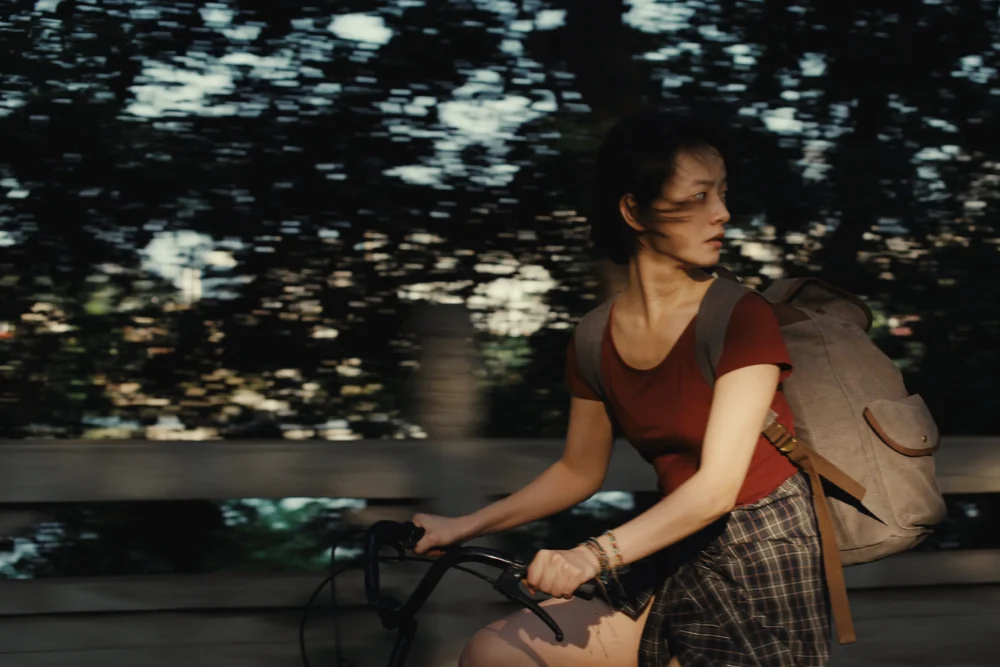
Zou Jing’s "A Girl Unknown," which captured the Best Narrative Feature award in the International Competition, offers a poignant and deeply unsettling look at rootlessness. The film follows a young Chinese girl as she is passed between three different families between the ages of six and eighteen, exploring the psychological fallout of institutional and familial instability.
In the documentary category, Asmahan Bkerat’s "Concrete Land" claimed Best Documentary in the International Competition. The multi-generational portrait captures a mixed-race family as they fiercely fight against displacement, marginalization, and external hostility in Jordan, painting a vivid picture of urban survival and familial bonds.
Locally, Hamad Al-Fayhani’s "Crawling Into Myself" dominated the Made in Qatar competition. The evocative narrative tackles themes of identity and perception by telling the story of a man grappling with a rare, disfiguring illness that progressively erases his facial features. Meanwhile, the Audience Award went to Jamal Rashid Alkhanji for "Jodari Meno," further demonstrating strong local engagement with home-grown cinema.
Global Industry Heavyweights Lead Juries and Masterclasses
The prestige of the Doha Film Festival was underscored by the caliber of industry professionals who participated as jury members and masterclass speakers.
The international feature film jury was presided over by acclaimed Japanese director Naomi Kawase. She was joined by an illustrious panel including French-Tunisian actor Adam Bessa, Tunisian producer Dora Bouchoucha, Italian documentary filmmaker Gianfranco Rosi, and award-winning Palestinian filmmaker and artist Kamal Aljafari.
The short film competition was led by French-Moroccan producer Karim Aitouna, alongside Malaysian filmmaker Amanda Nell Eu and Swiss-Rwandan actress and filmmaker Kayije Kagame. The Made in Qatar jury was spearheaded by Lebanese actress and filmmaker Yumna Marwan, collaborating with Qatari filmmaker Al Johara Al Thani and Palestinian-Belgian filmmaker and producer Naël Khleifi.

The closing ceremony itself was a star-studded affair hosted by Sudanese filmmaker and presenter Amjad Al-Nour. Dignitaries and cinematic icons in attendance included Elia Suleiman, Brigitte Lacombe, and Ahmed Al Baker. They were joined by high-ranking Qatari officials, including H.E. Sheikha Al-Mayassa bint Hamad bin Khalifa Al Thani, chairperson of the DFI; H.E. Sheikh Dr. Abdulla bin Ali Al Thani; Hamad Omar Al-Mannai, CEO of Media City Qatar; and Eng. Abdulaziz Ali Al Mawlawi, CEO of Visit Qatar.
Bridging Creators and Commerce at Doha Industry Days
Running parallel to the public screenings and red-carpet events was the wildly successful Doha Industry Days. Serving as the festival’s commercial and networking engine, the three-day sidebar drew approximately 450 prominent industry executives from 38 countries, cementing Doha’s status as a burgeoning hub for international co-productions and film financing.
The industry platform boasted a stellar lineup of keynote speakers and masterclass leaders, featuring heavyweights such as "Squid Game" creator Hwang Dong-hyuk, "Avengers" director Joe Russo, French star Omar Sy, and Swedish actress Noomi Rapace.
The high-energy environment of Industry Days yielded major project announcements that immediately reverberated through the global trade press. Among the most notable was the unveiling of a Neon-backed biographical film titled "Caesar," which centers on Syrian military officer Farid Al-Madhhan. Additionally, two other major biopics were announced: one chronicling the life and career of Egyptian music icon Mohamed Mounir, and another focusing on Lebanese pop star Fadel Shaker. These announcements reflect the festival’s growing efficacy as a launchpad for major cinematic ventures bridging the Middle East with Western and Asian markets.
Reflecting on the Vision of the Doha Film Institute
Reflecting on the success of the eight-day event, Fatma Hassan Alremaihi, festival director and CEO of the Doha Film Institute, emphasized the broader philosophical and cultural implications of independent filmmaking in the modern era.
"Tonight, as we celebrate the winners of the 2026 Doha Film Festival, we celebrate far more than cinematic achievement," Alremaihi stated during her closing remarks. "We recognize the power of stories to transcend borders, challenge perspectives, and bring the experiences of people and communities into the global conversation."
Alremaihi elaborated on the core ethos driving the DFI’s expanded mandate, noting that marginalized and bold voices require dedicated institutional backing to break through an increasingly crowded global media landscape.
"The Doha Film Festival exists to provide that platform—bringing together filmmakers and audiences from across the world, championing bold and independent storytelling, and creating space for stories that might otherwise go untold," she added. "The films we honor tonight remind us that cinema is not simply a reflection of the world we live in; it is a force that can shape how we understand it, connect with one another, and imagine a more empathetic future."
Implications for the Regional and Global Film Economy
The triumphant conclusion of the second revamped Doha Film Festival signals a permanent shift in the Middle East’s cinematic ecosystem. By coupling a robust public-facing film festival with a high-powered industry market like Doha Industry Days, Qatar has successfully positioned itself as an essential nexus for cross-cultural exchange.
As traditional Western film markets face economic headwinds and shifting distribution models, regional initiatives supported by entities like the Doha Film Institute offer a vital lifeline for independent auteurs. The substantial financial backing, international co-production opportunities, and global press exposure generated during the event ensure that stories originating from the Global South and lesser-represented regions continue to secure a prominent foothold on the international stage.
With plans already underway for future iterations, the Doha Film Festival has firmly established its footprint on the global film festival calendar, proving that regional curation combined with global ambition can forge a sustainable, inclusive, and forward-looking cinematic future.