The State of the Manhattan Rental Market in 2026
The New York City rental market in 2026 remains defined by high demand and limited supply. According to recent industry reports from firms like Miller Samuel and Douglas Elliman, the median rent in Manhattan has plateaued at historically elevated levels, with the borough’s vacancy rate hovering consistently below 3 percent. This scarcity has created a "landlord’s market," where lines for open houses often stretch around city blocks and bidding wars for rentals have become a standard, albeit frustrating, component of the search process.
The introduction of new legislative measures, such as the pied-à-terre tax championed by Governor Kathy Hochul and Assemblymember Zohran Mamdani, has further complicated the high-end segment. Designed to generate revenue from non-primary residences, the tax has prompted a shift in how luxury units are marketed and occupied. Some owners of secondary residences have opted to list their properties as high-end, fully furnished rentals to offset the tax burden, contributing to a niche market of short-to-medium-term luxury stays in prestigious Art Deco and pre-war buildings.
Comparative Analysis: Upper West Side vs. Upper East Side
This week’s analysis pits the Upper West Side (UWS) against the Upper East Side (UES), two neighborhoods traditionally separated by Central Park and distinct cultural identities. While both areas offer proximity to the city’s largest green space, the value proposition differs based on building styles and historical context.
The Upper West Side is characterized by its grand pre-war cooperatives and a slightly more bohemian, intellectual atmosphere. Listings this week in the UWS range from sprawling townhouses to meticulously renovated condominiums. Conversely, the Upper East Side remains the bastion of old-world Manhattan elegance, featuring high-contrast luxury, landmark hotels turned residences, and a higher concentration of "white-glove" services. Despite the geographic proximity, the "park effect"—the premium added to any unit with a view of or direct access to Central Park—remains the primary driver of price in both sectors.
Detailed Listing Highlights: The Upper West Side
The Upper West Side listings for mid-April 2026 highlight a mix of historic charm and modern luxury. One of the most significant entries is a four-bedroom townhouse at 137 Manhattan Avenue, listed at $14,000 per month. Constructed in 1886, this property retains its "good bones," including original fireplaces, functional shutters, and a classic claw-foot tub. The architectural preservation of such units is increasingly rare in a market often dominated by "grey-box" renovations.
For those seeking shorter durations, the Century Condominium at 25 Central Park West offers a two-bedroom, fully furnished unit for $11,000. The Century is a landmarked Art Deco building, and the price point reflects its status as one of the few condominiums on Central Park West, providing tenants with sweeping views and a level of pre-war grandeur that is difficult to replicate in newer builds.
In the mid-to-high range, 360 Central Park West features a one-bedroom unit for $7,400. This listing is described as "triple mint," a real estate term of art signifying that the apartment has been renovated to a "like-new" condition. The unit boasts herringbone-patterned hardwood floors and Calacatta marble surfaces, representing the peak of the luxury one-bedroom market.
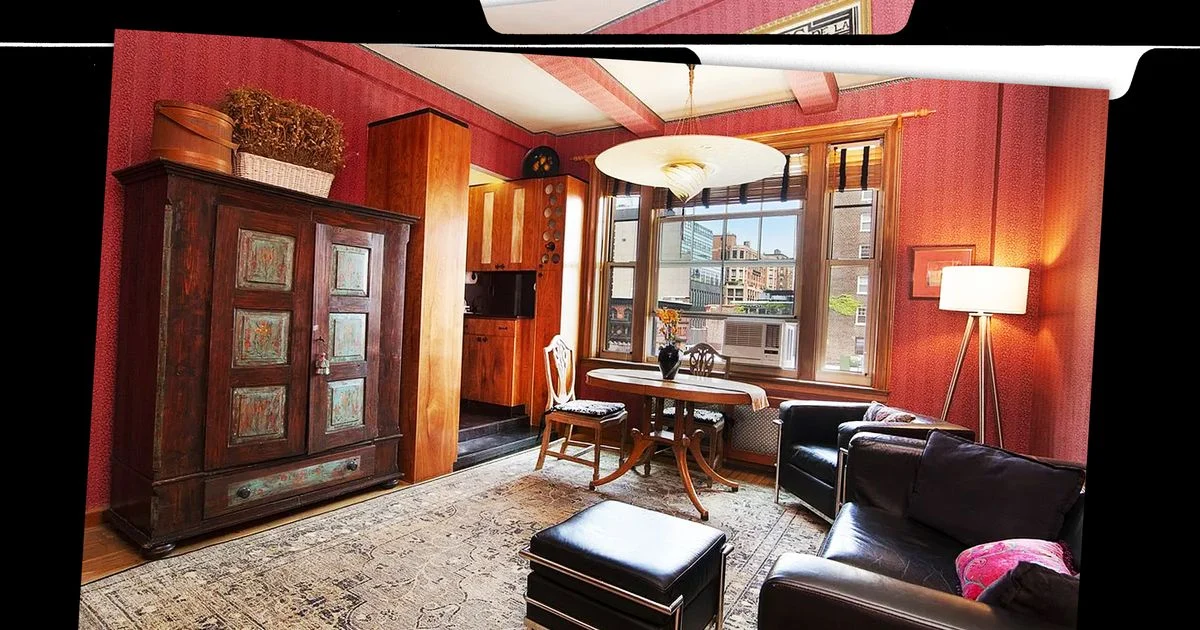
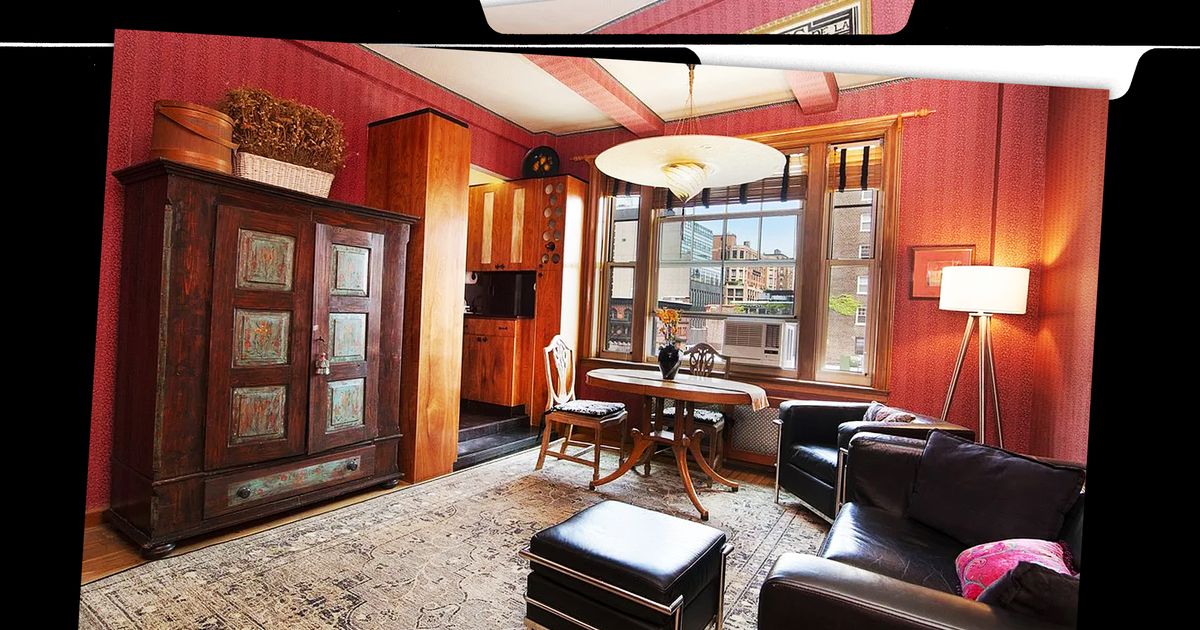
More accessible options on the Upper West Side include a one-bedroom at 170 West 74th Street for $4,600. This unit stands out for its interior design, featuring wrought-iron bed frames and fabric-covered wallpaper, alongside a marble bathroom equipped with a Jacuzzi. At the lower end of the spectrum, a studio at 949 West End Avenue is listed at $3,395. While small, its location near Riverside Drive provides a value-add for tenants seeking quiet residential surroundings.
Detailed Listing Highlights: The Upper East Side
The Upper East Side listings emphasize the neighborhood’s penchant for luxury and eccentric design. A three-bedroom unit at 112 East 61st Street, priced at $15,000, exemplifies the "lair-like" aesthetic of certain Midtown-adjacent townhouses. With over-the-top chandeliers and a massive hundred-pane window in the living room, the property prioritizes dramatic lighting and privacy over traditional layouts.
One of the most visually striking listings is a one-bedroom at the Sherry-Netherland (781 Fifth Avenue) for $11,500. The Sherry-Netherland is a world-renowned hotel and cooperative, and the unit reflects a specific 1980s high-end aesthetic, utilizing a high-contrast black-and-white palette, zebra-patterned rugs, and floor-to-ceiling mirrors. This style of "commitment to the bit" is a hallmark of the UES’s more flamboyant residential history.
For tenants seeking more traditional spaces, a two-bedroom at 70 East 79th Street is available for $6,650. The unit features high ceilings and a signature bay window, though its price is considered high even by current neighborhood standards. At the entry-level for the UES, a studio at 321 East 75th Street is listed at $2,595. The unit is notable for its clean finishes and marble-clad bathroom, representing a rare "affordable" find in a neighborhood where studios often exceed $3,000.
Economic Implications and the Pied-à-Terre Tax
The presence of highly expensive, furnished rentals in buildings like the Century and the Sherry-Netherland can be partially attributed to the evolving tax landscape. The Hochul-Mamdani pied-à-terre tax, which targets non-primary residences valued at over $5 million, has altered the calculus for wealthy property owners. By leasing these units as luxury rentals, owners can generate income to offset the annual tax surcharge, which ranges from 0.5% to 4% of the property’s market value.
This shift has created a surplus of high-end, short-term inventory while the supply of moderately priced, long-term rentals remains stagnant. Housing advocates argue that while the tax generates necessary revenue for the city’s transit and infrastructure, it does little to alleviate the housing crisis for the average New Yorker. The "Listings Edit" highlights this disparity, showing that while "worth-it" apartments exist, they are increasingly concentrated in the upper-middle and luxury tiers of the market.
Chronology of the New York Rental Crisis (2024–2026)
The current state of the market is the result of a multi-year trend that began with the post-pandemic rebound in 2022.
- Early 2024: Manhattan rents hit a record median of $4,500, driven by a lack of new construction and high mortgage rates keeping potential buyers in the rental market.
- Late 2024: The introduction of "Good Cause Eviction" legislation provided more protections for tenants but led some landlords to raise initial asking prices to hedge against future limitations on rent increases.
- 2025: The "Great Inventory Squeeze" occurred as the city’s population returned to pre-pandemic levels, but housing starts lagged behind by nearly 50,000 units.
- April 2026: The market enters a phase of "stabilized high pricing," where competition remains fierce, but the astronomical month-over-month jumps seen in 2023 have slowed.
Conclusion and Future Outlook
As the "Listings Edit" moves toward a new format, the focus will expand to include the outer boroughs, where square footage and price points are expected to be more favorable. However, the core of the Manhattan market—the Upper East and Upper West Sides—will continue to serve as the benchmark for the city’s residential health.
The persistence of $10,000-plus rentals and the rarity of units under $3,000 suggest that the Manhattan rental market is becoming increasingly bifurcated. For the discerning renter, finding a "worth-it" apartment now requires not just a significant budget, but an appreciation for architectural history and a keen eye for units that have managed to retain their character amidst a sea of generic renovations. As the city continues to implement new tax structures and housing policies, the definition of "value" in New York real estate will likely continue to evolve, making expert curation more essential than ever for those navigating the five boroughs.