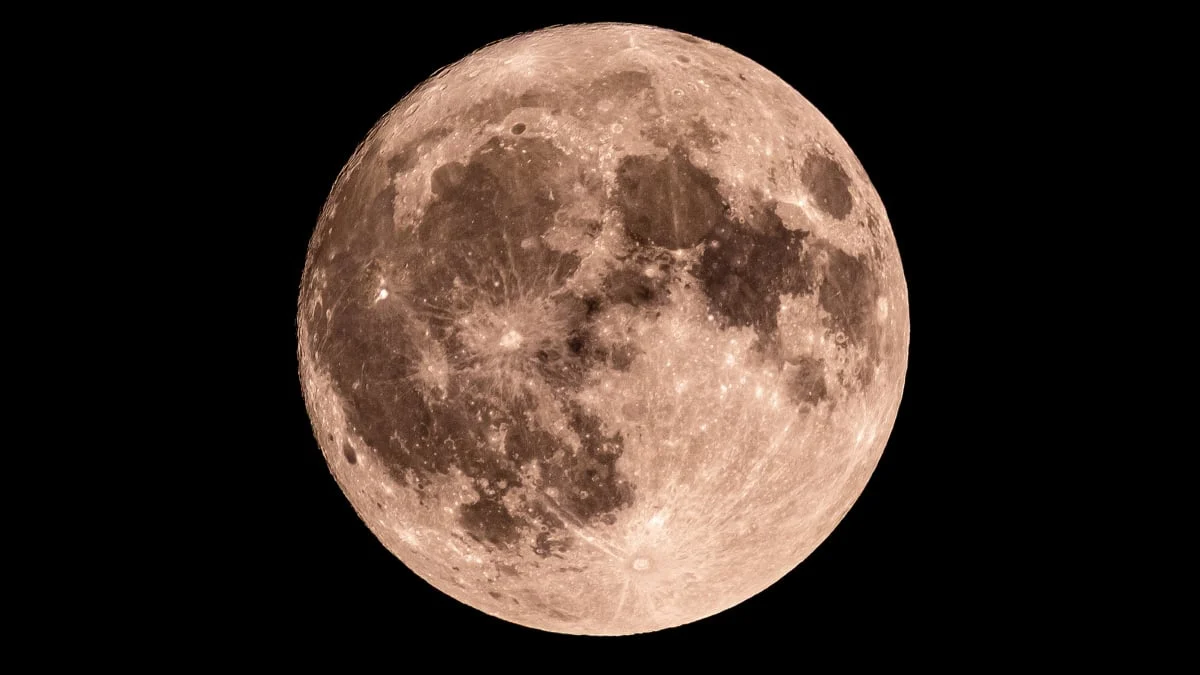
The celestial dance of the Moon has entered a new, luminous phase, marking the end of its invisible New Moon period and ushering in a nightly spectacle of increasing illumination. As of Saturday, April 18th, observers will witness the Moon gradually grow larger and brighter in the night sky, a direct consequence of more of its sunlit hemisphere becoming visible from Earth. This waxing period will continue, with the Moon steadily becoming more illuminated each evening, culminating in the next Full Moon. Currently, the Moon is in its Waxing Crescent phase, with a mere 1% of its surface lit, a faint sliver that, while subtle, signifies the beginning of a visually engaging lunar cycle. This phase, though barely perceptible, represents the nascent stages of the Moon’s journey through its approximately 29.5-day orbit around our planet.
The Dawn of Illumination: Understanding the Waxing Crescent
The transition from the New Moon, where the Moon is positioned between the Earth and the Sun rendering its visible face dark, to the Waxing Crescent marks a significant shift in our perception of this celestial body. The term "waxing" itself is derived from the Old English word "weaxan," meaning to grow. This period is characterized by the increasing portion of the Moon’s sunlit side that becomes visible from Earth. In the Northern Hemisphere, this illuminated sliver typically appears on the right side of the Moon, gradually expanding over successive nights.
As detailed by NASA’s Daily Moon Guide, the current illumination level of 1% signifies that the Moon has just begun its journey away from the New Moon position. While this sliver is often too faint to be easily discerned by the naked eye, especially in areas with significant light pollution, it is the initial visible evidence of the lunar cycle’s progression. For astronomers and keen observers, even this minimal illumination is a clear indicator of the Moon’s orbital path and its interaction with solar light. The subtle increase in brightness night after night provides a tangible, albeit gradual, connection to the vast cosmic processes at play.
Anticipating the Apex: The Next Full Moon
The upcoming celestial highlight will be the next Full Moon, anticipated to grace the night sky on May 1st. This event holds particular significance as it is the first of two Full Moons predicted for the month of May, a phenomenon sometimes referred to as a "Blue Moon" if it occurs at the end of a month, though in this instance, it signifies a more frequent occurrence of two full moons within a single calendar month.
A Full Moon occurs when the Earth is positioned between the Sun and the Moon, allowing the entire face of the Moon that is visible from Earth to be illuminated by the Sun’s rays. This creates the iconic, brilliant disk that has captivated humanity for millennia, influencing tides, cultures, and countless myths and legends. The anticipation for a Full Moon often sparks increased public interest in astronomy and nocturnal observation, drawing attention to the Moon’s predictable yet awe-inspiring cycles. The May 1st Full Moon will offer a prime opportunity for widespread viewing, weather permitting, and will serve as a visual climax to the current waxing period.
The Lunar Ballet: A Deep Dive into Moon Phases
The captivating spectacle of lunar phases is a direct result of the Moon’s orbital mechanics and its relationship with the Sun. As NASA explains, the Moon completes one orbit around the Earth approximately every 29.5 days. During this orbital journey, the relative positions of the Earth, Moon, and Sun continuously change. Crucially, we always observe the same side of the Moon from Earth due to a phenomenon called tidal locking. However, the amount of sunlight reflecting off this visible hemisphere fluctuates dramatically throughout the Moon’s orbit, giving rise to the distinct phases we observe.
There are eight primary lunar phases, each representing a specific point in this celestial cycle:
-
New Moon: This is the starting point of the lunar cycle. The Moon is positioned between the Earth and the Sun. The side of the Moon facing Earth receives no direct sunlight and is therefore dark, making the Moon essentially invisible to us. This phase is crucial as it marks the beginning of the Moon’s journey toward visibility.
-
Waxing Crescent: Following the New Moon, a small sliver of the Moon begins to be illuminated by the Sun. In the Northern Hemisphere, this sliver appears on the right side and gradually grows larger each night. This is the current phase we are experiencing.
-
First Quarter: Approximately one week after the New Moon, the Moon has completed about a quarter of its orbit. At this point, exactly half of the Moon’s visible face is illuminated by the Sun. It appears as a perfect half-circle, with the illuminated portion on the right side in the Northern Hemisphere.
-
Waxing Gibbous: As the Moon continues its orbit, more than half of its visible surface becomes illuminated, but it has not yet reached its fully illuminated state. The term "gibbous" refers to this bulging, almost-full appearance. The illuminated portion continues to increase.
-
Full Moon: This is the midpoint of the lunar cycle. The Earth is positioned between the Sun and the Moon, and the entire face of the Moon visible from Earth is bathed in sunlight. This is the brightest and most prominent phase of the Moon.
-
Waning Gibbous: After the Full Moon, the illuminated portion of the Moon begins to decrease. The term "waning" means decreasing or shrinking. In the Northern Hemisphere, the light starts to recede from the right side of the Moon, though the majority of the Moon remains illuminated.
-
Third Quarter (or Last Quarter): About three weeks after the New Moon, the Moon has completed three-quarters of its orbit. Again, half of the Moon’s visible face is illuminated, but this time it is the left side that is lit in the Northern Hemisphere.
-
Waning Crescent: In the final phase before the New Moon, only a thin sliver of light remains on the left side of the Moon (in the Northern Hemisphere). This sliver gradually diminishes each night until the Moon becomes invisible once more, completing the cycle.
The Science Behind the Shifting Face
The predictable progression of lunar phases is a fundamental aspect of observational astronomy and has been studied for millennia. Ancient civilizations meticulously charted these cycles, using them for calendrical purposes, navigation, and agricultural planning. The understanding of these phases relies on basic principles of geometry and optics. The Moon itself does not produce light; it reflects the light of the Sun. As the Moon orbits Earth, our perspective of its sunlit surface changes.
The concept of tidal locking, which ensures we always see the same side of the Moon, is a result of gravitational interactions between the Earth and the Moon over billions of years. The Earth’s gravity has slowed the Moon’s rotation until its rotational period exactly matches its orbital period. This creates a stable configuration where one hemisphere of the Moon is perpetually turned towards Earth.
Broader Implications and Context
While the current phase might be subtle, the ongoing lunar cycle has far-reaching implications. The Moon’s gravitational pull is the primary driver of Earth’s ocean tides, influencing coastal ecosystems, maritime activities, and even geological processes. The predictable ebb and flow of tides are directly linked to the Moon’s position and phase. During Full Moon and New Moon phases, when the Sun, Earth, and Moon are roughly aligned, the combined gravitational pull results in higher high tides and lower low tides, known as spring tides. During the quarter moons, the gravitational forces of the Sun and Moon are at right angles, leading to less extreme tidal ranges, called neap tides.
Beyond its physical effects, the Moon has held profound cultural and symbolic significance throughout human history. It has inspired art, literature, music, and religious practices across diverse cultures. From ancient lunisolar calendars to modern-day fascination with lunar missions, the Moon continues to capture our imagination and serve as a constant reminder of our place in the cosmos. The current waxing phase, a period of gentle growth and increasing visibility, offers a moment of reflection on this enduring relationship between humanity and its closest celestial neighbor. As the Moon steadily brightens, it beckons us to look up and contemplate the vastness of the universe and the intricate celestial mechanics that govern our world. The journey from an almost invisible sliver to the radiant Full Moon is a testament to the dynamic and ever-changing nature of our solar system.