Sabrina Carpenter’s second-weekend appearance at the Coachella Valley Music and Arts Festival solidified her status as a premier pop powerhouse, characterized by a meticulously choreographed set that leaned heavily into cinematic nostalgia and high-profile guest appearances. Following a buzzy first weekend, the "Espresso" singer doubled down on her "Thelma & Louise" stage theme by enlisting Academy Award winner Geena Davis for a pivotal mid-show monologue. Davis appeared as an older version of the singer, referred to as "Aunt Sabrina," effectively completing the tribute to the 1991 classic film after Susan Sarandon—Davis’s co-star in the original movie—handled the role during the festival’s opening weekend.
The transition from Sarandon to Davis was not merely a change in personnel but a significant recalibration of the performance’s pacing. Observers noted that Davis’s monologue was approximately half the length of Sarandon’s previous delivery, which had been criticized by some attendees as uncomfortably protracted. This shift lent substantial weight to industry rumors suggesting that Sarandon had been instructed to improvise and extend her segment during Weekend One to compensate for a behind-the-scenes technical delay. By contrast, Davis’s appearance moved with a brisk efficiency, ensuring the energy of the set remained high as the show progressed toward its climax.
The Evolution of the "Aunt Sabrina" Monologue
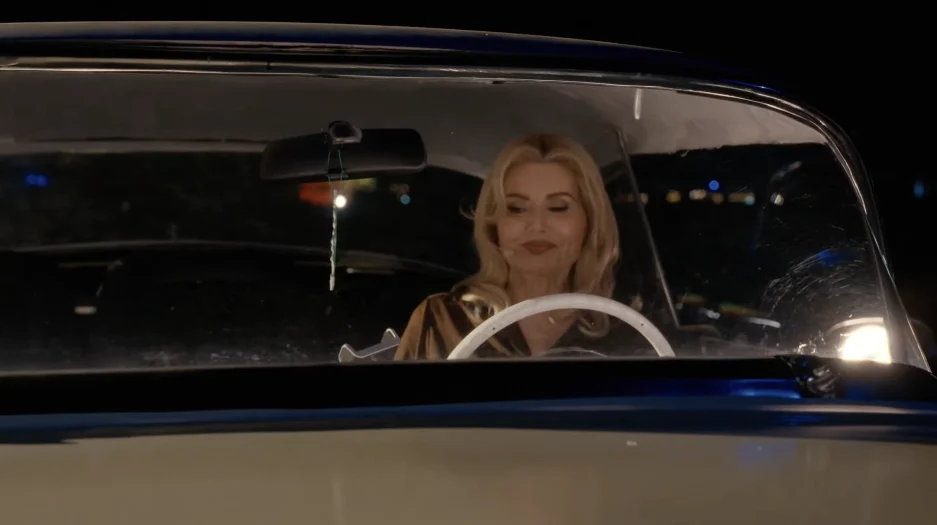
The central narrative device of Carpenter’s Coachella set involves a 1950s-style drive-in theater aesthetic, complete with vintage automobiles and a sprawling desert backdrop. Within this environment, the "Aunt Sabrina" character serves as a reflective, older iteration of Carpenter, offering a blend of cynical wisdom and nostalgic regret. Sitting in one of the vintage cars parked amidst a makeshift drive-in lot, Geena Davis delivered a script that mirrored the thematic beats of Sarandon’s earlier performance but with notable editorial "trims."
While the core message remained consistent, the dialogue was largely paraphrased. Where Sarandon had opened with a line about being a "moron" who ran around "bippity boppity boo," Davis opted for a variation, describing her younger self as "all hippity, skippity." The most significant changes, however, involved the removal of several minutes of dialogue that had previously confused some audience members. A lengthy anecdote regarding a fictional sister named Laurie—who Sarandon’s character claimed would "shit on" her career—was entirely excised. Furthermore, an inspirational concluding segment about the "little voice" that encourages self-belief was also dropped.
The efficiency of the revised script was most evident in the timing of the "carhop" character’s arrival. Played by Corey Fogelmanis, Carpenter’s former co-star from the Disney Channel series Girl Meets World, the carhop appeared at the three-and-a-half-minute mark to settle the tab, whereas the same sequence had taken seven minutes to resolve during the first weekend. This tightening of the script suggested a deliberate effort by Carpenter’s creative team to optimize the show’s flow for the second weekend’s broadcast and live audience.
The Madonna Cameo: A Multi-Generational Pop Moment
While the appearance of Geena Davis provided a sophisticated nod to film history, the evening’s most explosive moment arrived when Madonna took the stage. For days leading up to the Friday night set, the Coachella grounds were rife with "hurricane-force" rumors that the Queen of Pop would make an appearance. Speculation initially suggested Madonna might take over the "Aunt Sabrina" monologue, but she was instead reserved for a headline-making musical collaboration later in the set.
Madonna joined Carpenter for a medley and duet that bridged the gap between 1980s pop royalty and the current generation of chart-toppers. The appearance was not limited to music; it included an extended segment focused on astrology, a personal passion of Madonna’s. This conversational interlude was so expansive that it threatened to overshadow the earlier discussions regarding the length of Sarandon’s monologue. However, the sheer star power of the moment ensured that the crowd remained engaged, marking one of the most significant "Coachella moments" in recent memory.
The inclusion of Madonna serves as a powerful endorsement of Carpenter’s career trajectory. Having recently served as the opening act for Taylor Swift’s record-breaking Eras Tour, Carpenter has rapidly transitioned from a teen television star to a global pop sensation. Sharing the stage with Madonna at a festival as influential as Coachella functions as a symbolic passing of the torch, or at the very least, a validation of Carpenter’s current dominance in the streaming and radio landscapes.
Supporting Cast and Creative Continuity
Beyond the high-profile female leads, Carpenter’s set featured a rotating cast of comedic talent. In the role of the "electrician"—a bit part used to facilitate set changes and provide comic relief—Terry Crews succeeded Will Ferrell, who had performed the role during Weekend One. Crews brought his signature high-energy physicality to the part, though he performed with entirely different dialogue and omitted a gag involving a failed attempt to light a cigarette that Ferrell had utilized.
The return of Corey Fogelmanis as the drive-in carhop provided a sense of continuity for long-time fans of Carpenter. The chemistry between the former co-stars added a layer of meta-commentary to the show, acknowledging Carpenter’s roots in television while firmly situating her in her current role as a sophisticated musical artist. The use of recurring characters with different actors across the two weekends has become a hallmark of the 2024 Coachella season, as artists look for ways to make their second-weekend sets feel distinct from the first.
Technical Execution and Stage Design
The logistical complexity of Carpenter’s set cannot be understated. The "drive-in" theme required the placement of several 1950s-era vehicles on the Coachella Stage, which is notoriously difficult to navigate given the quick turnaround times between artists. The production design utilized a combination of physical props and high-definition LED screens to create an immersive environment that felt both intimate and grand.
The technical adjustments made between the two weekends highlight the iterative nature of major festival performances. In the professional music industry, the first weekend of Coachella is often viewed as the "premiere," while the second weekend serves as the "refined" version, where technical glitches are smoothed out and pacing is perfected. The reduction in the monologue’s length suggests that Carpenter’s team prioritized a tighter musical experience for the second outing, likely in response to critical feedback regarding the first weekend’s "stalling" segments.
Chronology of Sabrina Carpenter’s Rise to Coachella Headliner Status
To understand the significance of this Coachella performance, one must look at the timeline of Sabrina Carpenter’s recent career milestones:
- July 2022: Carpenter releases her fifth studio album, Emails I Can’t Send, which marks a shift toward more personal, mature songwriting and yields the hit "Nonsense."
- August 2023 – March 2024: Carpenter joins Taylor Swift as the opening act for the Eras Tour in South America, Australia, and Singapore, exposing her to millions of new fans globally.
- April 2024 (Early): Carpenter releases "Espresso," a disco-infused pop track that immediately climbs global charts, becoming a "song of the summer" contender.
- April 12, 2024: Coachella Weekend One. Carpenter debuts the "Thelma & Louise" theme with Susan Sarandon and Will Ferrell. The set receives positive reviews but faces minor criticism for the length of the monologue.
- April 19, 2024: Coachella Weekend Two. Carpenter delivers a refined set with Geena Davis, Terry Crews, and a surprise appearance by Madonna, cementing the performance as a career-defining event.
Broader Impact and Industry Implications
Sabrina Carpenter’s success at Coachella 2024 is indicative of a broader trend in the music industry where "stardom" is built through a combination of viral social media moments, high-profile associations, and rigorous touring. Her ability to secure cameos from the likes of Madonna and Geena Davis speaks to the high level of industry respect she has garnered in a relatively short period.
Furthermore, the "Thelma & Louise" theme resonates with a current cultural interest in feminist narratives and vintage Americana. By aligning herself with such iconic figures and themes, Carpenter is positioning herself as an artist with depth and a keen understanding of pop culture history. This branding strategy is effective in appealing to both her core Gen Z demographic and older festival-goers who recognize the cinematic and musical legends she brings to the stage.
The "Espresso" singer’s performance also highlights the evolving role of Coachella itself. As the festival faces increasing competition from other global events, its reliance on "surprise moments" and "exclusive cameos" has become more pronounced. Carpenter’s set delivered on both fronts, providing a visual and auditory spectacle that was tailor-made for social media amplification.
In the final analysis, Sabrina Carpenter’s Weekend Two performance was a masterclass in pop spectacle. By addressing the pacing issues of the previous week, leaning into the strengths of her guest stars, and maintaining a high level of vocal and dance performance, she has arguably set the standard for what a modern pop set at Coachella should look like. As she moves forward into the next phase of her career, the momentum generated by this performance—and the endorsement of a legend like Madonna—will likely propel her toward even greater heights in the global music landscape.