NASA’s Earth Science Division (ESD) has launched a pivotal initiative, the Commercial Satellite Data Acquisition (CSDA) program, signaling a strategic pivot towards integrating privately sourced Earth observation data into its vast scientific endeavors. This forward-looking program is designed to rigorously identify, meticulously assess, and strategically acquire data from commercial satellite providers. The overarching objective is to unlock cost-effective avenues for augmenting the invaluable Earth observation data currently gathered by NASA, other U.S. government agencies, and a network of international scientific partners. This strategic move promises to broaden the scope and deepen the insights gleaned from our planet’s complex systems, from climate change indicators to disaster response.
A New Era of Data Collaboration: The CSDA Program
The CSDA program represents a significant step in NASA’s evolving approach to Earth science. For decades, the agency has been at the forefront of developing and deploying its own sophisticated satellite missions, providing foundational datasets for understanding our planet. However, the rapidly expanding commercial space sector now offers a wealth of data that can complement and enhance these existing capabilities. The CSDA program acts as a crucial bridge, enabling NASA to tap into this burgeoning market, potentially accelerating scientific discovery and improving the timeliness and resolution of critical environmental data.
Introducing MDA Space: A Key Partner in the CSDA Initiative
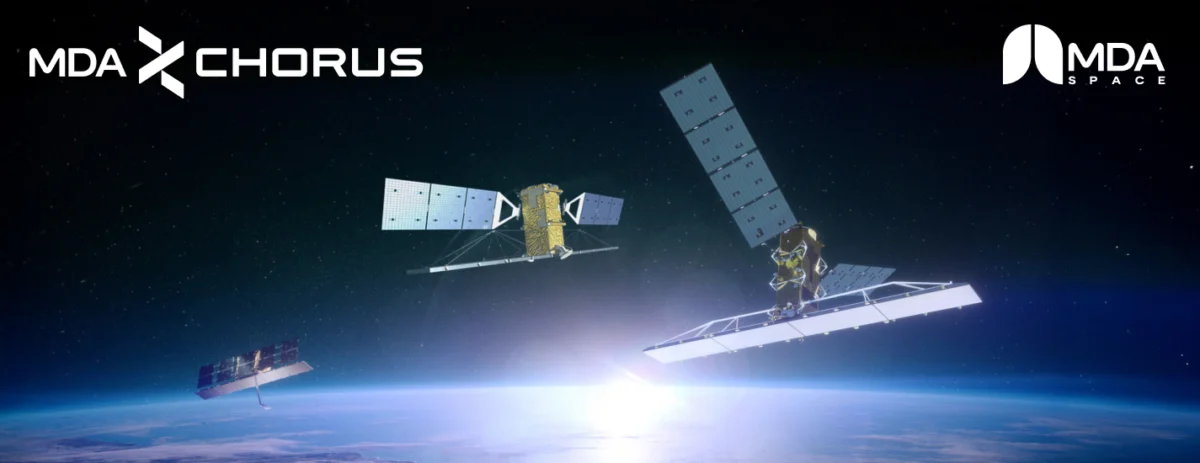
A cornerstone of the CSDA program’s early engagement is the introduction of MDA Space, a prominent player in the commercial Earth observation arena. During a recent vendor webinar hosted by NASA, representatives from MDA Space provided an in-depth overview of their cutting-edge satellite constellation and its unique capabilities. The webinar served as a vital platform for researchers and application specialists to understand how to effectively discover, access, and utilize MDA Space’s C-band synthetic aperture radar (SAR) data products. This focus on SAR data is particularly significant, as it offers a powerful tool for penetrating cloud cover and observing the Earth’s surface regardless of weather conditions or time of day, a crucial advantage for consistent global monitoring.
The webinar’s agenda was meticulously crafted to empower potential users. Speakers not only introduced MDA Space’s technological prowess but also demonstrated the practical steps involved in integrating their data into existing research workflows. Crucially, the session addressed how MDA’s SAR data products can serve as a powerful complement to the existing Earth science data holdings managed by NASA. This synergy is expected to unlock new research avenues and enhance the effectiveness of applications ranging from agricultural monitoring and urban planning to natural disaster assessment and resource management.
Unlocking the Potential of C-Band SAR Data
Synthetic Aperture Radar (SAR) technology represents a significant advancement in Earth observation. Unlike optical sensors that rely on sunlight and can be hampered by cloud cover, SAR systems emit their own microwave pulses and record the backscattered signals. This capability allows for consistent data acquisition, day or night and through virtually all weather conditions. C-band SAR, specifically, operates at a wavelength that offers a balance between penetration capabilities (e.g., through vegetation or dry soil) and sensitivity to surface features.
MDA Space’s constellation is designed to provide high-resolution, wide-area coverage, making it an attractive asset for large-scale environmental monitoring. The ability to acquire data frequently and consistently is paramount for tracking dynamic processes such as deforestation, glacial melt, land subsidence, and the aftermath of natural disasters like floods and earthquakes. By integrating this commercial data, NASA aims to achieve a more comprehensive and responsive understanding of Earth’s systems.
Services, Support, and Future Directions
Beyond the technical aspects of data acquisition, the NASA CSDA program vendor webinar also provided crucial information regarding the services and support available to data users. This includes guidance on accessing and utilizing MDA Space’s data products, as well as information on the tools and platforms that facilitate their integration into research and application frameworks. The program’s commitment to providing ongoing assistance underscores NASA’s dedication to fostering a collaborative ecosystem where commercial data can be effectively leveraged by the scientific community.
The initiative is not a one-off procurement but rather a strategic program designed for sustained engagement with commercial data providers. This suggests a long-term vision for NASA to build robust partnerships that can adapt to the evolving landscape of commercial Earth observation capabilities. The CSDA program is expected to undergo continuous evaluation, with new vendors and data types being assessed as they emerge in the market.
Background and Context: The Growing Commercial Space Sector
The emergence of the CSDA program is deeply rooted in the rapid growth and increasing sophistication of the commercial space industry over the past decade. Companies are now launching constellations of satellites equipped with advanced sensors, capable of delivering data with unprecedented resolution, frequency, and coverage. This technological leap, coupled with declining launch costs, has created a fertile ground for new data providers.
Historically, NASA and other government agencies have been the primary drivers of Earth observation capabilities, investing billions of dollars in developing and operating their own satellite missions. While these missions have yielded invaluable scientific data, they are often characterized by long development cycles and substantial costs. The CSDA program represents a pragmatic recognition of the economic and operational advantages that can be gained by strategically incorporating commercially available data. This approach allows NASA to focus its internal resources on cutting-edge research, mission design, and the development of novel scientific instruments, while leveraging the private sector for broad-scale data acquisition.
Chronology of a Strategic Shift
While the specific launch date of the CSDA program itself is not explicitly stated in the provided text, the announcement of the vendor webinar with MDA Space on April 17, 2026, indicates a significant phase of active implementation. It is reasonable to infer that the foundational work for establishing the CSDA program, including policy development, vendor vetting processes, and initial pilot projects, would have occurred in the years leading up to this announcement.
Pre-2026: NASA’s Earth Science Division likely conducted extensive market research, identifying potential commercial data providers and assessing the readiness and capabilities of their respective constellations. Internal discussions and planning sessions would have been underway to define the program’s scope, objectives, and procurement mechanisms.
Early 2026: The CSDA program is formally established, with a clear mandate to explore and acquire commercial satellite data. Initial outreach to key commercial partners, such as MDA Space, would have commenced.
April 17, 2026: The vendor webinar with MDA Space takes place, marking a public-facing step in the CSDA program’s execution. This event serves to inform the scientific community and potential users about the available data and how to access it.
Post-April 2026: Following the webinar, NASA ESD will likely proceed with data acquisition agreements with MDA Space, and potentially other vendors, based on the assessments conducted. Research projects and applications utilizing this new data stream will begin to emerge, contributing to NASA’s broader Earth science objectives.
Supporting Data and Potential Applications
The integration of commercial satellite data, particularly C-band SAR from providers like MDA Space, opens up a multitude of applications that can be significantly enhanced.
- Disaster Response and Monitoring: SAR data’s ability to penetrate clouds is invaluable for assessing damage after hurricanes, floods, or earthquakes, even in challenging weather conditions. Real-time or near-real-time data can guide rescue efforts and inform damage assessments for insurance and rebuilding efforts.
- Agriculture and Food Security: Monitoring crop health, soil moisture, and land use changes at a global scale can contribute to more accurate yield predictions, optimized resource allocation, and improved food security strategies.
- Climate Change Research: Tracking changes in ice sheets, glaciers, sea ice extent, and land surface temperature with higher frequency and resolution can provide critical data for climate models and the understanding of global warming impacts.
- Urban Planning and Infrastructure Monitoring: High-resolution SAR imagery can be used to map urban sprawl, monitor the integrity of critical infrastructure like bridges and dams, and assess the impact of development on surrounding environments.
- Resource Management: Monitoring deforestation, illegal logging, and the health of forests is crucial for sustainable resource management and carbon sequestration efforts. Similarly, monitoring water resources, including reservoirs and inland water bodies, is essential for managing scarcity and preventing pollution.
Official Responses and Inferred Reactions
While direct quotes are not available, the establishment of the CSDA program and the engagement with commercial vendors like MDA Space can be interpreted as a positive and proactive response from NASA’s Earth Science Division.
NASA Earth Science Division Leadership: The initiative likely reflects a strategic decision to adapt to the evolving technological landscape and leverage the most efficient and effective data sources. This demonstrates a commitment to maximizing the scientific return on investment and ensuring that NASA remains at the forefront of Earth observation.
Scientific Community: Researchers are likely to welcome the expansion of available data resources. Access to diverse datasets, particularly those offering different resolutions and temporal frequencies, can foster new collaborations and enable previously infeasible research. The availability of commercial data may also democratize access to Earth observation capabilities for a broader range of institutions.
Commercial Satellite Industry: The CSDA program represents a significant endorsement and potential revenue stream for commercial satellite data providers. It signals a growing recognition by government agencies of the value and reliability of private sector Earth observation capabilities, which could spur further investment and innovation within the industry.
Broader Impact and Implications
The NASA CSDA program, by embracing commercial satellite data, has profound implications for the future of Earth science and global environmental monitoring.
Cost-Effectiveness and Scalability: Partnering with commercial providers offers a potentially more cost-effective and scalable approach to acquiring vast amounts of Earth observation data compared to solely relying on government-funded missions. This can free up NASA’s resources for more specialized or groundbreaking scientific investigations.
Enhanced Data Diversity and Accessibility: The program will bring a wider variety of data types, resolutions, and revisit frequencies into NASA’s purview. This diversity is crucial for addressing the multifaceted challenges of understanding our planet. Furthermore, by establishing clear pathways for acquisition and access, NASA aims to make these valuable datasets more readily available to the broader scientific and application communities.
Fostering Public-Private Partnerships: The CSDA program exemplifies a growing trend of public-private collaboration in space exploration and Earth observation. Such partnerships are crucial for driving innovation, accelerating technological development, and addressing complex global challenges that require a coordinated, multi-sectoral approach.
Global Leadership in Earth Observation: By proactively integrating commercial capabilities, NASA reinforces its position as a global leader in Earth observation. This initiative sets a precedent for other space agencies and national governments, encouraging a more integrated and efficient approach to monitoring our planet’s vital signs. The ultimate success of the CSDA program will be measured by its contribution to a more comprehensive understanding of Earth’s complex systems, enabling more informed decision-making for a sustainable future.