The speaker of Iran’s Parliament, Mohammad-Bagher Qalibaf, declared on Friday that Iran would close the Strait of Hormuz once again if the United States maintained its blockade on Iranian ports, directly contradicting earlier assertions by President Trump that the vital waterway was "open for business." Qalibaf’s incendiary remarks, delivered via social media, plunged global markets into renewed uncertainty, just hours after an initial easing of tensions had prompted a stock market rally and a significant drop in oil prices. This latest escalation underscores the precarious state of U.S.-Iran relations and highlights the critical geopolitical sensitivity of the Strait of Hormuz, a crucial choke point for global energy supplies.
The Geopolitical Chessboard: Strait of Hormuz’s Criticality
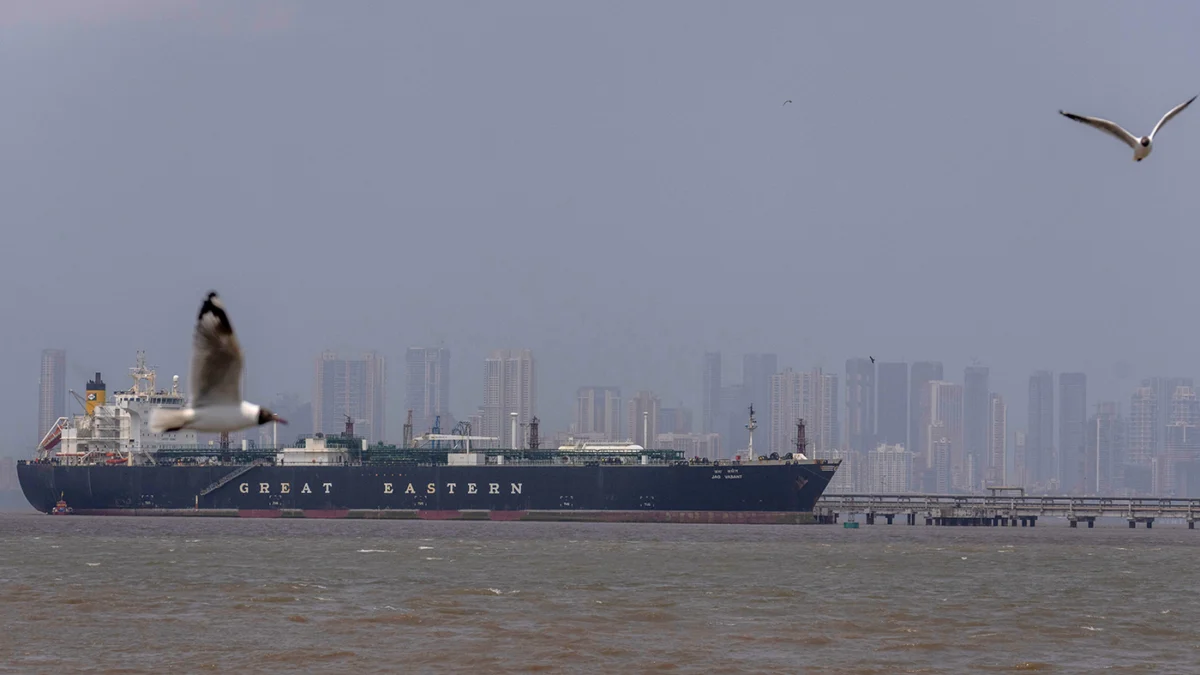
The Strait of Hormuz is arguably the world’s most strategically important oil transit choke point. Located between Oman and Iran, it connects the Persian Gulf to the Arabian Sea and is the only sea passage from the Persian Gulf to the open ocean. Approximately one-fifth of the world’s total petroleum liquids consumption, and about one-third of all seaborne traded oil, passes through this narrow waterway daily. This includes nearly all the oil exports from Saudi Arabia, Iran, Iraq, Kuwait, Qatar, and the United Arab Emirates. Any disruption to traffic through the Strait, whether perceived or real, sends immediate shockwaves through global energy markets, impacting everything from crude oil prices to shipping insurance premiums and broader economic stability. Its closure would severely impede the flow of oil, gas, and other goods, potentially triggering a global energy crisis and economic recession.
Historically, Iran has repeatedly threatened to close the Strait of Hormuz in response to international pressure, particularly U.S. sanctions aimed at crippling its oil exports. These threats are rooted in a strategic doctrine that views the Strait as a powerful leverage tool against the West. Incidents such as the "Tanker War" during the Iran-Iraq War in the 1980s, where both sides attacked oil tankers, demonstrate the vulnerability of shipping in the region. More recently, Iran has been accused of harassing and seizing commercial vessels, laying mines, and engaging in confrontations with U.S. naval assets, further underscoring the volatile nature of the waterway. International law, particularly the United Nations Convention on the Law of the Sea (UNCLOS), generally upholds the right of "transit passage" through straits used for international navigation. However, Iran, while a signatory to UNCLOS, has not ratified it and maintains that passage through its territorial waters requires prior authorization, a stance that clashes with the principle of freedom of navigation championed by the U.S. and its allies. The presence of the U.S. Navy’s Fifth Fleet in Bahrain, tasked with protecting maritime traffic in the region, adds a significant military dimension to any Iranian threat of closure.
A Day of Contradictory Claims: A Chronology of Escalation
The latest diplomatic volley began earlier on Friday, setting off a rollercoaster of market reactions. The day’s events unfolded rapidly, marked by conflicting statements from Tehran and Washington, largely disseminated through social media platforms.
Morning Calm (Briefly): The initial glimmer of hope emerged when Iran’s Foreign Minister, Abbas Araghchi, posted on social media that the Strait of Hormuz was "open for all commercial vessels… for the remaining period of ceasefire." This statement, seemingly signaling a de-escalation, was interpreted by many as a significant concession, especially given the ongoing U.S. economic pressure.
Trump’s Amplification and Expansive Claims: Shortly after Araghchi’s announcement, President Trump seized upon the news, broadcasting it via a series of posts on his Truth Social platform and during phone interviews with reporters. While confirming the Strait’s openness, Trump also declared that the U.S. blockade on Iranian ports would remain in effect. He then escalated his claims dramatically, stating during a phone interview with Bloomberg that Iran had agreed to an "unlimited" suspension of its nuclear program and to hand over its "nuclear dust," an apparent reference to enriched uranium. Furthermore, Trump claimed that Israel would cease bombing Lebanon, proclaiming, "Enough is enough." These additional assertions, however, lacked any independent verification or confirmation from Iranian officials.
Market Euphoria and Subsequent Doubt: In response to the initial news that the Strait of Hormuz was open, global stock markets rallied, reflecting investor relief at the potential easing of geopolitical tensions. Concurrently, oil prices experienced a sharp decline, dropping by 12 percent, as the immediate threat to crude supply seemed to recede. However, this optimism was short-lived.
Tehran’s Internal Dissent Emerges: The first crack in the facade of de-escalation appeared when Fars News Agency, a state-affiliated Iranian news outlet often reflecting hardline views, publicly questioned Araghchi’s initial tweet. Fars characterized it as an "unexpected tweet about the liberation of the Strait of Hormuz, and following Trump’s subsequent nervous saber-rattling, Iranian society has been plunged into an atmosphere of confusion." This public questioning from a state media outlet suggested either internal disagreement within the Iranian leadership or a deliberate strategy to walk back Araghchi’s seemingly conciliatory tone.
Qalibaf’s Direct Contradiction: The definitive rebuttal came from Mohammad-Bagher Qalibaf, the Speaker of Iran’s Parliament. While Trump was delivering a speech at a Turning Point USA event in Phoenix, Arizona, Qalibaf took to social platform X to issue a stark warning: "With the continuation of the blockade, the Strait of Hormuz will not remain open." He added that passage through the strait would be "conducted based on the ‘designated route’ and with Iranian authorization." Qalibaf further asserted, "Whether the strait is open or closed and the regulations governing it will be determined by the field, not by social media," a direct jab at the U.S. President’s preferred mode of communication. This statement effectively nullified Araghchi’s earlier claim and reintroduced the specter of a full closure.
Iran’s Internal Discord and Strategic Communication
The contradictory statements emanating from Tehran — Araghchi’s conciliatory posture versus Qalibaf’s hardline threat, further complicated by Fars News Agency’s skepticism — reveal either a significant internal policy division or a sophisticated, multi-layered communication strategy designed to keep adversaries off balance. Araghchi, as the Foreign Minister, typically represents the more diplomatic face of Iran, often engaging in dialogue with international counterparts. His initial statement might have been an attempt to mitigate immediate economic pressure or test the waters for de-escalation.
Conversely, Mohammad-Bagher Qalibaf holds a powerful position as Speaker of the Parliament and is a prominent conservative figure with strong ties to the Islamic Revolutionary Guard Corps (IRGC), having previously served as its commander and as Tehran’s mayor. His pronouncements often reflect the more uncompromising elements within Iran’s political establishment, particularly those aligned with Supreme Leader Ali Khamenei, who holds ultimate authority. Qalibaf’s direct challenge to Trump and his emphasis on "the field" determining the Strait’s status underscore the influence of the military and security apparatus in Iran’s foreign policy decisions, especially concerning strategic assets like Hormuz.
The Fars News Agency’s public questioning of Araghchi further reinforces the idea that the initial "open for business" statement was not universally endorsed within Iran’s power structure. This internal dynamic suggests that any perceived concession from Iran might face significant pushback from hardliners, making sustained de-escalation difficult. It also creates an environment of ambiguity, where Iran can simultaneously project a willingness to negotiate through one channel while maintaining a posture of defiance through another. This "two-track" approach can serve to sow confusion and test the resolve of international actors.
U.S. Sanctions and Iran’s Economic Squeeze
The backdrop to these escalating threats is the U.S. "blockade," a term used by Iran to describe the comprehensive economic sanctions reimposed by the United States following its withdrawal from the Joint Comprehensive Plan of Action (JCPOA), or the Iran nuclear deal, in 2018. The Trump administration initiated a "maximum pressure" campaign aimed at crippling Iran’s economy and forcing it to renegotiate a more stringent nuclear deal, address its ballistic missile program, and curb its regional influence.
These sanctions target Iran’s most vital revenue stream: oil exports. They also include restrictions on banking, shipping, and other key sectors, severely limiting Iran’s ability to engage in international trade and access global financial markets. The impact on the Iranian economy has been profound, leading to a significant depreciation of its currency, soaring inflation, and widespread economic hardship for its citizens. Iran’s oil exports have plummeted from over 2.5 million barrels per day before the sanctions to a fraction of that figure. The U.S. maintains that these sanctions are a legitimate tool of foreign policy to compel behavioral change, while Iran views them as an act of economic warfare, a violation of international law, and a direct threat to its sovereignty. The threat to close the Strait of Hormuz is Iran’s most potent counter-measure, designed to inflict economic pain on the global economy and, by extension, on countries that support or benefit from U.S. sanctions, thereby pressuring Washington to lift its restrictions.
The Nuclear Conundrum and Regional Stability
President Trump’s expansive claims regarding Iran’s nuclear program — an "unlimited suspension" and the handover of "nuclear dust" (enriched uranium) — added another layer of complexity and concern. These statements, made without any corresponding confirmation from Tehran, raised immediate questions about their veracity and basis. While Iran has consistently maintained that its nuclear program is for peaceful purposes, its enrichment activities have drawn international scrutiny, especially after it began exceeding the limits set by the JCPOA in response to U.S. sanctions. The "nuclear dust" reference likely alludes to Iran’s stockpile of enriched uranium, which, if significantly reduced or handed over, would represent a major concession in any future nuclear deal. However, the complete absence of any Iranian acknowledgement of such an agreement makes Trump’s claims highly suspect and potentially a rhetorical tactic rather than a factual breakthrough.
Furthermore, Trump’s pronouncement that "Israel would not be bombing Lebanon going forward, proclaiming: ‘Enough is enough’" touched upon another highly volatile regional flashpoint. The implied cessation of Israeli military action in Lebanon, often targeting Iranian-backed Hezbollah, suggests a broader de-escalation effort, potentially linked to the alleged nuclear agreement. However, like the nuclear claims, this statement also lacked independent confirmation from either Israel or Lebanon, raising doubts about its immediate impact or feasibility. The interconnectedness of these issues — Iran’s nuclear program, its economic sanctions, and regional proxy conflicts — means that any perceived shift in one area inevitably affects the others, making comprehensive de-escalation a monumental diplomatic challenge.
The Digital Battlefield: Social Media as a Diplomatic Tool
The entire sequence of events, from Araghchi’s initial tweet to Qalibaf’s forceful rebuttal, unfolded almost entirely on social media platforms like X (formerly Twitter) and Truth Social. This phenomenon, which Qalibaf himself termed "media warfare and engineering public opinion," has become a defining characteristic of modern international relations. Leaders now routinely bypass traditional diplomatic channels and established media outlets to communicate directly with global audiences, often with instantaneous and far-reaching effects.
While social media offers unparalleled speed and reach, it also carries significant risks. The brevity and informality of posts can lead to misinterpretation, ambiguity, and the rapid dissemination of unverified information. In a highly charged environment like U.S.-Iran relations, such communication can exacerbate tensions, create confusion, and increase the risk of miscalculation. Both sides use these platforms not just to convey policy but also to shape narratives, engage in psychological operations, and even "troll" each other, as noted in the original article. This "digital diplomacy" blurs the lines between official policy statements and propaganda, making it challenging for international observers to discern genuine intentions from strategic posturing. Qalibaf’s assertion that Iran is "not affected by those tricks" is itself part of this media warfare, attempting to project an image of resilience and steadfastness.
Global Repercussions and Future Outlook
The immediate market reactions — the brief rally followed by renewed uncertainty — underscore the profound global economic implications of any threat to the Strait of Hormuz. A sustained closure would not only cause oil prices to skyrocket, potentially reaching unprecedented levels, but also disrupt global supply chains, increase shipping costs due to heightened insurance premiums and longer alternative routes (if available), and severely impact energy-dependent economies worldwide. International bodies, including the United Nations and the European Union, would likely issue calls for de-escalation and upholding freedom of navigation. Regional powers, particularly Saudi Arabia and the UAE, whose economies are heavily reliant on oil exports through the Strait, would be deeply concerned, potentially increasing their diplomatic efforts to de-escalate tensions or bolster their own security postures.
The latest statements from Tehran and Washington confirm that the standoff over Iran’s nuclear program and its regional activities remains highly volatile. The direct contradiction between Iranian officials, coupled with the U.S. President’s unconfirmed claims, creates a climate of profound instability. The situation demands clear, consistent communication through established diplomatic channels to prevent miscalculation, rather than relying on the often-ambiguous and emotionally charged arena of social media. The global community watches with bated breath, aware that any misstep in this critical waterway could trigger a severe global economic crisis and potentially ignite a broader military confrontation in the Middle East. The White House has been reached for comment, indicating the ongoing nature of this rapidly developing story and the need for official clarification amidst the swirling rhetoric.