
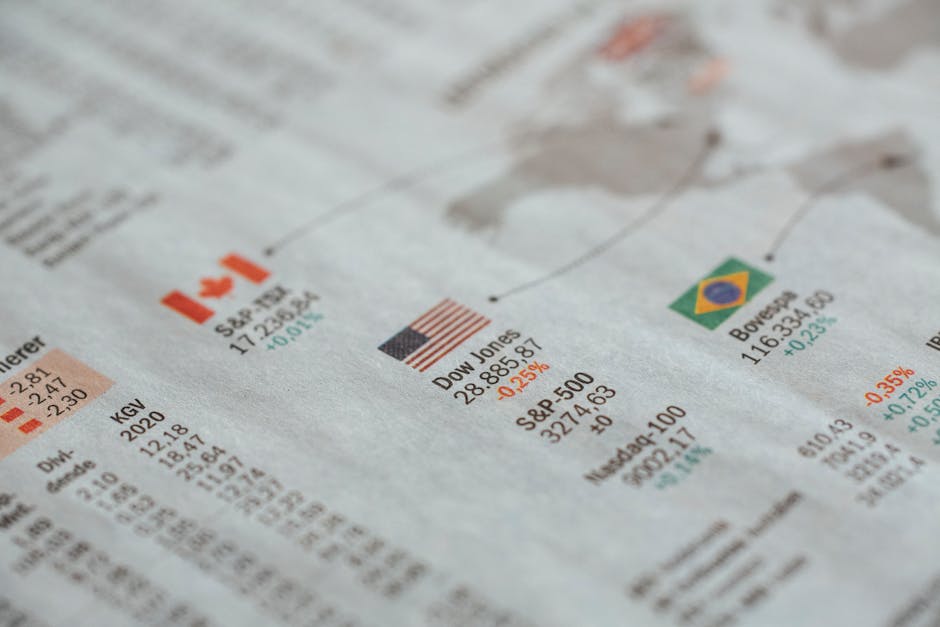
Brazil Stocks Lower at Close of Trade, Bovespa Down 1.50%
The Brazilian stock market experienced a downturn in its latest trading session, with the benchmark Ibovespa index closing down 1.50%. This decline reflects a confluence of domestic and international factors impacting investor sentiment and driving sell-offs across various sectors. The broad-based nature of the losses suggests a generalized risk-off sentiment prevailing in the market, prompting investors to reassess their exposure to emerging market assets, particularly those tied to commodity prices and domestic economic performance. Understanding the specific drivers behind this downward movement is crucial for investors seeking to navigate the complexities of the Brazilian equity landscape. Several key economic indicators, corporate earnings reports, and geopolitical developments have contributed to the prevailing bearish sentiment.
One of the primary catalysts for the decline in Brazilian stocks was the release of recent inflation data, which indicated a potential acceleration in price pressures. The monthly inflation rate, as measured by the consumer price index (IPCA), exceeded expectations, raising concerns about the central bank’s monetary policy trajectory. Investors are keenly observing the Banco Central do Brasil’s (BCB) response to inflationary pressures, as any indication of a more aggressive tightening cycle could dampen economic growth prospects. Higher interest rates typically translate to increased borrowing costs for businesses, potentially impacting profitability and investment. Furthermore, elevated inflation erodes the purchasing power of consumers, leading to reduced demand for goods and services, which in turn affects corporate revenues. The market’s reaction underscores the sensitivity of equities to macroeconomic policy shifts and the perceived stability of the economic environment. Traders closely monitor inflation statistics and the BCB’s forward guidance, as these provide critical insights into the future direction of monetary policy and its implications for asset valuations. The expectation of prolonged high inflation can also lead to increased uncertainty, prompting a flight to safer assets and away from riskier investments like equities. This psychological aspect of market sentiment plays a significant role in amplifying short-term price movements.
In addition to domestic inflation concerns, external factors played a substantial role in pulling down the Ibovespa. The persistent uncertainty surrounding global economic growth, particularly in major trading partners like China and the United States, weighed on commodity prices, a crucial component of Brazil’s export-driven economy. Brazil is a significant producer and exporter of commodities such as iron ore, soybeans, and crude oil. A slowdown in global demand, especially from China, which is a major consumer of raw materials, directly impacts the profitability and outlook for Brazilian commodity companies. This spillover effect is amplified by the fact that many of the largest companies listed on the Ibovespa are involved in the commodity sector. Therefore, any global headwinds that affect commodity prices have a disproportionately large impact on the overall index performance. Investors are increasingly factoring in the risk of a global recession or significant economic slowdown, which would further depress demand for these essential goods. The interconnectedness of the global economy means that developments in one region can quickly propagate to others, and Brazil, as an emerging market with a strong reliance on external demand, is particularly susceptible to these shocks. The strengthening of the US dollar against emerging market currencies also presents a challenge, making Brazilian exports more expensive for foreign buyers and potentially reducing export volumes.
Corporate earnings season provided further reasons for investor caution. While some companies reported solid results, a significant number missed analyst expectations or issued cautious forward guidance. This uneven performance highlighted the challenges many businesses are facing, including rising input costs, supply chain disruptions, and weakening consumer demand. For companies dependent on imported components, a weaker Real also exacerbates cost pressures. The specific sectors most affected were those with significant international exposure or those reliant on discretionary consumer spending. For instance, companies in the retail and services sectors often see their revenues directly impacted by consumer confidence and disposable income. Conversely, companies with strong domestic demand drivers or those benefiting from higher commodity prices might have fared better, but the overall trend was negative. The interpretation of earnings reports is crucial, as it shapes investor perceptions of a company’s future earning potential and its ability to navigate challenging economic conditions. A pattern of downward earnings revisions across multiple sectors can create a cascading effect, leading to broader market sell-offs.
Geopolitical tensions also cast a shadow over the Brazilian market. Ongoing conflicts and trade disputes in various parts of the world contribute to global economic uncertainty and a general aversion to risk. Emerging markets are often the first to be affected by such global uncertainties, as investors tend to withdraw capital and seek refuge in perceived safer havens. The heightened geopolitical risk can also lead to disruptions in global supply chains, further exacerbating inflationary pressures and impacting corporate operations. For Brazil, this means that international events, even if geographically distant, can have a tangible impact on its stock market performance through their influence on investor sentiment, commodity prices, and global trade flows. The complexity of global affairs means that predicting the precise impact of geopolitical events is challenging, but their general effect is often to increase market volatility and reduce investor appetite for risk.
The sectorial breakdown of the Ibovespa’s decline further illustrates the diverse pressures at play. The mining and energy sectors, which are heavily weighted in the index, were particularly affected by falling commodity prices and concerns about global demand. Companies like Vale, a major iron ore producer, and Petrobras, the state-controlled oil giant, often lead market movements due to their size and influence. Their share prices are highly sensitive to fluctuations in global commodity markets. The financial sector also experienced pressure, reflecting concerns about potential increases in non-performing loans in a slowing economy and the impact of higher interest rates on credit demand and profitability. Retail and consumer discretionary sectors faced headwinds from weakening consumer confidence and reduced purchasing power due to inflation. Conversely, some defensive sectors, such as utilities and healthcare, might have shown more resilience, offering a degree of stability amidst the broader market downturn, although even these were not entirely immune to the general risk-off sentiment. The differential performance across sectors highlights the varied impacts of macroeconomic and geopolitical forces on different segments of the economy.
Looking ahead, investor focus will remain on key economic data releases, the BCB’s policy decisions, and the evolving global economic landscape. The potential for further interest rate hikes by major central banks, such as the US Federal Reserve, could continue to pressure emerging market assets by making investments in developed markets more attractive. Brazil’s ability to manage its inflation and fiscal deficits will be critical in regaining investor confidence. Fiscal discipline and credible economic reforms are essential to attract and retain foreign investment. The upcoming political calendar and any policy announcements by the government will also be closely watched. The perception of political stability and the clarity of economic policy direction are crucial determinants of investor sentiment in emerging markets. Furthermore, the ongoing global commodity cycle will continue to be a significant driver of performance for Brazilian equities. Any positive developments in global economic recovery or a stabilization of commodity prices could provide a much-needed boost to the Ibovespa. However, persistent inflationary pressures, potential global economic downturns, and ongoing geopolitical uncertainties suggest that the path forward for Brazilian stocks may remain volatile. The intricate interplay of domestic economic fundamentals, global market dynamics, and geopolitical events will dictate the trajectory of the Ibovespa in the near to medium term, making it imperative for investors to maintain a cautious and informed approach. The current market environment necessitates a thorough understanding of the underlying economic drivers and a willingness to adapt investment strategies to evolving conditions, as the pursuit of robust returns often involves navigating periods of heightened uncertainty and risk.
