
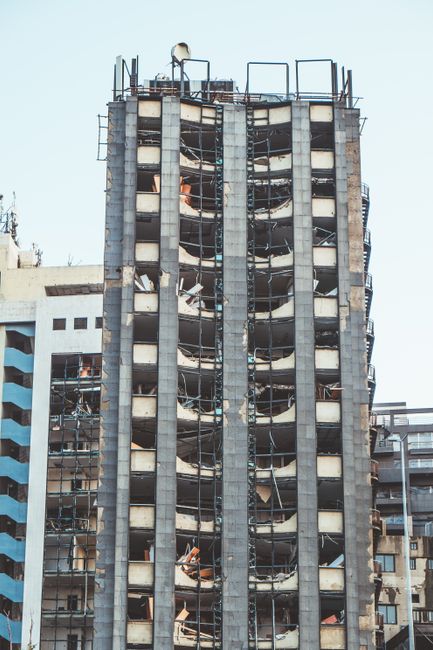
Beirut Eye Doctor Describes Devastating Injuries After Blasts
Dr. Elias Georges, a distinguished ophthalmologist practicing in Beirut, offered a chilling firsthand account of the catastrophic eye injuries sustained by victims of the August 4, 2020, port explosions. His testimony, delivered during interviews and later corroborated by medical reports and patient narratives, paints a stark picture of the immediate and long-term consequences of the immense blast waves and flying debris on human vision. Dr. Georges, whose clinic is located in proximity to the blast zone, was among the first medical professionals to witness the horrific aftermath. He described an overwhelming influx of patients presenting with a spectrum of ocular trauma, ranging from superficial corneal abrasions to complete globe rupture and permanent blindness. The sheer volume and severity of these injuries far exceeded anything he had encountered in his extensive career, even in the context of Lebanon’s history of conflict.
The primary mechanism of injury, as detailed by Dr. Georges, was multifaceted. The explosive force generated a powerful pressure wave, capable of causing direct ocular trauma. This blast wave, traveling at supersonic speeds, exerted extreme pressure on the eyes, leading to conditions like blast-induced optic neuropathy and retinal detachment. More commonly, however, the explosions propelled a torrent of shrapnel, glass fragments, concrete dust, and other debris at high velocity. These projectiles acted as direct impalement injuries, penetrating the delicate structures of the eye. The sheer force of the impact often resulted in catastrophic damage, rendering surgical intervention futile and leading to the loss of the eye itself. Dr. Georges repeatedly emphasized the pervasive nature of these injuries, noting that nearly every patient he treated presented with some form of ocular involvement, underscoring the pervasive reach of the blast.
Corneal lacerations and perforations were among the most frequent presentations. The cornea, the transparent outer layer of the eye, is highly susceptible to damage from sharp objects and high-velocity impacts. Dr. Georges described tears and punctures of varying depths, some so severe that the iris and lens prolapsed through the wound. These injuries not only threatened vision but also posed a significant risk of infection, often requiring complex surgical repair to salvage any remaining visual function. In many cases, even with successful repair, the scarring of the cornea resulted in permanent visual impairment, characterized by blurred vision, glare, and light sensitivity. The challenge was compounded by the limited availability of specialized surgical instruments and sterile supplies in the immediate aftermath, as the healthcare infrastructure itself had been severely impacted by the explosions.
Beyond the cornea, the internal structures of the eye also sustained devastating damage. The force of the blast could dislodge the lens from its natural position, causing subluxation or complete dislocation. This would lead to profound visual disturbances and necessitate surgical intervention to implant an artificial lens, a procedure often complicated by pre-existing damage to the eye. Furthermore, Dr. Georges reported a significant number of retinal detachments. The retina, the light-sensitive tissue at the back of the eye, can be torn or separated from its underlying support by the shockwave or by direct trauma. Repairing a detached retina is a delicate surgical procedure, and the success rate is often dependent on the extent of the damage and the promptness of treatment. Many of the blast victims with retinal detachments experienced irreversible vision loss due to the severity and delayed intervention.
Blast-induced optic neuropathy was another distressing consequence observed by Dr. Georges. This condition affects the optic nerve, the crucial pathway that transmits visual information from the eye to the brain. The pressure wave can cause damage to the nerve fibers, leading to a progressive loss of vision. Unlike injuries to other parts of the eye, damage to the optic nerve is often irreversible, leaving patients with permanent visual field deficits or even complete blindness. Dr. Georges noted the difficulty in diagnosing and managing this specific injury, as the symptoms might not be immediately apparent and the long-term prognosis is often bleak. The psychological toll on patients experiencing such profound and unexpected vision loss was also a significant concern for the medical team.
The human cost, beyond the purely medical, was profound. Dr. Georges spoke of the immense emotional distress and psychological trauma experienced by his patients. Many had witnessed horrific events, lost loved ones, and were now grappling with the life-altering reality of vision impairment or blindness. The suddenness of the event and the sheer scale of destruction left many in a state of shock and disbelief. For children, the impact was particularly devastating, as their developing visual systems were vulnerable to permanent damage, hindering their educational prospects and overall development. The economic implications were also significant, with many individuals losing their ability to work and support their families due to their injuries.
The challenge of providing adequate medical care was immense. The explosions damaged hospitals and clinics, disrupting the supply chain for essential medications and equipment. Dr. Georges and his colleagues worked under immense pressure, often with limited resources, to treat the overwhelming number of patients. The reliance on international aid and the efforts of volunteer medical teams were critical in alleviating some of this strain. However, the long-term rehabilitation and ongoing care required for these complex eye injuries presented a persistent challenge for the Lebanese healthcare system, which was already struggling with pre-existing economic and political instability. The need for specialized prosthetics, ongoing therapeutic interventions, and psychological support remained a critical issue long after the initial emergency phase.
The stories of individual patients, as recounted by Dr. Georges, served as poignant reminders of the human tragedy. He spoke of a young woman who lost sight in both eyes while shielding her child, a father who suffered extensive facial and ocular injuries while trying to rescue his family, and numerous children who sustained permanent vision loss from flying debris. These personal narratives underscore the indiscriminate nature of the explosions and the profound impact on ordinary citizens. The resilience of the Lebanese people in the face of such adversity was evident, but the scars, both visible and invisible, would undoubtedly last for generations. The article highlights the critical role of healthcare professionals like Dr. Elias Georges, who, despite facing overwhelming circumstances, dedicated themselves to alleviating suffering and providing the best possible care.
The long-term implications of these injuries extend beyond individual suffering. The loss of vision for a significant portion of the population can have a broader societal impact, affecting the workforce, education, and overall productivity. The need for comprehensive rehabilitation programs, accessible assistive technologies, and ongoing support for visually impaired individuals is paramount. Dr. Georges’ testimony serves as a stark reminder of the fragility of human sight and the devastating consequences of explosive events. The international community’s continued support for Lebanon’s healthcare infrastructure and for the rehabilitation of blast survivors remains crucial. The efforts to document and learn from such catastrophic events are vital for future disaster preparedness and for understanding the long-term health consequences of blast trauma. The enduring impact of the Beirut port explosions on ocular health will continue to be a significant public health concern for years to come, necessitating sustained medical and societal attention.
