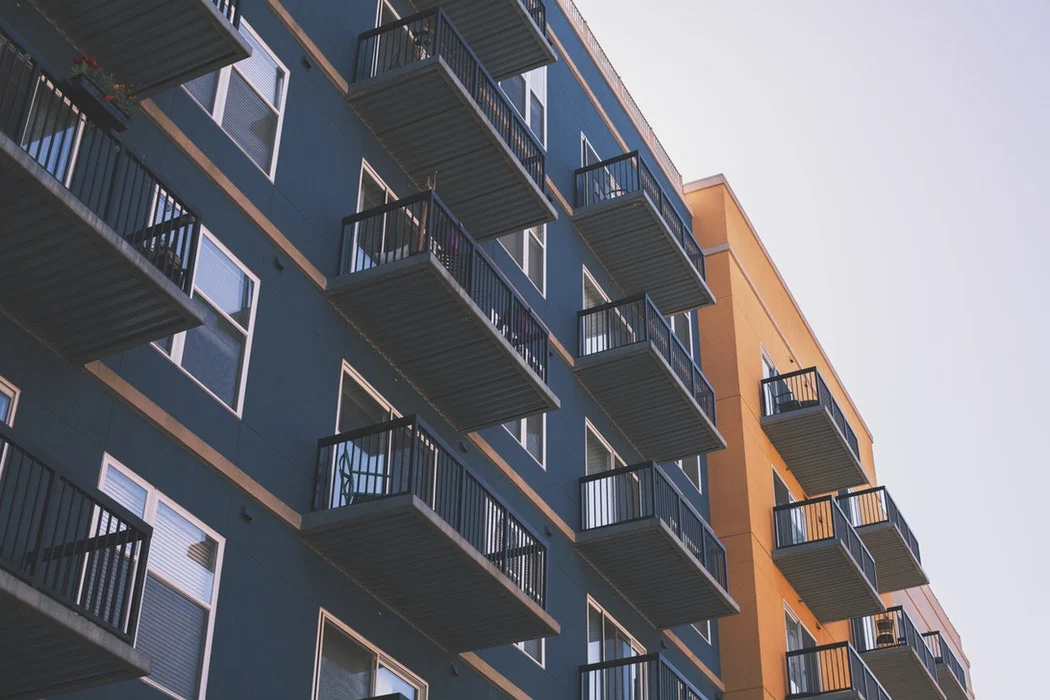
As the California State Legislature reconvenes following its summer recess, the spotlight has shifted toward a pair of pivotal bills aimed at dismantling the systemic barriers that have stifled condominium development for nearly two decades. Assembly Bill 1903 and Assembly Bill 1406 represent a concerted effort by lawmakers to address the state’s chronic housing shortage by recalibrating the legal and financial frameworks that govern the multi-family ownership market. These legislative maneuvers come at a critical juncture as California faces mounting pressure to increase housing density and provide affordable paths to homeownership for middle-income residents who find themselves priced out of the single-family residential market.
The cornerstone of this legislative push, Assembly Bill 1903, seeks to overhaul the state’s condo construction defect liability rules. Under current statutes, developers often find themselves embroiled in protracted, high-stakes litigation shortly after a project is completed, a reality that has driven insurance premiums to prohibitive levels and scared off many builders. AB 1903 proposes a robust "right-to-repair" process, which would mandate that developers be given a formal opportunity to remediate construction issues before a homeowners’ association (HOA) or individual owner can initiate a lawsuit. By prioritizing physical repairs over monetary settlements, proponents argue the bill will reduce the "litigation tax" that currently inflates the cost of every new condo unit produced in the Golden State.
Simultaneously, Assembly Bill 1406 addresses the financial volatility associated with new construction sales. This bill proposes an increase in the state’s liquidated-damages limit for new condominium contracts, raising it from the current 3% of the purchase price to 6%. In the context of real estate development, liquidated damages serve as a safeguard for builders; if a buyer defaults on a contract before the building is finished, the developer retains the deposit. Supporters of AB 1406, who refer to the measure as "condo deposit reform," argue that the current 3% cap—one of the most restrictive in the United States—does not sufficiently deter buyers from walking away from deals late in the construction phase. By doubling this limit, lawmakers hope to provide developers with the financial certainty required to secure construction loans and stabilize project timelines.
The Historical Context of California’s Condominium Collapse
To understand the urgency behind these bills, one must look at the dramatic decline of condominium starts over the last 20 years. According to comprehensive data released in 2024 by the Terner Center for Housing Innovation at the University of California, Berkeley, condominium production in major metropolitan hubs like Los Angeles has essentially flatlined. During the peak years of 2005 and 2006, Los Angeles alone saw upwards of 8,000 new condo units permitted annually. However, following the Great Recession of 2008, the sector failed to recover alongside the rest of the housing market.
While the broader residential market saw a resurgence in the mid-2010s, developers largely pivoted toward luxury rental apartments rather than for-sale condominiums. The Terner Center’s research highlights a stark disparity: while thousands of apartment units have been added to the California inventory, the "missing middle"—condos that offer a path to equity for first-time buyers—has remained stagnant. This shift is not merely a result of market preference but is a direct consequence of the legal environment. In California, the "Right to Repair Act" (SB 800), passed in 2002, was originally intended to streamline defect claims. However, critics argue it inadvertently created a roadmap for "extrapolated" claims, where legal teams use a single defect in one unit to allege systemic issues across an entire complex, leading to massive class-action style settlements.
Economic Data and the Cost of Litigation
The financial impact of defect liability is not merely theoretical; it is a measurable "hard cost" that is passed directly to the consumer. A follow-up study by the Terner Center quantified these impacts, finding that defect liability litigation and the associated insurance premiums add between $8,100 and $18,300 in costs to every single unit in a typical Los Angeles development. When these costs are combined with California’s already high land and labor prices, the feasibility of building entry-level condominiums vanishes.
Furthermore, the insurance market for condominium construction has become increasingly dysfunctional. Many national insurers have exited the California market entirely, citing the state’s litigious environment. Those that remain charge premiums that can be three to five times higher than those for comparable rental apartment projects. Because developers of rental properties are not subject to the same long-term defect liability laws as condo developers (who sell individual units to different owners), the financial incentive to build rentals over condos is overwhelming. This has contributed significantly to California’s "renter-heavy" economy, where homeownership rates remain among the lowest in the nation.
Legislative Evolution and Stakeholder Reactions
The path for AB 1903 has not been without significant compromise. The bill initially proposed a radical "certified building" framework. This would have allowed developers to hire state-vetted private inspectors to certify a project during the construction phase. Once certified, the building would have enjoyed a protected status, shielding the builder from certain types of defect claims and locking in a developer-controlled repair process. However, consumer advocacy groups and trial lawyer associations voiced strong opposition, arguing that such a move would strip homeowners of their right to seek redress for shoddy workmanship.
In response to this feedback, the bill’s author agreed to strike the "certified building" language. The amended version of AB 1903 now focuses on softening the edges of current law rather than a total overhaul. Key amendments include:
- Investigative Cost Limits: Builders must be given 21 days’ notice and the opportunity to attend testing before they can be held liable for a claimant’s investigative costs.
- Discretionary Dismissal: A previous proposal for a mandatory motion to dismiss noncompliant claims was changed to a discretionary motion, giving judges more latitude in how they handle procedural errors by claimants.
- Performance Standards: The bill will now focus on revising defect performance standards on a forward-looking basis, removing the requirement that a claimant prove a defect caused damage to another component of the building.
Meanwhile, AB 1406 faced a different set of hurdles. The California Association of Realtors (CAR) emerged as a primary opponent, successfully stalling the bill in a General Assembly committee earlier this year. The CAR expressed concern that doubling the deposit risk would unfairly shift the financial burden of market fluctuations from professional developers to individual buyers. This opposition has cast a shadow over the bill’s future, with many political analysts suggesting it currently has a slim chance of reaching the Governor’s desk without significant concessions to consumer protection advocates.
Federal Context: The National Dialogue on Condo Safety
California’s legislative efforts are taking place against a backdrop of renewed federal interest in condominium safety and financing. Following the tragic 2021 collapse of the Champlain Towers South in Surfside, Florida, the national conversation has shifted toward the structural integrity and financial health of aging condo associations.
In Washington, D.C., Rep. Debbie Wasserman Schultz (D-Fla.) and Rep. Maria Elvira Salazar (R-Fla.) have reintroduced bipartisan legislation that would offer low-interest federal loans to condo associations for essential structural repairs. This federal push is significant for California because it addresses the "back end" of the condo lifecycle—maintenance and safety—while the state bills address the "front end"—construction and initial sale. If passed, the federal bill could provide a much-needed safety net for older California condo complexes that are currently struggling with massive special assessments and skyrocketing insurance rates following recent state-mandated balcony and structural inspections.
Implications for the California Housing Market
The success or failure of AB 1903 and AB 1406 will have profound implications for the state’s housing goals. California’s Regional Housing Needs Allocation (RHNA) requires local governments to plan for millions of new units over the next decade. Many of these units are designated for "high-density" zones, where condominiums are the most logical and efficient form of development.
If AB 1903 passes in its amended form, it may provide just enough legal certainty to entice smaller, local developers back into the condo market. However, industry experts warn that without a more fundamental shift in insurance costs, the "condo drought" may persist. The transition from a litigation-heavy model to a repair-first model is a delicate balancing act; if the law favors builders too heavily, consumer confidence in condo quality may erode. If it continues to favor litigation, the supply will remain non-existent.
For the average Californian, the stakes are high. Condominiums have historically served as the "starter home" that allows families to build the equity necessary to eventually move into single-family homes. By failing to produce these units, the state has effectively removed the first rung of the property ladder, forcing many residents into a cycle of permanent renting or prompting them to leave the state entirely in search of affordable ownership opportunities.
As the legislative session progresses, the eyes of the real estate industry and housing advocates will be on the remaining committee hearings. The outcome will determine whether California can finally modernize its "strictest in the country" rules or if the state’s condominium market will remain a relic of the pre-2008 era. In a state where the median home price continues to shatter records, the resolution of these "technical" legal bills may be among the most consequential economic decisions made in Sacramento this year.