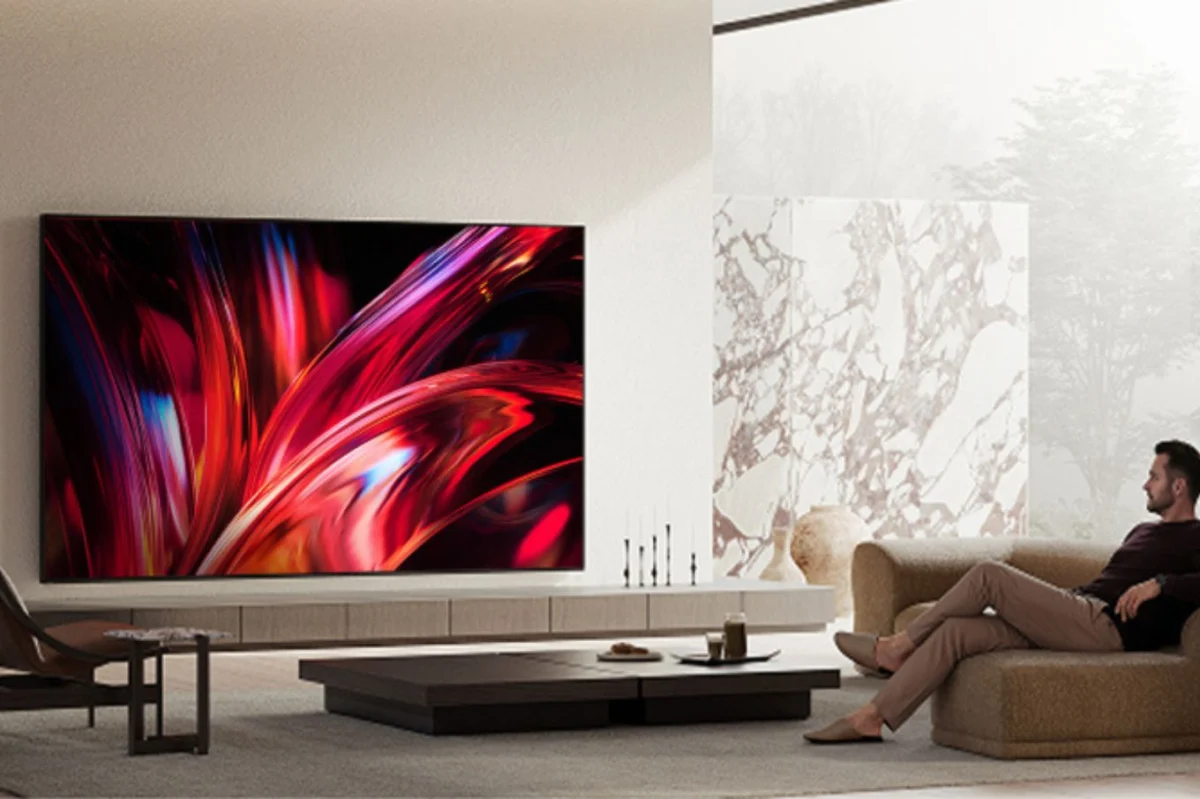
The consumer electronics landscape in 2026 has reached a significant milestone where the distinction between professional-grade monitors and home entertainment systems has virtually evaporated. As 4K resolution remains the industry standard, the competition among global manufacturers like Sony, Samsung, LG, Hisense, and TCL has shifted from mere pixel density to the refinement of luminance, color accuracy, and artificial intelligence integration. This year’s lineup of 4K televisions represents a paradigm shift, characterized by the maturation of Mini-LED technology and the widespread adoption of AI-driven processors that tailor the viewing experience to the specific lighting conditions of a room and the genre of content being displayed.
The Evolution of Display Technology: A 2026 Retrospective
To understand the current market, one must look at the technological trajectory established over the last twenty-four months. In early 2025, the industry saw a definitive move toward higher refresh rates and more sophisticated local dimming zones. By 2026, these features have trickled down from ultra-premium flagships to mid-range models. The primary battleground is now "True RGB" reproduction and AI upscaling. Manufacturers are no longer just selling screens; they are selling "intelligent hubs" capable of managing smart homes, facilitating high-fidelity cloud gaming, and providing cinematic experiences that rival commercial theaters.

Market data from the first quarter of 2026 suggests that the average consumer screen size has shifted from 65 inches to 75 inches, driven by a decrease in manufacturing costs for large-scale panels and an increased consumer appetite for immersive "home stadium" experiences. This shift is accompanied by a demand for "all-in-one" versatility, where a single unit must perform equally well for high-stakes gaming, live sports, and color-critical cinematic viewing.
Sony BRAVIA 9 II: The Benchmark for True RGB Performance
Leading the premium segment is the Sony 85-Inch BRAVIA 9 II, a television that has been heralded as the "Best Overall" choice for 2026. Priced at $3,599.99, this model represents Sony’s most aggressive push into "True RGB" display technology. Unlike traditional LED-backlit LCDs that often struggle with color bleeding, the BRAVIA 9 II utilizes a sophisticated red, green, and blue light emission system that ensures colors remain vivid without sacrificing the depth of black levels.
Technical analysis of the BRAVIA 9 II reveals a peak brightness that exceeds 3,000 nits, making it one of the most capable displays for High Dynamic Range (HDR) content. Sony’s Cognitive Processor XR has been updated for 2026 to include "Motion Clarity Pro," which uses predictive algorithms to insert frames into high-speed action sequences, such as live sports or action cinema, with zero perceptible artifacting. This makes the 85-inch variant a centerpiece for dedicated home theaters where picture integrity is the paramount concern.

The OLED Frontier: Samsung’s S90H and the Push for Luminance
Samsung continues to dominate the OLED market with the 77-Inch S90H 4K Smart TV. Historically, OLED (Organic Light Emitting Diode) technology was criticized for lower peak brightness compared to LED models. However, the 2026 S90H utilizes Samsung Vision AI to optimize pixel-by-pixel luminance, effectively minimizing the "blooming" or "haloing" effects often seen around bright objects on dark backgrounds.
The S90H is particularly notable for its 165Hz refresh rate, a specification that was once reserved for high-end PC gaming monitors. This high ceiling for motion allows for "buttery smooth" transitions, which is essential for the 2026 gaming landscape. Furthermore, the inclusion of Dolby Atmos and a multi-channel speaker system integrated into the chassis provides a spatial audio experience that often precludes the need for an external soundbar in medium-sized rooms.
LG’s Mastery of Viewing Angles and AI Integration
For households with large seating areas, the LG 77-Inch OLED evo AI G6 has emerged as the premier choice for wide viewing angles. Standard displays often suffer from "color shift" when viewed from the side, but LG’s 2026 evo panel maintains 99% color accuracy even at extreme 178-degree angles. This makes the G6 the "social" television of the year, ideal for family gatherings or viewing parties.

The G6 also introduces the webOS 26 operating system, which features deep integration with Google Gemini. This AI allows users to use natural language commands to find content, such as "Find the scene in the movie where the car chases through Paris," or "Optimize the settings for a dark horror movie." The TV also supports a comprehensive suite of formats, including Dolby Vision, HDR10, and HLG, ensuring compatibility with every major streaming platform from Netflix to Peacock.
The Democratization of Quality: TCL and Hisense
The 2026 market is perhaps most defined by the "value revolution" led by TCL and Hisense. The TCL 75-Inch QM7L Series SQD-Mini-LED is priced at approximately $1,498, a price point that would have been unthinkable for Mini-LED technology just three years ago. By using thousands of microscopic LEDs to control backlighting, the QM7L achieves contrast ratios that closely mimic OLED at a fraction of the cost. The inclusion of Bang & Olufsen audio tuning provides a significant upgrade over the standard "tinny" sound often associated with budget-friendly models.
Similarly, the Hisense 75-Inch U7 Mini-LED ULED has been labeled the "Best for Versatility." Its standout feature is the support for nearly every modern picture and audio format, including Dolby Vision IQ, HDR10+ Adaptive, and IMAX Enhanced. For consumers who do not want to worry about whether their hardware is compatible with their content, the Hisense U7 serves as a "universal" receiver. Its 165Hz native refresh rate and 3,096-nit peak brightness make it a formidable competitor to flagship models costing twice as much.

Lifestyle and Aesthetics: Samsung ‘The Frame Pro’
A significant segment of the 2026 market is no longer satisfied with a "black slab" on the wall. The Samsung 85-Inch "The Frame Pro" LS03HW addresses this aesthetic concern by disguising the television as high-end art. The 2026 "Pro" version features a matte QLED display with an advanced anti-reflection layer that eliminates the glare from windows or lamps, making the digital "Art Mode" indistinguishable from a physical canvas.
The most significant innovation in the LS03HW is the Wireless One Connect box. By moving the power supply, HDMI inputs, and processors to a separate box that transmits data wirelessly to the screen, Samsung has allowed the TV to sit flush against the wall with no visible cables. This "cord-cutting" in the physical sense represents a major trend in 2026 home interior design, where technology is meant to be invisible until it is in use.
The Gaming Powerhouse: Samsung S95H
For the dedicated gaming community, the Samsung 77-Inch OLED S95H is the undisputed leader. As the industry prepares for the next generation of consoles, including the rumored Nintendo Switch 2 and mid-generation refreshes for the Xbox Series X and PlayStation 5, the S95H provides the necessary infrastructure. All four HDMI ports are version 2.1b, supporting Auto Low Latency Mode (ALLM) and Variable Refresh Rate (VRR).

Perhaps more importantly, the S95H reflects the 2026 shift toward cloud gaming. With native apps for Xbox Game Pass Ultimate and NVIDIA GeForce Now, the television allows users to play AAA titles without a physical console, provided they have a high-speed internet connection. The AI-driven Game Bar 4.0 gives players real-time data on their frame rates and input lag, allowing for on-the-fly optimizations that were previously the domain of professional eSports athletes.
Industry Analysis: Implications and Future Outlook
The 2026 TV market reveals several critical trends that will likely dictate the next decade of home entertainment. First, the gap between "budget" and "premium" is closing in terms of raw specifications, forcing premium brands to innovate through AI features and aesthetic design rather than just resolution. Second, the integration of AI like Google Gemini and Samsung Vision AI indicates that the TV is becoming the central processor for the modern home.
Analysts at Display Supply Chain Consultants (DSCC) note that the 4K market is currently saturated, which has led to the aggressive pricing seen in models from TCL and Hisense. This competition is a net positive for consumers, who can now access "theater-quality" screens for under $2,000. However, the high energy consumption of these high-nit displays has prompted new regulatory discussions in the EU and North America, leading manufacturers to invest heavily in "Eco-Modes" that use AI to dim the screen when no one is in the room.

In conclusion, the best 4K TVs of 2026 are defined by their ability to adapt. Whether it is Sony’s color precision, Samsung’s gaming prowess, or LG’s viewing versatility, the current generation of displays offers a tailored experience for every niche. As we look toward 2027, the focus will likely remain on making these massive, brilliant screens more energy-efficient and even more deeply integrated into our digital lives. For now, the models listed above represent the pinnacle of what is possible in the 4K era.