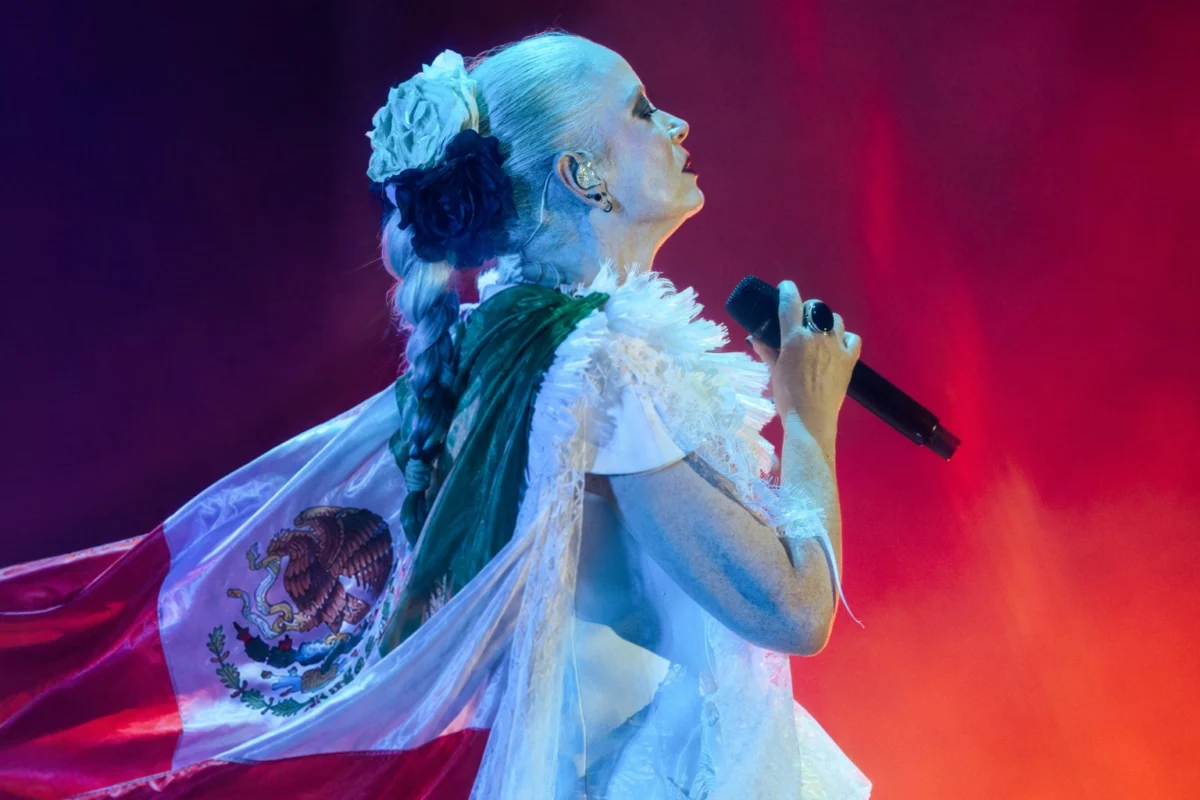
On November 14, 2026, the Zócalo in Mexico City—a venue steeped in centuries of history and political significance—witnessed a milestone in international musical performance. Shirley Manson, the iconic frontwoman of the Scottish-American alternative rock band Garbage, stepped onto the stage to headline a free concert that drew an estimated 90,000 fans. With this appearance, Manson secured her place in the venue’s lore, becoming the first non-Hispanic woman to headline a show at the historic public square, which serves as the heart of Mexico’s cultural and political life.
The performance served as the grand finale for the band’s 2026 tour, marking a celebratory conclusion to a three-decade-long relationship between the group and their Mexican audience. The event, facilitated by the Mexico City government and its local Department of Culture, underscored the enduring popularity of 1990s alternative rock within Latin American markets and highlighted the Zócalo’s status as one of the most prestigious stages in the world.
A Chronology of a Cultural Milestone
The path to this historic performance began long before the band arrived in Mexico City. Garbage, formed in Madison, Wisconsin, in 1993, has cultivated a dedicated following in Mexico since the release of their self-titled debut album in 1995. Over the last 30 years, the band has performed in venues across the country, building a rapport with local fans that culminated in this invitation to the Zócalo.
The concert itself was a meticulously curated affair. The setlist functioned as a retrospective of the band’s eight studio albums, beginning with the 1995 hit "No Future" and moving through a career-spanning catalog that included tracks from their 2025 release, Let All That We Imagine Be the Light.

The evening was defined by moments of cross-cultural collaboration. One of the most significant highlights was the band’s decision to perform "The World Is Not Enough," their signature contribution to the James Bond franchise, reimagined with a traditional mariachi arrangement. This stylistic choice, which integrated the quintessential sounds of Mexican folk music into a global pop-rock anthem, resonated deeply with the local crowd. Additionally, the band invited Paulina Villarreal—the internationally recognized drummer of the Mexican rock trio The Warning—to join them on stage for a rendition of the 1998 classic "I Think I’m Paranoid," bridging the generational gap between the grunge-era legends and the modern Mexican rock scene.
Contextualizing the Zócalo Venue
The Zócalo, or the Plaza de la Constitución, is the second-largest public square in the world, trailing only Tiananmen Square in Beijing. For international artists, a performance here is not merely a concert; it is a testament to an artist’s reach and their ability to resonate with the Mexican public on a massive scale.
In recent years, the Zócalo has evolved into a hub for major free-entry cultural events, hosting a diverse array of international icons. The list of previous performers is a "who’s who" of the global music industry, ranging from pop royalty like Shakira and Rosalía to rock legends such as Paul McCartney and Roger Waters. By joining this ranks, Garbage has cemented their status as a legacy act that commands significant cultural capital.
The logistical scale of such a performance is immense. City authorities reported an attendance of 90,000 for the Garbage show, though this figure sits within a broader context of massive Zócalo gatherings. To understand the scale of the Zócalo as a venue, one must look at the attendance records of recent years. In March 2026, Colombian superstar Shakira drew a record-breaking 400,000 people to the square. Other notable high-attendance events include the Argentine rock band Los Fabulosos Cadillacs, who drew 300,000 fans in June 2023, and the regional Mexican powerhouse Grupo Firme, which saw 280,000 attendees in September 2022. While Garbage’s audience was smaller than these record-setting crowds, the prestige of the performance remains high, representing a strategic focus on high-caliber international talent.
Artistic Homage and Public Perception
A poignant aspect of the performance was Shirley Manson’s visual presentation. Dressed in a white veil, adorned with a floral tricolor headdress, and sporting braided hair, Manson utilized her stage presence to pay tribute to Frida Kahlo, the seminal Mexican painter whose work has been a profound influence on the singer’s creative sensibilities.

In comments provided to Billboard Español prior to the show, Manson expressed the emotional weight of the performance. "It’s one of the biggest honors of our entire career, and the whole band is very excited," she stated. "Really, we’re all really emotional, and we’re so proud to be here tonight. It’s a culmination of 30 years of coming to Mexico and playing in this amazing city."
The sentiment was echoed by the band’s instrumentalists—Butch Vig, Duke Erikson, and Steve Marker—alongside guest bassist Nicole Fiorentino. The band’s performance of The Cure’s "Lovesong" further illustrated their intent to honor their influences while acknowledging the deep musical literacy of their Mexican audience.
The Broader Implications for Global Touring
The success of the Garbage concert at the Zócalo offers several insights into the current state of global touring. Firstly, it highlights the importance of localized engagement. By incorporating mariachi arrangements and inviting local guest artists, international acts can transform a standard touring set into a culturally significant event that fosters deeper loyalty among the local fanbase.
Secondly, the event demonstrates the effectiveness of government-supported cultural programming. By organizing these high-profile free concerts, the Mexico City government effectively stimulates tourism and fosters public engagement with global art. The partnership between the city’s Department of Culture and internationally recognized bands provides a template for how major metropolitan centers can utilize public space to create unique, non-commercialized experiences.
From a music industry perspective, the inclusion of Garbage in the list of Zócalo headliners serves to validate the "legacy act" market in Latin America. As international audiences become increasingly fragmented, the ability of artists like Manson to draw massive, multi-generational crowds in major foreign capitals confirms that the appeal of 1990s and 2000s alternative rock remains robust.

Looking Toward the Future
As the band concludes its 2026 touring cycle, the memory of the Zócalo performance will likely serve as a focal point for their career trajectory. For Shirley Manson, the event marks a professional zenith, reinforcing her position as a pioneering female voice in the rock industry. The historic nature of her performance—breaking the barrier as the first non-Hispanic woman to take the stage at this specific venue—is an achievement that will be cited in future discussions regarding gender representation in global music.
The Zócalo, meanwhile, continues to solidify its reputation as a democratic space for music. By welcoming artists from across the globe and facilitating collaborations between international stars and local talents, the venue remains a vital link between Mexico and the international artistic community.
In the final assessment, the performance was more than just a concert; it was an act of cultural exchange. By blending their own industrial-rock aesthetic with the traditions of their host city, Garbage demonstrated the power of music to transcend borders and build lasting connections. As the echoes of the show fade, the event remains a case study in how international artists can engage meaningfully with the history and culture of the cities they visit, ultimately turning a standard tour stop into an enduring piece of musical history.