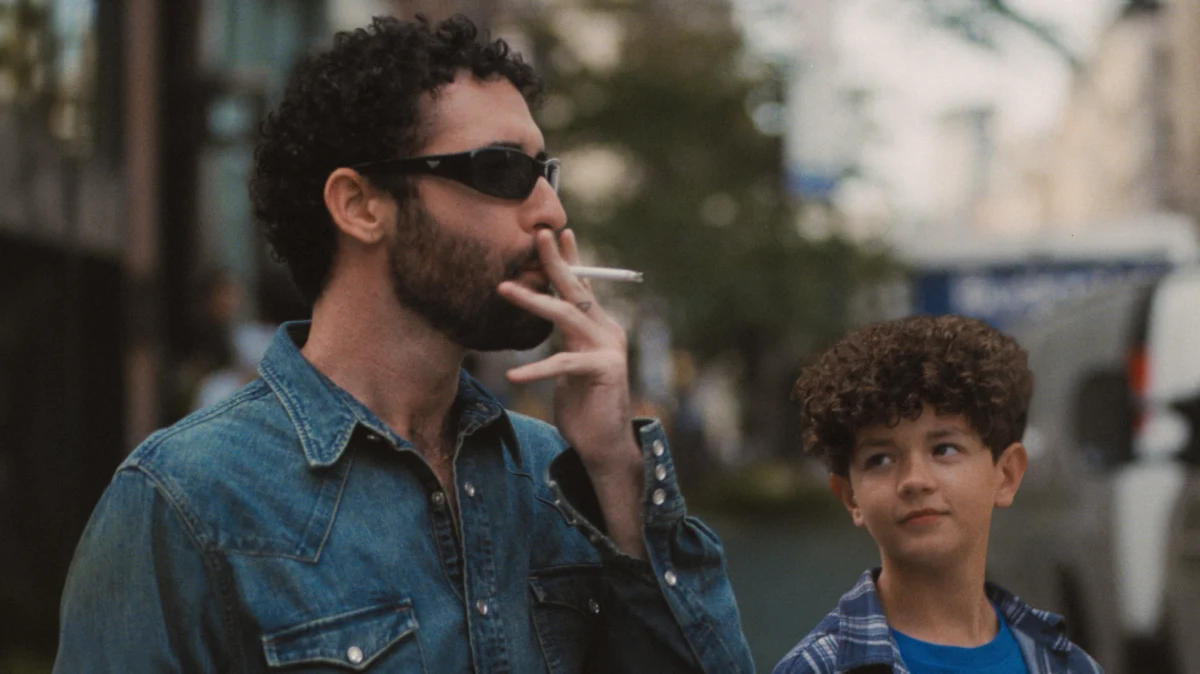
The intersection of modern queer culture, the endless pursuit of hedonistic release, and the sobering realities of unplanned parenthood take center stage in Club Kid, the ebullient and emotionally resonant feature film debut from writer, director, and star Jordan Firstman. Premiering to intense industry discussions and polarizing audience reactions, the film uses a deceptively traditional narrative framework to interrogate a much larger, systemic cultural phenomenon: the relentless, six-decade-long evolution of Western party culture.
At its narrative core, Club Kid follows Peter, played with chaotic charm and vulnerability by Firstman. Peter is a fixture of the Brooklyn nightlife scene, a downtown-style party promoter whose existence is defined by unhinged hedonism, 4:00 a.m. club bacchanals, and a deliberate refusal to embrace traditional maturity. His world is upended when he learns he has a nine-year-old son, Arlo, portrayed with sweet earnestness by Reggie Absolom. Arlo was conceived years prior during a random three-way sexual encounter at one of Peter’s underground events. Following the sudden suicide of Arlo’s mother in London, the child is sent to New York under the care of a chaperone, leaving Peter with a legal and moral responsibility he never sought and initially lacks the capacity to manage.
As Peter and Arlo navigate their initial awkwardness, the film traces a familiar trajectory of reluctant domesticity, drawing inevitable narrative comparisons to cinematic touchstones like About a Boy and Big Daddy. Yet, to dismiss Club Kid as a mere formulaic comedy-drama about a man-child learning the value of fatherhood is to overlook the sophisticated thematic ambitions driving Firstman’s cinematic vision.
Chronology and Context: The Evolution of Modern Party Culture
To fully appreciate the scope of Club Kid, film historians and cultural critics must examine the historical lineage it interrogates. Since the late 1960s, the Western world has witnessed the normalization of an unceasing, cyclical party culture. From the underground gay liberation discotheques of early 1970s New York—which laid the foundational blueprint for modern club music and safe spaces—to the predatory frat-house benders of the late 1970s, party culture has continuously morphed.
The chronology of this collective revelry spans decades and subcultures:
- The 1970s: The birth of disco and underground gay club circuits as essential tools for queer liberation, community building, and political defiance.
- The 1980s: The rise of industrial dance venues, the extravagant countercultural haven of Studio 54, and the simultaneous shadow of the HIV/AIDS epidemic that fundamentally altered queer nightlife.
- The 1990s: The global explosion of electronic dance music, warehouse raves, and youth-driven countercultures.
- The 2000s and Beyond: The commercialization of suburban saturnalia, modern music festivals, and contemporary underground spaces like Basement, alongside hyper-mediated depictions of hedonism in media properties such as Jersey Shore.
Firstman places his audience directly inside this continuum. The club sequences in Club Kid are rendered with a fervor, tumult, and lived-in authenticity that takes the viewer’s breath away. Through meticulously staged scenes of shade-throwing nightblooms, cocaine and ketamine binges, and gender-flipping transgression, the film captures the cathartic rush of drugged-out insolence and heightened erotic excitement. Firstman honors the historical truth that for marginalized communities, the party scene has long served as a core expression of freedom and sanctuary.
However, Firstman’s artistic achievement lies in his refusal to merely romanticize this lifestyle. Through Peter’s trajectory, the film asks a profound and uncomfortable question: When does the pursuit of liberation mutate into an escape from accountability?
The Backlash and Cultural Debate
Upon its release, Club Kid sparked a fierce debate among critics, queer audiences, and cultural commentators. A vocal faction of detractors has levied harsh criticisms against the film, branding it "conservative" or puritanical. These critics argue that a narrative in which a queer man abandons his personal decadence and drug-fueled autonomy to embrace the traditional call of family plays into age-old, regressive tropes reminiscent of mid-century respectability politics. Some detractors have gone so far as to label it a story that conservative figures like Nancy Reagan might champion.
Industry analysts and defenders of the film, however, argue that this interpretation fundamentally misreads Firstman’s intent. Having emerged directly from the underground scene he depicts, Firstman does not approach his subject matter with moralistic condemnation or conservative judgment. Instead, he captures the genuine vibrancy, communal warmth, and therapeutic release of party culture, while simultaneously interrogating its psychological underpinnings.
"The criticism misses the nuance of what the film is actually achieving," notes a prominent film programmer familiar with contemporary queer cinema. "Firstman isn’t saying that queer people shouldn’t party or that liberation is inherently flawed. He is asking us to look at the seduction of getting high on oneself—the ego-driven isolation that can hide beneath the guise of community."
Supporting Data and Sociological Implications
Sociological data on modern nightlife and substance use contextualize the themes raised in Club Kid. According to recent public health studies on urban nightlife economies, post-pandemic engagement in high-intensity social spaces has surged, accompanied by a rising cultural conversation regarding burnout, mental health, and the limits of escapism. While underground clubs remain vital sanctuaries for self-expression, mental health professionals increasingly note a generational shift toward wellness, emotional sobriety, and a re-evaluation of long-term lifestyle sustainability among adults moving past their twenties and thirties.
Club Kid taps directly into this zeitgeist. The film posits that while the underground party culture was born out of political necessity and communal survival, its modern iteration frequently leans into a perpetual loop of physical and spiritual abandon. The underlying seduction of this lifestyle is not merely the music or the chemical enhancements, but the intoxicating allure of self-absorption.
By juxtaposing Peter’s chaotic, insular world with the unconditional, grounding presence of a nine-year-old child, Firstman strips away the glamorous artifice of nightlife to examine what remains when the music finally stops.
Broader Impact and Industry Reception
As Club Kid continues its festival and theatrical rollout, its broader impact on independent cinema and queer storytelling is becoming clear. By refusing to paint queer characters as universally virtuous or entirely tragic, Firstman contributes to a maturing cinematic landscape that permits complex, flawed protagonists to exist without moral safety nets.
The film does not suggest that the party must end forever, nor does it advocate for a reactionary retreat into domestic conformity. Instead, Club Kid issues a subtle, provocative challenge to contemporary culture: to stop viewing endless revelry as an unexamined form of salvation, and to summon the courage to ask what the relentless pursuit of escape is truly doing to the human spirit.