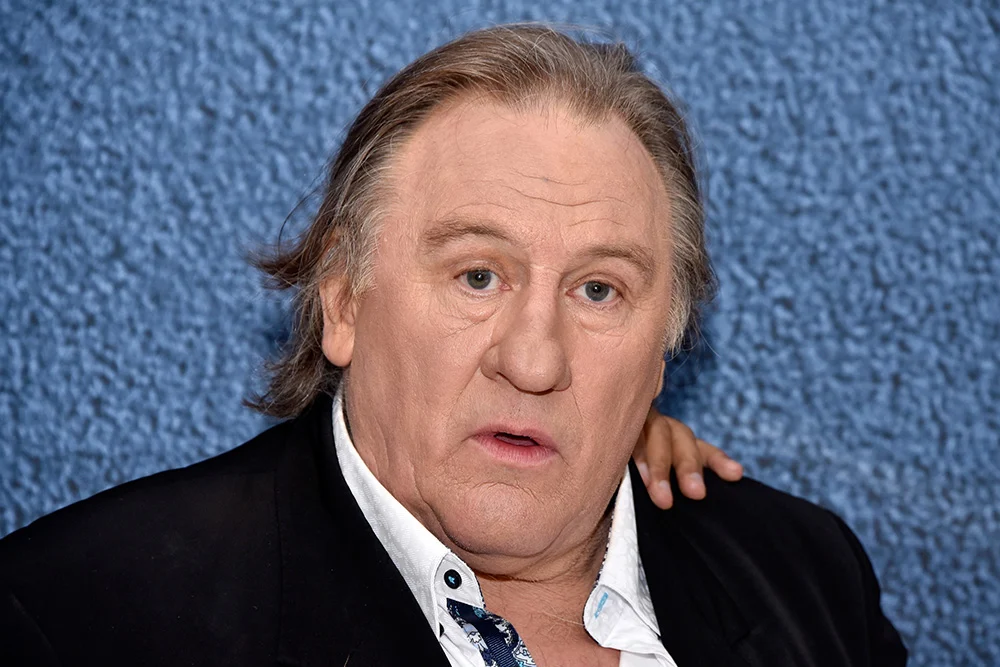
PARIS — French cinema icon Gérard Depardieu is set to stand trial on criminal rape charges after the Paris Court of Appeal formally rejected a final legal challenge mounted by his defense team. The decision marks a critical legal juncture in a multi-year saga that has profoundly shaken the French film industry, known globally as le cinéma français, and reignited intense national debates surrounding accountability, power dynamics, and the MeToo movement within European artistic circles.
According to rulings delivered by the Paris appellate court, the criminal proceedings will proceed regarding allegations brought forward by actress Charlotte Arnould. Arnould first lodged a formal complaint against the veteran actor in 2018, accusing him of subjecting her to two separate instances of sexual violence at his private residence in Paris during the month of August that same year. Depardieu, who is now 77 years old, was formally indicted in December 2020. Throughout the preliminary investigations and subsequent procedural battles, the actor has consistently maintained his innocence, denying any and all wrongdoing through his legal representatives.
Despite the rejection of their broader appeal to block the proceedings entirely, the defense secured a partial limitation: the court ruled that Depardieu will stand trial exclusively for the first alleged assault, while the second count cited in the initial complaint has been dismissed. If the court ultimately convicts the acclaimed actor on the remaining charge, he faces a potential prison sentence ranging from 15 to 20 years under French penal law.
The latest courtroom development arrives closely on the heels of another major legal milestone involving the actor. Just ten days prior to the appellate court’s announcement, Depardieu officially withdrew a separate legal challenge contesting a prior criminal conviction. Last year, a French court found him guilty of sexual assault stemming from incidents involving two women on the production set of the 2021 feature film Les Volets Verts (The Green Shutters), directed by Jean Becker. For those offenses, Depardieu was handed an 18-month suspended prison sentence.
In a surprising shift of tone following the withdrawal of that appeal, Depardieu issued a formal statement to the prominent French daily newspaper Le Monde. In his remarks, the actor acknowledged the judicial outcome, stating, “Justice has spoken. I have been found guilty. I accept this and take responsibility for this conviction.” He further extended his “deep and sincere apologies” to any individuals who “may have suffered as a result” of his conduct.
Compounding his mounting legal pressures, the actor’s name surfaced in yet another ongoing investigation. Last week, legal filings revealed a fresh criminal complaint containing further allegations of rape and sexual assault against Depardieu. This new complaint pertains to alleged incidents occurring during the 2018 production of director Guillaume Nicloux’s film Thalasso, which notably co-starred French author Michel Houellebecq. While the complaint was formally filed with authorities in May 2025—shortly after the conclusion of Depardieu’s initial sexual assault trial—representatives for the actor stated to French radio station RTL that they had been entirely unaware of its existence until recently.
Chronology of the Legal Proceedings
To fully understand the gravity of the current judicial landscape surrounding Gérard Depardieu, it is essential to trace the timeline of events, investigations, and public accusations that have accumulated over the past several years.
August 2018: Actress Charlotte Arnould visits Depardieu’s private mansion in Paris. She later alleges that she was subjected to two separate incidents of rape during this visit.
September 2018: Arnould formally reports the incidents to police in the southeastern French town of Lambesc. The case is subsequently transferred to Parisian prosecutors due to jurisdiction.
2019: Initial investigations by Parisian prosecutors stall, leading to the temporary dismissal of the case due to a lack of conclusive forensic or documentary evidence at that early stage.
December 2020: Bolstered by renewed legal arguments and civil party constitution by Arnould, investigative judges formally indict Depardieu on preliminary charges of rape and sexual assault.
2021–2023: Multiple women come forward in journalistic investigations, publishing accounts of alleged inappropriate behavior, verbal harassment, and sexual misconduct spanning decades across various film sets. Depardieu and his supporters vehemently deny these journalistic claims, releasing open letters defending his legacy as a titan of French culture.
2024: Depardieu stands trial for the sexual assault allegations involving two crew members on the set of Les Volets Verts. The court delivers a guilty verdict, imposing an 18-month suspended prison sentence.
Late 2024 to 2025: Depardieu’s defense team files appeals to block the impending trial concerning the 2018 allegations brought by Charlotte Arnould. Meanwhile, additional complaints—including the May 2025 filing concerning the set of Thalasso—are quietly registered by prosecutors.
Late November 2026: The Paris Court of Appeal officially rejects Depardieu’s primary challenge, clearing the path for the long-awaited criminal rape trial, even as the actor drops his remaining challenges regarding his prior suspended sentence conviction.
Background Context and the Cultural Impact in France
Gérard Depardieu is widely regarded as one of the most prolific and celebrated actors in the history of French cinema. With a career spanning more than five decades, he has appeared in over 200 films and television productions, earning international acclaim for iconic roles in masterpieces such as Cyrano de Bergerac (1990), Green Card (1990), Jean de Florette (1986), and the cinematic adaptations of Asterix and Obelix. His deep baritone voice, rugged persona, and immense emotional range made him a living monument of French artistic identity.
However, the accumulation of judicial inquiries has transformed his cultural legacy into a major flashpoint within French society. For years, the French cultural establishment maintained a complex relationship with allegations against powerful figures, often balancing a traditional reverence for artistic genius against modern standards of personal conduct. Depardieu’s defenders, including several high-profile figures from the artistic community, have previously argued that the actor has been subjected to a premature trial by media, emphasizing the principle of the presumption of innocence.
Conversely, advocacy groups, feminist organizations, and survivors’ networks have pointed to the cascading investigations as definitive proof of systemic impunity within the entertainment industry. The willingness of multiple complainants to step forward, despite the immense social and professional pressures associated with challenging a national icon, has underscored the growing momentum of the MeToo movement—frequently referred to in France as #MeTooThéâtre and #MeTooCinema—within a traditionally resistant cultural sphere.
Broader Implications for the French Judiciary and Film Industry
As the case moves toward a definitive criminal trial, the legal and professional implications for Gérard Depardieu are profound. At 77 years old, a conviction carrying a potential 15-to-20-year prison sentence would not only effectively terminate his professional career but would also represent a historic high-water mark for French courts in prosecuting high-profile figures within the arts.
Legal analysts note that the decision by the Paris Court of Appeal to narrow the scope of the trial—focusing solely on the first alleged assault while dismissing the second—demonstrates a rigorous evidentiary review by the appellate judges. This procedural filtering ensures that the proceedings will hinge strictly on verifiable testimonies and corroborating evidence tied to the specific parameters of that initial encounter.
Furthermore, the simultaneous unfolding of separate legal challenges, suspended sentences, and newly surfaced investigative complaints ensures that Depardieu will remain under intense public and judicial scrutiny for the foreseeable future. As television networks, streaming platforms, and international distributors increasingly distance themselves from his catalog of recent works, the impending trial stands as a defining test of how contemporary French institutions handle accountability at the highest echelons of cultural power.
The Paris tribunal is expected to set a definitive date for the commencement of the criminal trial in the coming months, where both the defense and civil parties will present their arguments before a panel of judges, setting the stage for what promises to be one of the most closely watched legal proceedings in modern French history.