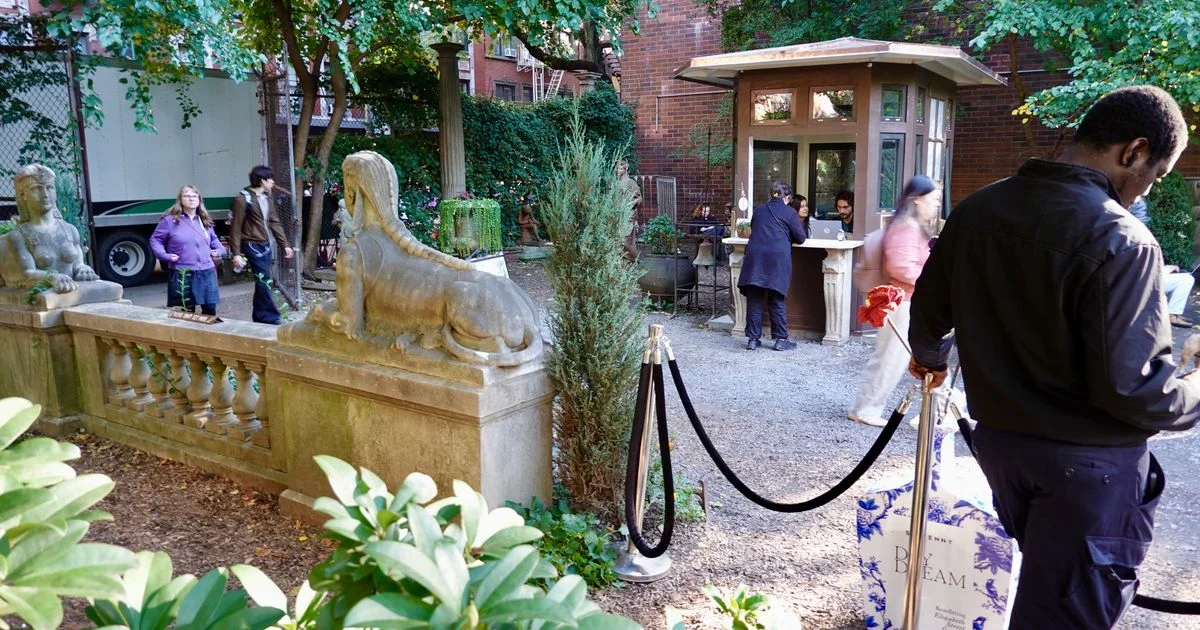
On a crisp, clear autumn afternoon in the heart of Manhattan’s Lower East Side, the public was barred from entering a designated city park. Five security guards dressed in stark black suits stood at attention along a velvet rope, cordoning off a prized green space from the very neighborhood it was meant to serve. Inside this exclusive perimeter, a curated crowd of fashion writers, interior design influencers, and home-decor media figures sipped mocktails and rested against the plush cushions of high-end sectional sofas.
This was not a community gathering or a public workshop, but a heavily orchestrated marketing event for Sixpenny, a direct-to-consumer furniture brand whose viral sectional sofas have saturated social media feeds. CEO Robert Natale, sporting Gucci loafers and a white double-breasted jacket, navigated the crowd. He admitted to renting the municipal space because he used to eat his lunch there and felt the lush botanical setting aligned with his brand’s aesthetic. Yet, this high-profile brand activation has ignited a fierce public debate, laying bare the ongoing tensions between municipal agreements, neighborhood preservation, and the commercialization of newly won public green spaces in New York City.
The controversial event highlights a widening chasm between the legal status of the Elizabeth Street Garden and its day-to-day reality. Just a year after community advocates, preservationists, and local stakeholders celebrated what they thought was a definitive victory to secure the property as public parkland, critics argue that the garden is operating more like a private club for the affluent than an accessible urban oasis.
A Hard-Fought Victory and the Compromise of Parkland Status
To understand the friction surrounding the Elizabeth Street Garden, one must examine the decade-long war of attrition that preceded its current status. For over ten years, neighborhood activists locked horns with city officials and housing advocates over a municipal plan to demolish the lush, sculpture-filled lot to clear the way for Haven Green, a proposed 123-unit affordable housing development targeted at low-income seniors.
Proponents of the housing project argued that New York City was in the throes of a historic housing crisis, making the vacant city-owned lot between Prince and Spring Streets an imperative site for deeply subsidized homes. Conversely, the garden’s defenders—organized under the banner of Elizabeth Street Garden, Inc.—fought tooth and nail to preserve the nearly one-acre green space. They championed its rare botanical collection, its historic architectural elements, and its function as an irreplaceable sanctuary in one of Manhattan’s most densely populated and park-poor neighborhoods.
The stalemate finally cracked late last year in a dramatic eleventh-hour maneuver by then-Mayor Eric Adams. Seeking a compromise to end the protracted legal battles, the city administration designated the lot as permanent parkland. In December, a formal license agreement was executed between the New York City Department of Parks and Recreation and Elizabeth Street Garden, Inc., granting the nonprofit a ten-year license to maintain and operate the space.
Under the terms of the operational agreement, the nonprofit assumed responsibility for the garden’s upkeep under straightforward rules designed to ensure public transparency and equitable access. The contract stipulated that the organization must maintain operating hours consistent with standard city parks, submit advance plans for any special events to the Parks Department for formal review and approval, and file monthly financial disclosures detailing all revenues and expenditures.
However, the Sixpenny marketing event starkly bypassed these protocols. City officials confirmed they had received no prior notification regarding the furniture showcase, and they were unable to disclose how much the company paid to rent the municipal grounds. Furthermore, the nonprofit reportedly failed to submit its required operational reports to the city for multiple months, obscuring the financial footprint of both the corporate furniture installation and an earlier carnival-themed fundraising event held weeks prior.
Silence from Leadership and Shifting Park Hours
As scrutiny mounts, key figures at Elizabeth Street Garden, Inc., have remained conspicuously silent. Neither board chair Renee Green nor executive director Joseph Reiver responded to repeated inquiries regarding the unpermitted event or the missing financial disclosures. Norman Siegel, the prominent civil rights attorney representing the nonprofit, also declined to comment by press time.
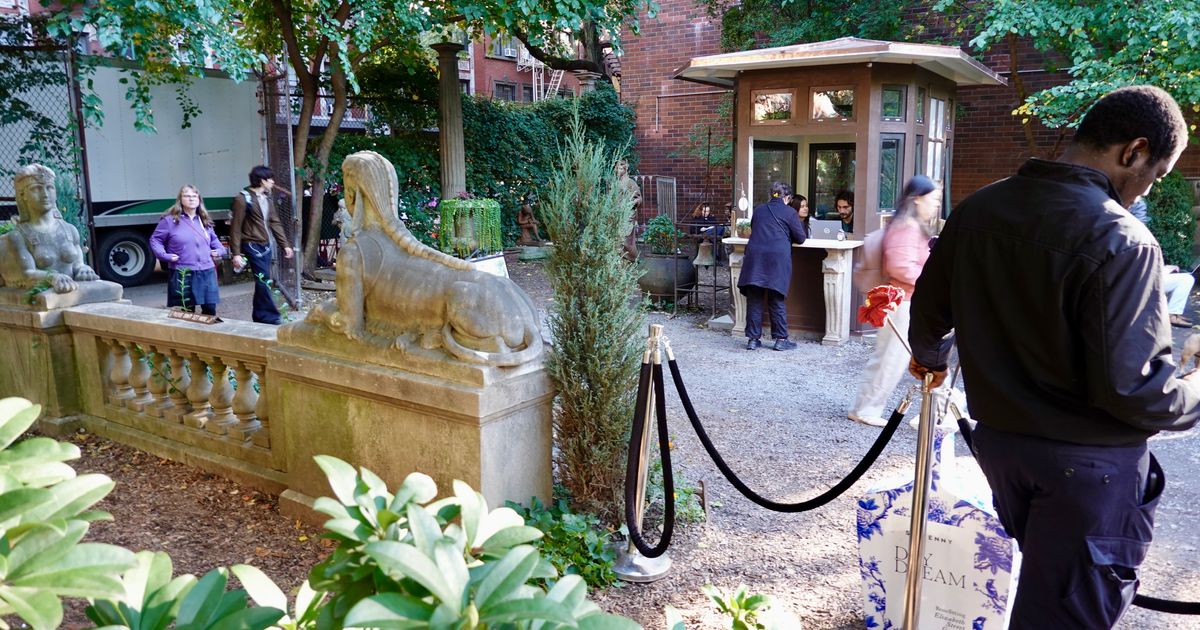
This lack of transparency is particularly jarring given the organization’s explicit legal acknowledgments. In a sworn affidavit submitted to the New York State Supreme Court earlier in the year, Reiver affirmed that his organization had entered into the binding license agreement with the Parks Department and was actively operating the space as an official city park.
Compounding public frustration is the issue of restricted accessibility. While standard municipal parks and playgrounds in the surrounding district—such as the nearby playground around the corner and the expansive Sara D. Roosevelt Park—maintain broad operational hours, the Elizabeth Street Garden operates under severely constrained winter hours. The gates are routinely locked by mid-afternoon, opening only from 10 a.m. to 4 p.m. Critics point out that these limited windows effectively restrict access to remote workers, freelancers with flexible schedules, or attendees of leisurely mid-day brunches, while locking out traditional working-class residents, school children, and families.
The Broader Fallout: Housing Advocates and Financial Pressures
The operational missteps at the garden have drawn sharp rebukes from housing advocacy groups who viewed the site as a crucial battleground for economic equity.
Annemarie Gray, executive director of Open New York, did not mince words when addressing the fallout of the park agreement. "New York gave up 123 affordable homes for low-income seniors on this site in exchange for a promise that the garden would operate as a public park," Gray said in a public statement. "Less than a year into that agreement, the group running it has reportedly failed to file its required financial reports and closed off part of the space during public hours so a luxury furniture brand could stage a photo shoot for influencers. Seniors on fixed incomes lost homes here so that one of the wealthiest neighborhoods in Manhattan could keep a garden run by and for the wealthy people who live around it."
At the same time, financial records reveal that Elizabeth Street Garden, Inc., faces significant monetary headwinds. Operating a historic green space without direct public subsidies is a costly endeavor, and public tax filings indicate the charity has operated at a deficit, posting losses of $52,955 and $115,528 in consecutive recent fiscal years.
Adding to the fiscal pressure are legacy debts stemming from the years of litigation. A state appellate panel upheld a ruling that the entity formerly operating the space owed back rent to the city dating back to 2018, totaling roughly $95,000 as of 2023, with an accumulating 9 percent annual interest rate. While city officials previously suggested that the back rent was under discussion during the negotiation of the parkland deal, it remains legally ambiguous whether the current licensee bears responsibility for liabilities incurred by its predecessor entity, Elizabeth Street, Inc., which was founded by the late gallery owner Allan Reiver.
Without liquid funds, the charity’s balance sheet remains heavily reliant on its reported $1 million in assets—predominantly historical statues, architectural fragments, and artistic installations donated over the decades, items that supporters view as untouchable cultural artifacts rather than sellable capital.
Public Sentiment and the Future of the Space
Inside the neighborhood, public sentiment regarding the garden’s commercial pivot is sharply divided. For casual visitors accustomed to enjoying the tranquil greenery, unexpected closures for corporate events can be jarring. Passersby drawn to the gates by the promise of public open space have expressed frustration upon encountering velvet ropes and private security guards protecting luxury daybeds that retail for upwards of $4,000.
Yet, other local residents take a more pragmatic view of the garden’s financial survival. Some frequent visitors argue that if hosting occasional high-end brand activations or ticketed fundraisers is the necessary price to keep the gates open, pay maintenance costs, and preserve the botanical sanctuary from financial ruin, it is a compromise worth tolerating. Some have even mused that a privatized, club-like model with an entry fee would guarantee the preservation of the space against the relentless pressures of urban development.
As the Elizabeth Street Garden navigates its first full year as official city parkland, the unfolding controversy serves as a cautionary tale about the complexities of urban stewardship. The city’s arrangement with the nonprofit was intended to settle a bitter neighborhood war and preserve a treasured urban sanctuary. However, unless city regulators enforce stricter oversight and the garden’s leadership embraces true public accountability, the space risks alienating the very public it was preserved to serve, transforming a hard-won victory for green space into a symbol of urban exclusivity.