The third season of the Disney+ fantasy series Percy Jackson and the Olympians introduces a profound shift in narrative scope, character development, and emotional weight, anchoring much of its dramatic tension on seventeen-year-old star Leah Sava Jeffries. Stepping into the pivotal role of Annabeth Chase, Jeffries carries a literal and figurative burden in the latest episodes based on The Titan’s Curse, the third installment of Rick Riordan’s immensely popular young adult book series. Unlike previous seasons, which largely followed a tight-knit trio of demigods on unified quests across the United States, Season 3 fractures the group dynamic immediately, thrusting Jeffries’ character into isolation, high-stakes captivity, and grueling physical tests.
For Jeffries, inhabiting Annabeth during this transitional phase of the adaptation has meant navigating entirely new creative territory. Because the early 2010 film adaptations of the franchise focused exclusively on the first two novels, The Titan’s Curse has never before been realized in live-action. This presents both a unique opportunity and a considerable challenge for the young actor, who balances faithfulness to Riordan’s extensive source material with her own distinct artistic choices. As the series continues to expand its audience—capturing both lifelong devotees of the 2005 novels and a new generation of viewers who discovered the franchise through the streaming adaptation—the production faces heightened expectations to deliver visual spectacle alongside emotional resonance.
Breaking New Ground: Adapting The Titan’s Curse for Live-Action
The narrative trajectory of Season 3 diverges significantly from the foundational structure established in Seasons 1 and 2. In the season premiere, Annabeth is abducted by a manticore—a terrifying mythological hybrid possessing the features of a human, a lion, and a scorpion—and separated from Percy Jackson, portrayed by Walker Scobell, and Grover Underwood, played by Aryan Simhadri. This separation forces Annabeth into an entirely different narrative sphere, where her primary scene partners shift to Charlie Bushnell, who plays the conflicted Luke Castellan, and Dafne Keen, who portrays the goddess Artemis.
This structural reconfiguration allows the television adaptation to explore the psychological depths of its characters independently. For Jeffries, stepping away from her primary co-stars required a recalibration of her performance style. Rather than relying on established chemistry with Scobell and Simhadri, she had to build fresh dynamic tension with Bushnell and Keen. The result is a more mature, introspective portrayal of Annabeth, whose loyalty, intellect, and resilience are tested far beyond the physical boundaries of Camp Half-Blood.

Industry analysts and television critics have noted that adapting serialized fantasy novels for streaming platforms requires a delicate balance between respecting established lore and introducing cinematic innovations. By choosing to adapt The Titan’s Curse, the creative team behind Percy Jackson and the Olympians has signaled a willingness to embrace darker, more complex mythological themes, including mortality, sacrifice, and the corrupting nature of divine power.
Behind the Scenes: Physicality, Stunts, and Creative Collaboration
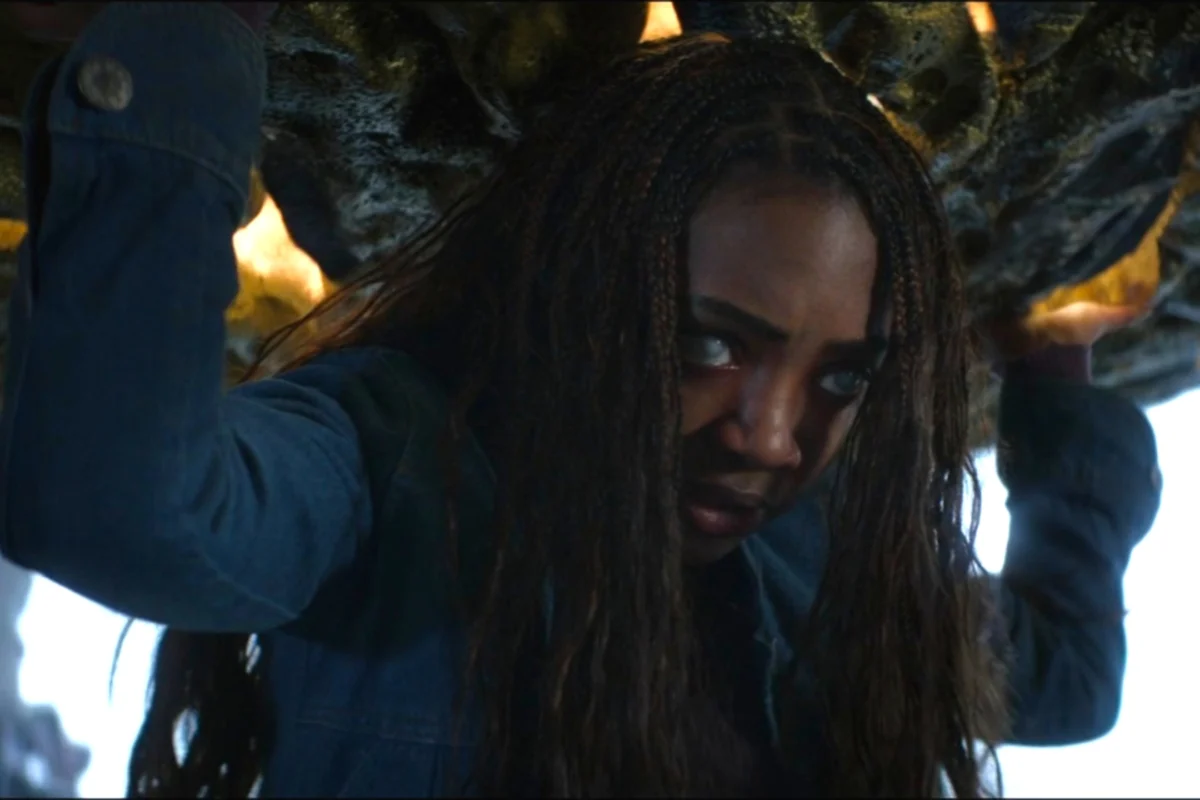
Bringing the trials of Annabeth Chase to the screen demanded rigorous physical preparation and creative problem-solving from Jeffries. One of the season’s most striking visual and narrative motifs involves the ancient Greek punishment of holding up the celestial sphere—a burden traditionally borne by the Titan Atlas. In Episode 2, Annabeth discovers that Luke has been subjected to this excruciating torment and bravely volunteers to take the weight upon her own shoulders.
The subsequent scene required a visceral performance from Jeffries, including a guttural scream of exertion. Recalling the recording process, Jeffries noted the technical quirks of television production, observing how her gritty, deep on-set delivery translated into a higher-pitched sound during post-production audio mixing. To achieve consistent and convincing expressions of physical strain, Jeffries developed a specialized pre-scene physical routine, utilizing core engagement and deliberate vocal warm-ups to project authentic exhaustion on camera.
Furthermore, Jeffries contributed directly to the visual language of the series. When a character bears the weight of the sky in Riordan’s universe, an eerie, gray haze overtakes their eyes. It was Jeffries herself who pitched the use of specialized color contacts to writer Daphne Olive, arguing that the visual obstruction would physically ground the performance and emphasize the nightmarish, otherworldly strain of the burden. After review, production leadership approved the concept, adding a tangible layer of realism to the fantastical sequence.
The physical demands continued into Episode 3 during a high-stakes dramatic sequence where Annabeth experiences a terrifying vision of herself clinging to a cliffside while holding onto Percy and Thalia, portrayed by Tamara Smart. Filming the sequence required Jeffries to be suspended on safety wires over a practical set piece while holding heavy weights instead of her actual co-stars. Navigating the absence of physical scene partners while maintaining raw emotional vulnerability underscored the technical complexities inherent in modern fantasy television production.

Interpersonal Dynamics and Mentorship on Set
Despite the heavy subject matter, the production environment fostered strong mentorship and collaborative camaraderie among the cast. Jeffries has spoken candidly about the positive influence of her twenty-two-year-old co-star, Charlie Bushnell. Working closely with Bushnell through intense fight choreography and emotional sequences in Episodes 2 and 3, Jeffries observed his professionalism, steady confidence, and deep dedication to his craft. She credited his steady demeanor with helping her manage the external pressures and online scrutiny that frequently accompany high-profile franchise adaptations.
Similarly, Jeffries and Walker Scobell approached their limited shared screen time this season with an instinctive, improvisational philosophy. Having built a strong rapport across the first two seasons, the actors deliberately chose to forgo exhaustive discussions prior to filming certain scenes, preferring to trust their mutual instincts when the cameras rolled and refine their performances collaboratively between takes. This organic approach has added a layer of authentic spontaneity to the evolving relationship between Percy and Annabeth.
Future Implications and Fan Expectations
As Season 3 progresses toward its latter half, the stakes for the characters and the overarching narrative continue to escalate. Jeffries has teased standout moments in upcoming episodes, highlighting extensive improvisation during her scenes with Bushnell in Episode 5 and promising a major narrative payoff in the season finale that directly answers long-standing requests from the literary fanbase.
The success of Percy Jackson and the Olympians on Disney+ underscores the enduring viability of well-executed young adult adaptations in the streaming era. By maintaining fidelity to the core emotional truths of Rick Riordan’s novels while empowering its young cast to contribute creative solutions to physical and dramatic challenges, the series has solidified its place as a cornerstone of contemporary family fantasy programming. As Leah Sava Jeffries continues to chart Annabeth Chase’s evolution from a tactical strategist into a battle-tested hero of mythic proportions, the production demonstrates that thoughtful casting, rigorous preparation, and creative collaboration remain vital to translating legendary tales for modern audiences.