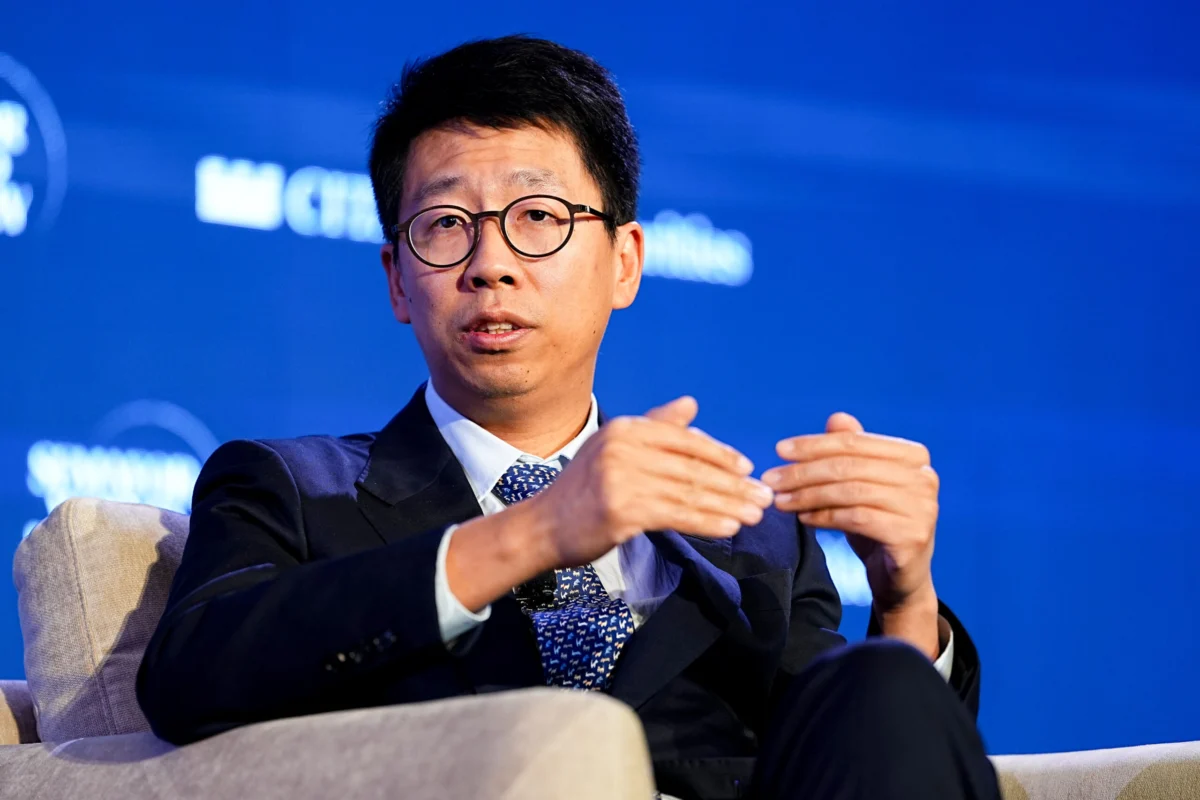
The stark opulence of Michael Moritz’s San Francisco residence, a dwelling offering panoramic vistas of the Golden Gate Bridge, served as the unlikely stage for a pivotal moment in the trajectory of global fintech. It was here, amidst an atmosphere of immense power and influence, that Jack Zhang, then 34 years old and three and a half years into building his startup, Airwallex, was presented with an offer that would test the very foundations of his entrepreneurial vision. Moritz, a legendary figure at Sequoia Capital, one of Silicon Valley’s most esteemed venture capital firms, had extended an invitation not for a casual discussion, but to persuade Zhang to sell his company. The suitor? Stripe, the undisputed king of online payment processing, helmed by the equally formidable Patrick Collison. The proposed acquisition price: a staggering $1.2 billion.
At that juncture, Airwallex, a company born in Melbourne, Australia, was generating approximately $2 million in annualized revenue. The arithmetic presented by Moritz was, on its face, nearly irresistible. A revenue multiple approaching an astonishing 600 times underscored the immense perceived value Stripe placed on Airwallex. Moritz, renowned for his prescient investments and astute understanding of market dynamics, framed the acquisition as a strategic imperative, a move that would "compound" into something extraordinary, leveraging Collison’s proven track record as a generational founder. Zhang listened, the weight of the offer palpable. He spent two weeks in a state of profound introspection, walking the streets of San Francisco, wrestling with a decision that would define his company’s future. He even, at one point, verbally agreed to the deal.
Then, he flew nearly 8,000 miles back to his home base, the decision not yet final.
The Genesis of Conviction: A Founder’s Unwavering Vision
Speaking from overseas earlier this week, Zhang articulated the internal turmoil and the eventual clarity that guided his ultimate rejection of Stripe’s lucrative overture. "I really went deep on what motivates me to build Airwallex," he explained. "I was three and a half years into the business. The business was growing 100 times in 2018. And I only just sort of tasted what it [was like] to be an entrepreneur. And that’s what I’d been dreaming about." This nascent taste of entrepreneurial success, coupled with the exponential growth his company was experiencing, fueled a deeper commitment to the ambitious mission he had set out to achieve.
The internal dynamics of Airwallex also played a crucial role. Two of Zhang’s three co-founders had voted against the acquisition, providing a valuable counterpoint to Moritz’s persuasive argument. However, the most definitive signal, according to Zhang, emerged from a quiet moment of reflection in his own office. He gazed at the whiteboard, a canvas still adorned with the unfinished blueprint of Airwallex’s grand vision: to construct the foundational financial infrastructure that empowers any business to operate globally as if it were a local entity. This unfinished vision, stark and compelling, solidified his resolve.
The wisdom of that decision is now being validated by Airwallex’s impressive performance. The company currently boasts over $1.3 billion in annualized revenue, demonstrating a robust year-over-year growth rate of 85%. Its transaction volume is approaching an astounding $300 billion annually. Zhang readily acknowledges that this ascent has been anything but easy, but he posits that this very difficulty is integral to the company’s enduring strength and competitive advantage.
The "Path of Maximum Resistance": A Strategy Forged in Adversity
Zhang’s conviction is deeply rooted in his personal journey, a narrative shaped by resilience and a relentless drive to overcome obstacles. He grew up in Qingdao, a bustling port city in northeastern China. At the age of 15, he relocated to Melbourne, Australia, unaccompanied by his parents and with a rudimentary grasp of English. He lived with a host family, navigating the complexities of a new culture and educational system. The financial collapse of his family necessitated a period of intense personal sacrifice. To fund his computer science degree at the University of Melbourne, Zhang juggled four jobs, as reported by the Australian Financial Review. These included bartending, washing dishes, working overnight shifts at a petrol station, and even picking lemons on a farm during school holidays, an experience he has described as the most arduous of his life. Following his academic pursuits, he spent several years in the front office of an Australian investment bank, writing trading code. While financially rewarding, this role ultimately left him feeling a profound lack of deep fulfillment.
Before the inception of Airwallex, Zhang had already embarked on an entrepreneurial odyssey, launching approximately ten ventures. His earliest foray into business began at the tender age of 14 with the creation of a magazine. This was followed by ventures in real estate development, import-export operations involving Australian wine and olive oil destined for Asian markets, and reciprocal textile trade. He also ventured into the competitive food industry with a burger chain.
It was while managing a coffee shop in Melbourne that the core idea for Airwallex began to crystallize. His co-founder, Max Li, observed firsthand the inefficiencies and frustrations inherent in international payments. When attempting to pay coffee bean suppliers in Brazil, Indonesia, and Guatemala, Li witnessed payments frequently vanishing within correspondent banking systems. These funds were often flagged and frozen by intermediary American banks enforcing OFAC sanctions, sometimes reappearing weeks after their initial dispatch. "That pushed me to really look at how correspondent banking works," Zhang recounted, "how SWIFT works, and how we could build our own global money movement network."
This foundational concept – building a proprietary global money movement network – remains the bedrock of Airwallex’s strategy, albeit at a significantly scaled and sophisticated level. The company has meticulously pursued and acquired close to 90 financial licenses across 50 markets worldwide. Zhang estimates that Stripe possesses roughly half that number, at best. The process of obtaining these licenses has been extraordinarily time-consuming and complex. In Japan, for instance, securing the necessary approvals took a remarkable seven years. In certain emerging markets, Airwallex resorted to acquiring existing shell companies whose licenses were no longer being issued by central banks, and then subsequently rebuilding the underlying technology infrastructure from the ground up.
"You can’t really ‘vibe-code’ an integration with Mexico’s central bank," Zhang commented wryly, highlighting the tangible, often bureaucratic, nature of regulatory compliance. "We have to have a secure room – you have to do a biometric scan just to walk in to access the central bank integration."
The strategic imperative behind accumulating these extensive licenses extends far beyond mere regulatory compliance. In markets like Japan, while companies like Stripe and Square can process payments, they are mandated to immediately transfer funds to the merchant’s bank account. Airwallex, armed with its fund transfer operator license, possesses the unique ability to retain these funds within its own ecosystem. This capability empowers Airwallex to offer its customers the ability to issue bank accounts, create virtual cards, and facilitate spending without the funds ever leaving the platform.
The economic advantages derived from this model are substantial, particularly in the realm of foreign exchange. A U.S. merchant settling transactions in Australian dollars, for example, can circumvent the typical 2% to 3% conversion fee that processors like Stripe often impose when moving money back into U.S. dollars. Furthermore, these local balances can be strategically utilized to pay local vendors, manage payroll, and cover digital marketing expenses, all at competitive interbank rates. "You don’t really operate like a U.S. company anymore," Zhang asserted. "You operate like a company with entities around the world, but without needing to physically set up those entities."
This deliberate, methodical approach to building its infrastructure is encapsulated by Zhang’s oft-cited framework: the "path of maximum resistance." Each license acquired, each bank integration painstakingly established, and each local payment rail meticulously assembled has created formidable barriers to entry for competitors. "It took us six and a half years to get to $100 million in annual recurring revenue," Zhang stated. "But after that, it took just over three years to get to a billion."
The competitive logic, as Zhang articulates it, hinges on a fundamental distinction between owning infrastructure and merely utilizing someone else’s. When a company doesn’t control the end-to-end payment workflow, it faces limitations. If an issue arises, it cannot access the underlying data necessary to provide clear explanations to its customers. Similarly, it cannot seamlessly extend new products onto another provider’s existing stack. "Building on top of other infrastructure," he concluded, "is simply not scalable."
Evolving Competitive Landscape: From Separate Spheres to Direct Confrontation
For the majority of their existence, Airwallex and Stripe have largely operated in distinct geographical territories, catering to different customer segments. However, this dynamic is undergoing a significant shift. As Stripe increasingly penetrates international markets and Airwallex makes its initial strategic moves into the United States, the areas of overlap between the two companies are expanding.
Historically, Airwallex’s primary customer base has comprised finance departments in Australia and Southeast Asia, where the company has established a strong foothold. This typically includes finance directors and treasury teams, leading to a distinct sales motion compared to Stripe. Stripe’s customer acquisition has been largely driven by U.S. developers who often select it as the default starting point for new companies. In contrast, over 90% of Airwallex customers initially engage with a business account product, with payments and spend management functionalities following thereafter. Zhang notes that more than half of these customers utilize multiple Airwallex products.
Despite its impressive growth and strategic advantages, Airwallex faces considerable challenges. Perhaps the most significant is Stripe’s status as Silicon Valley’s darling, with its privately held shares having generated substantial wealth for numerous individuals across the tech industry. This translates into a significant brand recognition gap. Airwallex must embed itself not only within the considerations of finance teams but also within the minds of engineers and developers, ensuring that founders instinctively turn to its platform when launching new ventures. "Our brand is just not there yet," Zhang admitted. "That’s a harder competition to win."
Investor Dynamics and Valuation Disparities
This evolving competitive arena is being closely observed from various perspectives. Sequoia, through its China arm (which has since spun out and rebranded as Hongshan), was an early backer of Airwallex and remains one of its largest shareholders. Greenoaks Capital, another prominent investment firm, holds stakes in both Airwallex and Stripe, a situation Zhang dismisses as indicative of investors recognizing the vast potential of the global payments market.
The differing valuations between the two companies are a significant point of discussion. In February, Stripe was valued at $159 billion following a tender offer, marking a 74% increase from the previous year, after processing $1.9 trillion in total payment volume in 2025. Airwallex, which achieved an $8 billion valuation in December following a $330 million Series G funding round, is valued at approximately one-twentieth of Stripe’s valuation. However, Zhang argues that Stripe’s payment volume is only about six times that of Airwallex, not twenty times. With its 85% annual growth rate and projections of reaching $2 billion in revenue within the next year, Airwallex is demonstrably closing the revenue gap at a pace that outstrips the disparity in valuations.
The question of whether the broader market will eventually recognize Airwallex’s burgeoning potential remains to be seen. An initial public offering (IPO), which Zhang anticipates is at least three to five years away, would undoubtedly bring this into sharp focus.
The Road Ahead: Ambitious Targets and AI-Driven Innovation
In the interim, Zhang remains steadfastly focused on longer-term objectives. His targets include acquiring a million customers by 2030, achieving $20 billion in annual revenue, and increasing the average revenue per customer from the current approximate $12,000-$13,000 to roughly $20,000. The company is currently rolling out a suite of AI-powered autonomous finance products. These agents are designed not merely to present data but to actively execute transactions, representing a significant leap forward in financial automation. Zhang’s core thesis is that a decade’s worth of accumulated financial data, spanning the entire corporate finance stack – from revenue collection and treasury management to vendor payments and expense processing – has created an unparalleled training dataset that no competitor can replicate overnight.
The ultimate measure of Airwallex’s success will be its ability to chip away at Stripe’s dominant market share. For now, the competition appears to be playing out at a strategic distance. Zhang and Patrick Collison, while never close friends, maintained a cordial relationship during the merger talks years ago. Last year, both Zhang and Collison attended Greenoaks Capital’s annual gathering, but they did not engage in conversation. The narrative of Airwallex’s ascent, marked by its audacious refusal of a colossal acquisition offer and its relentless pursuit of building its own robust infrastructure, continues to unfold, promising a fascinating chapter in the ongoing evolution of global financial services.