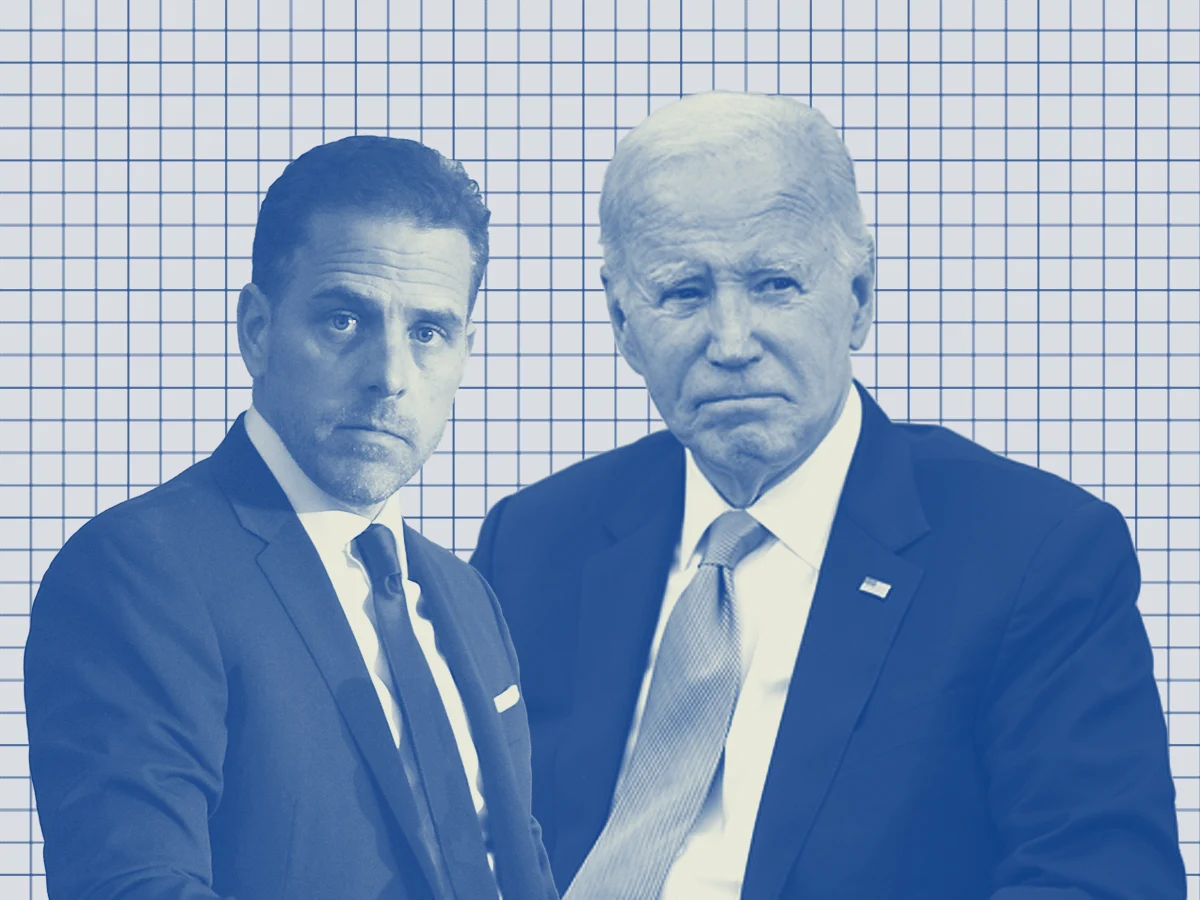
The political landscape in Washington D.C. has once again been gripped by the specter of impeachment, as House Majority Leader Kevin McCarthy formally announced an impeachment inquiry into President Joe Biden. This decision, made on Tuesday, September 12, 2023, directs three House committees to investigate allegations that President Biden may have benefited from his son Hunter Biden’s overseas business dealings. McCarthy’s announcement accused the Biden family of a "culture of corruption," suggesting that the administration provided "special treatment" to Hunter Biden in a criminal tax and gun investigation, and further claiming that President Biden had been untruthful about his awareness of his son’s financial activities.
Background and Initiation of the Inquiry
The call for an impeachment inquiry stems from long-standing accusations by Republican lawmakers regarding Hunter Biden’s international business ventures and the extent of his father’s alleged involvement or knowledge. These accusations have been a persistent theme in conservative media and among Republican politicians, particularly since Joe Biden launched his presidential campaign. House Republicans, who gained a narrow majority in the 2022 midterm elections, have made investigating the Biden family a top priority, utilizing their oversight powers to probe various aspects of Hunter Biden’s finances and business associates.
The specific impetus for McCarthy’s move, despite some internal Republican division, was the culmination of months of committee investigations and public hearings that, according to Republicans, unearthed sufficient concerns to warrant a formal inquiry. While no concrete evidence directly linking President Biden to illegal activities related to his son’s business has been presented publicly by the Republicans at the time of the announcement, the inquiry is intended to provide broader access to financial records and witness testimonies, which proponents argue are necessary to uncover the full scope of the alleged wrongdoing. The White House and Democratic leaders have vehemently dismissed the inquiry as a politically motivated "witch hunt" lacking legitimate grounds, asserting that Republicans are unable to produce evidence to support their claims.
Hunter Biden’s Legal and Business Challenges: A Chronology
At the heart of the impeachment discussions are the documented legal and business troubles of Hunter Biden. His professional life has been marked by a series of high-profile and controversial international business engagements, particularly in Ukraine and China, which have drawn scrutiny for their timing and the significant financial gains he reportedly achieved.
- 2013-2018: Reports indicate Hunter Biden made a substantial amount of money, estimated to be over $11 million, through overseas business deals during this period, including his role on the board of Ukrainian energy company Burisma Holdings.
- December 2020: It was revealed that federal prosecutors in Delaware were investigating Hunter Biden’s tax affairs.
- June 20, 2023: Hunter Biden reached a plea agreement with federal prosecutors. He agreed to plead guilty to two misdemeanor counts of failing to pay taxes on millions of dollars of income in 2017 and 2018. Additionally, the deal included an agreement that could allow him to avoid conviction on a separate felony charge of illegal gun ownership, contingent on his compliance with certain conditions.
- July 26, 2023: The plea deal dramatically fell apart during a court hearing. U.S. District Judge Maryellen Noreika, a Trump appointee, expressed reluctance to "rubber-stamp" the agreement, questioning its unusual structure and whether it granted Hunter Biden immunity from future charges related to his business dealings. This collapse reinvigorated Republican accusations of a "sweetheart deal" and special treatment.
- August 11, 2023: Following the collapse of the plea deal and intensified scrutiny, Attorney General Merrick Garland appointed David Weiss, the U.S. Attorney for Delaware who had been leading the investigation, as a special counsel to continue probing Hunter Biden’s finances and related matters. This move aimed to ensure public confidence in the investigation’s independence.
- September 12, 2023: House Majority Leader Kevin McCarthy announces the formal impeachment inquiry into President Joe Biden.
- September 14, 2023: A grand jury indicted Hunter Biden on three federal felony gun charges, alleging he lied about his drug use when purchasing a firearm in 2018. This indictment came shortly after the impeachment inquiry was announced, further complicating the political narrative.
These events have collectively created a challenging narrative for the Biden administration, even as President Biden himself has not been directly charged with any wrongdoing.
Public Perception of Hunter Biden’s Conduct
Polling data consistently indicates a widespread belief among Americans that Hunter Biden’s business activities were, at best, questionable. A YouGov/The Economist poll from August 2023, conducted after the plea deal collapsed, found that a significant 72 percent of Americans believe Hunter Biden personally profited from his father’s positions in government. This sentiment transcended partisan lines, with a slim majority (53 percent) of Democrats sharing this view. The same poll revealed that two-thirds (66 percent) of Americans hold an unfavorable view of Hunter Biden, compared to only 17 percent with a favorable view.

Further supporting this, a Yahoo News survey by YouGov in August found 59 percent of Americans believing Hunter Biden traded on his family name and proximity to power for financial gain from foreign associates. A similar proportion (51 percent) thought he improperly claimed tax deductions. An Ipsos/Politico Magazine poll in August showed 59 percent of Americans believing Hunter Biden was guilty of the alleged tax non-payment crimes, including 51 percent of Democrats.
However, these polls also offer a nuanced perspective. The YouGov/Economist survey suggested that many Americans view such behavior as somewhat common among the children of U.S. presidents, with 84 percent believing presidential children "get away with things" due to their parents’ positions, and 85 percent agreeing that adult children "personally profit" from their parents’ government roles at least sometimes. This suggests that while Hunter Biden’s actions are widely seen as problematic, they might not be universally shocking or unexpected, which could temper public outrage.
The Impeachment Hurdle: Connecting the President
While public opinion largely views Hunter Biden’s conduct critically, the crucial challenge for Republicans in their impeachment inquiry is to provide concrete evidence directly linking President Joe Biden to illegal or impeachable actions. McCarthy’s announcement asserted that millions earned by Hunter Biden were improperly shared with other Biden family members, and that President Biden used his official role as Vice President to assist his son’s business endeavors. However, these claims have, so far, not been substantiated with publicly available, definitive evidence.
Public opinion regarding President Biden’s direct involvement remains more divided and uncertain. The Yahoo poll indicated that less than half (41 percent) of respondents believe Hunter Biden funneled millions to his father in a scheme for Joe Biden to profit from his position. A significant 33 percent reported not knowing, and 26 percent did not believe it. Similarly, 44 percent believed President Biden "definitely or probably did something illegal" regarding Hunter Biden, while 32 percent thought he did not, and 32 percent again said they didn’t know. These "don’t know" figures highlight a substantial portion of the electorate that is either unengaged with the allegations or has not seen enough compelling evidence to form a strong opinion.
An SSRS/CNN poll from August offered a slightly different angle, with 61 percent of Americans agreeing Biden had "at least some involvement" in Hunter Biden’s business dealings. Within this group, 42 percent believed he acted illegally, and 18 percent believed he acted unethically but not illegally. A Quinnipiac University poll in September found 35 percent believing Biden was involved and did something illegal, while 14 percent thought he was involved but only unethically. Crucially, 37 percent believed he wasn’t involved at all.
The partisan divide on this issue is stark. The table provided in the original article clearly illustrates that Republican voters are overwhelmingly convinced of the Bidens’ wrongdoing across all allegations, including the belief that Hunter funneled money to his father. Democrats are significantly less convinced, and independents are often split, or report not knowing. This suggests that while the impeachment inquiry might solidify the views of the Republican base, it faces an uphill battle to sway a broader, more skeptical public, particularly those who are not deeply immersed in the daily political news cycle.
Public Opinion on the Impeachment Itself
Perhaps most significantly for the Republican strategy, there is currently no broad public consensus that an impeachment inquiry into President Biden is warranted. A GBAO/Fabrizio, Lee & Associates poll for The Wall Street Journal in late August found 52 percent of Americans opposing Biden’s impeachment, with only 41 percent in favor. More recently, a YouGov poll on September 13 showed 44 percent in support, 41 percent opposed, and 15 percent undecided, indicating a slight shift but still no overwhelming mandate for impeachment.
To put this in historical context, during the initial phases of former President Donald Trump’s first impeachment inquiry in October 2019, public opinion was more closely divided. Furthermore, after the January 6, 2021, attack on the U.S. Capitol, majorities of Americans supported Trump’s impeachment, and a slim majority even consistently backed his removal from office. The current polling on Biden’s impeachment does not show a similar level of public support or urgency.

A key factor influencing public perception is the belief regarding the inquiry’s motivation. The September YouGov poll found that 41 percent of Americans are more likely to describe the impeachment inquiry as "motivated by politics in an attempt to embarrass Biden," rather than a "serious effort to find out the truth" (28 percent). This perception of partisan motivation could undermine the legitimacy of the inquiry in the eyes of many voters.
Broader Perceptions of Corruption: Biden vs. Trump
Interestingly, when asked to compare the two political families, Americans appear more likely to perceive the Trump family as corrupt than the Bidens. The Yahoo News survey found 46 percent of Americans believing Trump and his family are more corrupt than the Bidens, compared to 36 percent who think the Bidens are more corrupt. An AP-NORC poll similarly found that Americans were more likely to describe Trump as "corrupt" than Biden. This comparative perception, rooted in the numerous legal challenges faced by former President Trump and his family’s business dealings during his presidency, further complicates the Republican effort to frame the Bidens as uniquely corrupt.
Political Implications and Outlook for 2024
The ongoing investigations into Hunter Biden, and now the formal impeachment inquiry into President Biden, carry significant political implications, particularly heading into the 2024 presidential election. While there isn’t widespread public support for impeaching President Biden, Hunter Biden’s legal troubles are undeniably a political liability for his father.
An Emerson College poll indicated that while 47 percent of voters said the indictments against Donald Trump made them less likely to vote for him, a nearly identical 46 percent stated that the Hunter Biden tax and felony gun charges made them less likely to vote for Joe Biden in 2024. This suggests that the issues surrounding Hunter Biden could erode support for the President, even if voters don’t believe his father committed an impeachable offense. The narrative of family impropriety, regardless of direct presidential involvement, could contribute to broader voter dissatisfaction and cynicism, especially among swing voters.
For Republicans, the impeachment inquiry is a high-stakes gamble. Without concrete evidence linking the President to impeachable offenses, the inquiry risks being perceived as a politically motivated attack, potentially backfiring and galvanizing Democratic voters while alienating moderate independents. The challenge for House Republicans is not just to uncover evidence, but to present it in a way that is compelling and credible to a skeptical public, moving beyond their partisan base. The White House and Democratic strategists will undoubtedly continue to frame the inquiry as a baseless distraction, aimed at undermining the President’s re-election campaign rather than pursuing justice.
In conclusion, while Americans largely view Hunter Biden’s business dealings with skepticism and concern, there is currently no broad public consensus supporting an impeachment inquiry into President Joe Biden. The inquiry proceeds against a backdrop of significant partisan division, a perception among many that it is politically motivated, and a comparative assessment of corruption that does not singularly target the Biden family. Republicans face a considerable challenge in providing the necessary evidence to convince a wider swath of the American public that President Biden’s actions warrant impeachment, rather than merely using the process as a political tool. As the investigations unfold, their impact on the President’s approval ratings and the dynamics of the 2024 election will be closely watched.