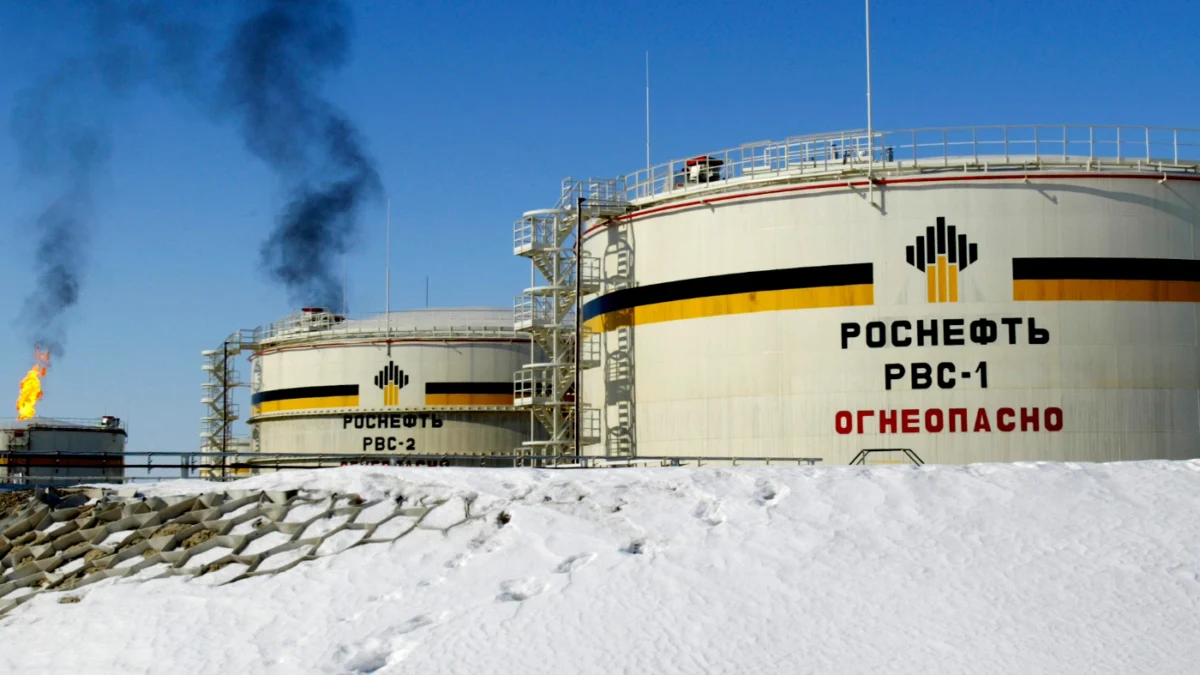
The Trump administration on Friday reversed its earlier stance, extending a crucial waiver on sanctioned Russian oil and petroleum products, a decision that comes just days after a senior Cabinet official had explicitly stated such an extension would not occur. This abrupt policy shift unfolds against the backdrop of an ongoing conflict involving Iran and its significant repercussions on global energy markets, particularly influencing crude oil prices.
The Treasury Department’s Office of Foreign Assets Control (OFAC) published a license on its official website, granting countries the authorization to purchase Russian oil and petroleum products. This new waiver is effective immediately, replacing a previous 30-day exemption that lapsed last week, and is set to remain in effect until May 16. The administration’s move, as reported by Reuters, is widely understood as a strategic maneuver aimed at stabilizing escalating energy prices, which have seen considerable hikes attributed to the protracted U.S.-Israeli conflict in Iran and its ripple effects across the Middle East.
Chronology of a Policy Reversal
The decision marks a stark departure from the administration’s publicly stated position earlier in the week. On Wednesday, Treasury Secretary Scott Bessent had unequivocally informed reporters that the waiver for Russian oil would not be renewed. Furthermore, Bessent indicated that a similar waiver for Iranian oil, also under sanctions, would likewise be allowed to expire. This firm declaration set expectations within financial markets and among international observers that the U.S. was poised to intensify its economic pressure on both Russia and Iran.
The sudden pivot, revealed two days later, has triggered a wave of criticism, particularly from within the U.S. Senate. Senate Democrats swiftly condemned the reversal as "shameful and a 180-degree reversal from Secretary Bessent, just two days after he pledged not to extend sanctions relief for Russia." This statement, issued jointly by prominent Democratic senators, including Jeanne Shaheen (D-N.H.), Elizabeth Warren (D-Mass.), and Senate Minority Leader Chuck Schumer (D-N.Y.), underscored the perceived inconsistency in the administration’s foreign policy and its implications for international alliances and humanitarian crises.
The Broader Geopolitical Context: Iran Conflict and Energy Markets
The backdrop to this policy shift is a volatile global energy landscape, primarily shaped by the ongoing conflict involving Iran. The "U.S.-Israeli conflict in Iran" has led to significant instability in one of the world’s most critical oil-producing regions, resulting in supply concerns and, consequently, a sharp ascent in global crude oil prices. This particular conflict, which escalated in early 2026, has had a profound impact on shipping lanes and energy infrastructure.
A critical choke point in global oil transit, the Strait of Hormuz, has been at the epicenter of these disruptions. This narrow waterway, through which approximately one-fifth of the world’s total oil supply passes, has experienced intermittent closures and blockades. Following intense diplomatic efforts, a 14-day ceasefire agreement between the U.S. and Iran was reached last week. A key provision of this deal was the reopening of the Strait of Hormuz, intended to alleviate pressure on oil prices by ensuring the free flow of maritime traffic.
However, the efficacy of this agreement proved short-lived. The strait, which had briefly reopened twice following the commencement of the ceasefire, was reportedly closed again on Friday. Iranian speaker of parliament, Mohammad-Bagher Qalibaf, attributed this renewed closure to a U.S. blockade in the strait, which he claimed had been implemented on Monday. This dynamic creates a complex and unpredictable environment for global oil supply, putting immense pressure on consuming nations and their governments to find solutions to mitigate rising costs.
The Rationale Behind the Waiver and Administration’s Stance
The administration’s rationale for extending the Russian oil waiver, despite earlier pronouncements, appears to be deeply rooted in domestic economic considerations and the broader objective of global energy market stability. Last month, Secretary Bessent had described the initial measure as "narrowly tailored," asserting that it would "not provide significant financial benefit to the Russian government." This suggests an attempt to balance the punitive intent of sanctions with the practical need to prevent excessive economic fallout for American consumers and businesses.
In a post on the social platform X, President Trump echoed this sentiment, stating that his administration "is taking decisive steps to promote stability in global energy markets and working to keep prices low as we address the threat and instability posed by the terrorist Iranian regime." This official communication highlights the administration’s framing of the waiver as a necessary measure to counteract the inflationary pressures stemming from the Iran conflict, rather than an abandonment of its sanctions policy against Russia. The argument presented is that the immediate priority is to prevent energy costs from spiraling out of control, which could severely impact the global economy and domestic consumer confidence.
Congressional Outcry and Political Ramifications
The Senate Democrats’ sharp rebuke underscores the deep political divisions surrounding the administration’s approach to foreign policy and sanctions. In their joint statement, Senators Shaheen, Warren, and Schumer questioned the message the waiver extension sends, particularly in light of recent Russian military actions in Ukraine. They pointedly asked what message the extension sends following "recent Russian attacks on Ukraine amid Russian President Vladimir Putin’s war on the European country."
Their statement further asserted that "Putin has been one of the biggest beneficiaries of President Trump’s war against Iran, as Russia saw oil revenues nearly double in March." This claim, if accurate, suggests that the geopolitical instability caused by the Iran conflict inadvertently provided an economic boon to Russia, allowing it to circumvent some of the intended effects of international sanctions. The senators called for a stronger stance, declaring, "Enough is enough. President Trump needs to stop letting Putin play him for a fool and impose additional sanctions on Putin, who is clearly not feeling sufficient pressure from this President." They concluded with a stark warning: "If President Trump does not change course, the war in Ukraine will continue and more innocent people will die."
This forceful reaction from Capitol Hill highlights concerns about the perceived erosion of U.S. credibility and the weakening of its sanctions regime. Critics argue that such reversals undermine the effectiveness of economic penalties designed to constrain adversarial nations and could be interpreted as a tacit acceptance of their aggressive actions.
Impact on Global Energy Markets and Sanctions Efficacy
The extension of the Russian oil waiver, even for a limited period, has immediate and long-term implications for global energy markets. In the short term, it may offer some relief to oil prices by ensuring a continued supply of Russian crude to the international market, thereby easing supply constraints exacerbated by the Strait of Hormuz disruptions. However, this relief comes at a cost.
Market analysts are divided on the long-term efficacy of such waivers. While some argue that they are pragmatic tools to manage price volatility during crises, others contend that they dilute the punitive impact of sanctions. Data from early 2026 had shown a noticeable decrease in Russian oil export volumes to countries strictly adhering to sanctions, but this was often offset by increased sales to other nations, sometimes at discounted prices. The March data cited by the senators, indicating a near doubling of Russian oil revenues, suggests that market conditions, particularly those influenced by the Iran conflict, can create opportunities for sanctioned entities to bypass restrictions.
The initial intent of sanctions against Russia, imposed after its invasion of Ukraine, was to cripple its economy and thereby reduce its capacity to fund the war effort. Waivers, by allowing some level of trade, inherently contradict this primary objective. Experts in international relations and energy policy suggest that such policy inconsistencies can send mixed signals to both allies and adversaries. Allies might question the U.S.’s commitment to its stated foreign policy goals, while adversaries might perceive weaknesses that could be exploited.
Future Outlook and Expert Analysis
The immediate future of global energy markets remains highly uncertain, primarily due to the unpredictable nature of the Iran conflict and its impact on critical shipping lanes. The continued closure of the Strait of Hormuz, if sustained, would likely exert immense upward pressure on oil prices, potentially forcing the administration to consider further measures, including additional waivers or strategic petroleum reserve releases.
Analysts from leading energy consultancies suggest that while the Russian oil waiver provides a temporary safety valve for global supply, it does not address the fundamental drivers of price volatility, which are geopolitical instability and supply chain disruptions. Furthermore, the decision raises questions about the long-term coherence of the U.S. sanctions policy. Consistency is often cited as a cornerstone of effective sanctions regimes, as it provides clarity to market participants and ensures predictable consequences for sanctioned entities.
The political fallout from this decision is also expected to persist. The Democratic leadership’s strong condemnation indicates that this issue will likely be leveraged in ongoing debates about the administration’s foreign policy approach, particularly its handling of relations with Russia and its engagement in the Middle East. The delicate balance between managing domestic economic pressures and upholding international sanctions against geopolitical rivals will continue to be a defining challenge for the Trump administration as it navigates a complex and interconnected global landscape. The coming weeks will be critical in observing how the market reacts to the extended waiver and whether the temporary relief on oil prices outweighs the political and strategic costs associated with the policy reversal.