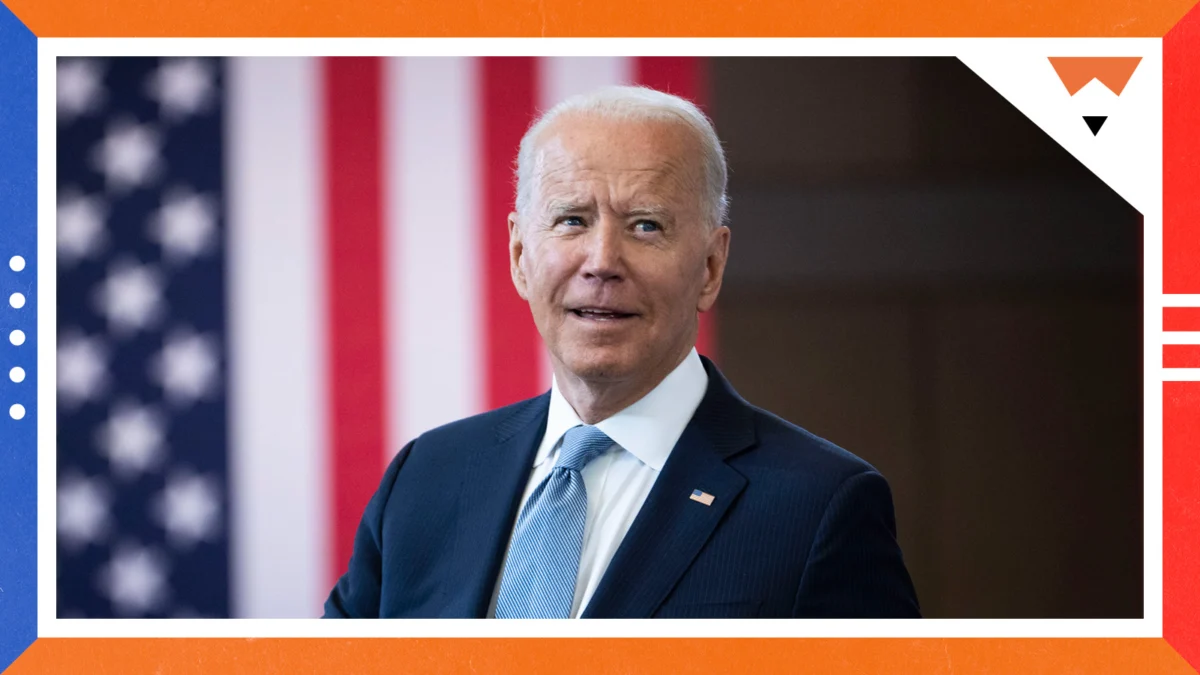
The political landscape, typically accustomed to the crescendo of polling analysis in the final months of a presidential campaign, experienced an unusual surge of hand-wringing and accusations of bias last week, more than a year out from the 2024 general election. This premature but intense scrutiny centered on a series of high-profile surveys that presented a challenging narrative for the incumbent President, Joe Biden, and offered a complex picture of the potential matchups against leading Republican contenders. The depth of the debate underscores a persistent tension in modern politics: the insatiable demand for predictive data versus the inherent volatility and limitations of early polling.
The Unconventional Early Scrutiny of 2024 Polls
Historically, polls conducted over a year before a presidential election are viewed with considerable skepticism, often dismissed as mere snapshots of fleeting public sentiment rather than reliable predictors. Voter awareness is low, campaign messaging is nascent, and the political environment is subject to dramatic shifts. Yet, the recent flurry of general election polls from prominent media outlets—the Wall Street Journal, CNN, and The New York Times—triggered a level of analytical intensity usually reserved for the homestretch of a race. This heightened attention reflects not only the intensely polarized political climate but also the lingering questions about polling accuracy following the 2016 and 2020 elections, where many surveys underestimated the support for Donald Trump. The current debate signals a collective nervousness about the 2024 cycle, with both parties eager to shape narratives and gauge the electorate’s mood, however preliminary.
Key Findings from Recent High-Profile Surveys
The catalyst for this early polling tempest was a trio of significant surveys, each presenting distinct, yet collectively concerning, data points for the Democratic Party, particularly regarding President Biden’s re-election prospects:
-
The Wall Street Journal Poll (September 2023): This survey delivered a striking finding: a dead heat between former President Donald Trump and President Joe Biden in a hypothetical general election matchup. Conducted from August 24-30, 2023, among 1,500 registered voters nationwide, with a margin of error of +/- 2.5 percentage points, the poll indicated that both candidates garnered 46% support. This result was particularly jarring for Democrats, as it suggested that despite Trump’s ongoing legal challenges and controversies, he remained competitive with the sitting president. The poll’s underlying data further revealed significant voter anxieties, with a majority expressing dissatisfaction with the direction of the country and President Biden’s handling of the economy. Concerns about Biden’s age and fitness for office also featured prominently, reflecting broader public discourse.
-
The CNN Poll (September 2023): Released shortly after, a CNN/SSRS poll, conducted between August 25 and September 7, 2023, among 1,510 registered voters (margin of error +/- 3.6 percentage points), highlighted a potential bright spot for Republicans beyond Trump. The survey indicated that former UN Ambassador Nikki Haley was the only Republican candidate who held a lead over President Biden that fell outside the poll’s margin of error. Haley registered 49% support compared to Biden’s 43%, a 6-point advantage. This finding immediately elevated Haley’s profile, suggesting she might possess a broader appeal to swing voters and moderates than other GOP hopefuls, including Trump, who consistently trailed or tied Biden in head-to-head matchups within the same poll. The implication was that a more traditional, less polarizing Republican might be better positioned to defeat Biden.
-
The New York Times/Siena College Poll (September 2023): Adding another layer of concern for the Biden campaign, data from a New York Times/Siena College poll (conducted July 28-August 1, 2023, among 1,329 registered voters, margin of error +/- 3.9 percentage points) suggested a significant erosion of support for President Biden among crucial demographic groups: Black and Hispanic voters. Historically, these groups have formed the bedrock of the Democratic Party’s electoral coalition. The poll indicated that Biden’s approval rating among Black voters had dipped considerably, while Trump’s support among Hispanic voters appeared to be growing. While specific head-to-head numbers for these demographics weren’t universally provided in the immediate summary, the underlying trend of declining Democratic allegiance within these groups was stark, signaling a potential realignment that could have profound consequences for the 2024 election. Economic concerns, cultural issues, and a perceived lack of attention from the Democratic Party were cited as potential factors contributing to this shift.
Background Context: The Evolving Landscape of Polling Accuracy and Distrust
The intense scrutiny of these early polls is inextricably linked to the broader challenges facing public opinion research. The 2016 election, where most national and state polls failed to predict Donald Trump’s victory, and the subsequent 2020 election, where polls generally overestimated Biden’s margin, have eroded public trust and fueled skepticism within political analysis circles.
Several factors contribute to these difficulties:
- Declining Response Rates: Fewer people are willing to participate in polls, making it harder to obtain representative samples.
- Shifting Demographics: Traditional polling methods sometimes struggle to accurately capture the views of increasingly diverse and mobile populations.
- Non-Response Bias: Certain segments of the population, often those with less traditional political engagement or strong anti-establishment views, are less likely to respond to polls, leading to underrepresentation. The "shy Trump voter" phenomenon is a frequently cited example.
- Weighting Challenges: Pollsters use complex statistical methods to "weight" their data to match known demographic distributions. Errors or outdated assumptions in this process can skew results.
- Likely Voter Models: As elections approach, pollsters shift from surveying all registered voters to "likely voters." Defining who is likely to vote is an art, not a science, and can introduce significant error, especially in a volatile political climate.
Against this backdrop, any poll showing unexpected or unfavorable results for a major candidate is immediately dissected, not just for its findings but for its methodology. The question isn’t just "What did the poll say?" but "Can we trust what the poll said?" This inherent skepticism is a crucial lens through which the recent 2024 poll debates must be viewed.
Expert Reactions and Methodological Scrutiny
The release of these polls immediately prompted a vigorous debate among political analysts, pollsters, and campaign strategists. On the FiveThirtyEight Politics podcast, host Galen Druke engaged Carlos Odio of Equis Research and Terrance Woodbury of HIT Strategies to dissect the data, offering insights into which findings warranted serious attention and which might be dismissed as "sound and fury."
-
Carlos Odio (Equis Research): As a co-founder of Equis Research, a firm specializing in Latino voters, Odio’s perspective would be particularly valuable regarding the New York Times/Siena College poll’s findings on Hispanic voter shifts. He would likely emphasize the growing diversity within the Latino electorate, the varying political priorities across different national origin groups, and the impact of economic issues and cultural grievances on their voting behavior. Odio often points out that Latino voters are not a monolithic bloc and cannot be taken for granted by either party. He might caution against overgeneralizing from a single poll but acknowledge that the trend of declining Democratic support among some segments of this demographic is a long-term challenge requiring nuanced engagement.
-
Terrance Woodbury (HIT Strategies): As a founding partner at HIT Strategies, a firm focused on Black voters, millennials, and Gen Z, Woodbury would likely offer a critical analysis of Biden’s performance among Black voters, as indicated by the NYT poll. He might highlight that while Black voters remain overwhelmingly Democratic, enthusiasm can wane if their specific concerns (e.g., economic equity, police reform, voting rights) are not perceived as being adequately addressed. Woodbury often argues that turnout and engagement are key, and a dip in support, even if not leading to a switch to the GOP, could manifest as lower turnout, which is equally detrimental to Democratic prospects. He might also discuss the generational differences within the Black community, with younger voters potentially less tethered to traditional party loyalties.
-
General Pollster Defense: In response to accusations of bias or inaccuracy, the pollsters themselves often defend their methodologies. They would emphasize their rigorous sampling techniques, weighting adjustments for demographics like age, gender, race, education, and geographic location, and their attempts to contact respondents through multiple modes (landline, cell phone, online panels). They would also typically stress that polls are snapshots in time and not predictions, especially so far out from an election.
-
Campaign Responses (Inferred):
- Biden Campaign: The Biden campaign would likely downplay the significance of early polls, emphasizing the long road ahead and the historical tendency for incumbents to face skepticism before voters fully engage. They would point to legislative achievements (e.g., infrastructure, climate, prescription drug costs) and contrasting them with the "chaos" of the Trump administration. Fundraising appeals would undoubtedly leverage these polls as a call to action for supporters, framing the election as a critical fight.
- Trump Campaign: The Trump campaign would seize upon the WSJ poll showing a tie as validation of his enduring strength and a sign that the electorate is rejecting Biden’s policies. They would likely amplify any negative data for Biden, portraying him as weak and ineffective. The campaign would use these numbers to galvanize their base and attract donors.
- Haley Campaign: Nikki Haley’s campaign would undoubtedly highlight the CNN poll’s finding of her lead over Biden as proof of her "electability" and broad appeal. This would be a crucial talking point in the Republican primary, aiming to convince voters that she is the strongest candidate to defeat Biden, contrasting herself with Trump’s higher negative favorability ratings.
Broader Implications for the 2024 Election Cycle
The intense debate surrounding these early polls carries significant implications for the unfolding 2024 election cycle, influencing narratives, campaign strategies, and internal party dynamics.
- Narrative Shaping: Even if ultimately inaccurate, early polls shape media narratives. A "Biden is vulnerable" narrative can gain traction, potentially affecting fundraising, candidate recruitment, and public perception of the race. Conversely, a strong showing for a challenger like Haley can inject momentum into their campaign.
- Campaign Strategy Adjustments: For the Biden campaign, these polls might prompt a re-evaluation of messaging, particularly on the economy and engagement with key demographic groups. The need to re-energize Black and Hispanic voters would become a top priority, potentially leading to increased outreach, targeted policy messaging, and more frequent appearances by the President and Vice President in those communities. For Republicans, Haley’s numbers could encourage a focus on "electability" as a primary differentiator, while Trump’s team would likely double down on their base mobilization strategy.
- Fundraising and Resource Allocation: Strong poll numbers can be a powerful fundraising tool, signaling viability to donors. Conversely, consistently weak numbers can make it harder to raise money, impacting a campaign’s ability to advertise and organize. These early polls could influence where campaigns decide to invest their resources geographically and demographically.
- Primary Race Dynamics: For Republicans, Haley’s outlier performance against Biden provides her with a potent argument against Trump and other primary challengers, framing her as the most viable general election candidate. This could put pressure on other candidates to demonstrate similar broad appeal.
- Voter Engagement: The early intensity of this polling debate could either energize or fatigue the electorate. For highly engaged political junkies, it provides fodder for discussion. For the broader public, it risks creating an impression of a foregone conclusion or an unpredictable mess, potentially affecting future turnout.
- The "Unpredictability" Factor: Crucially, political analysts are quick to point out that the political landscape can shift dramatically over a year. Economic conditions, unforeseen geopolitical events, candidate health, legal outcomes, and campaign gaffes can all alter the trajectory of a race. Therefore, while these polls offer valuable insights into the current mood of the electorate, they are not definitive predictions of the final outcome. The cautious interpretation remains paramount.
In conclusion, the early hand-wringing over 2024 election polls, while unusual in its intensity, reflects a deeply uncertain political climate and an electorate grappling with economic anxieties and a sense of political malaise. While the data from the Wall Street Journal, CNN, and New York Times presents clear challenges for President Biden, particularly concerning his standing against Donald Trump and among key Democratic constituencies, and highlights the potential appeal of a candidate like Nikki Haley, it is essential to interpret these findings with the understanding that they are snapshots in time. The road to the 2024 election is long, and the political narrative is far from written, but the early skirmishes over polling data have undeniably set a contentious tone for the campaign ahead.