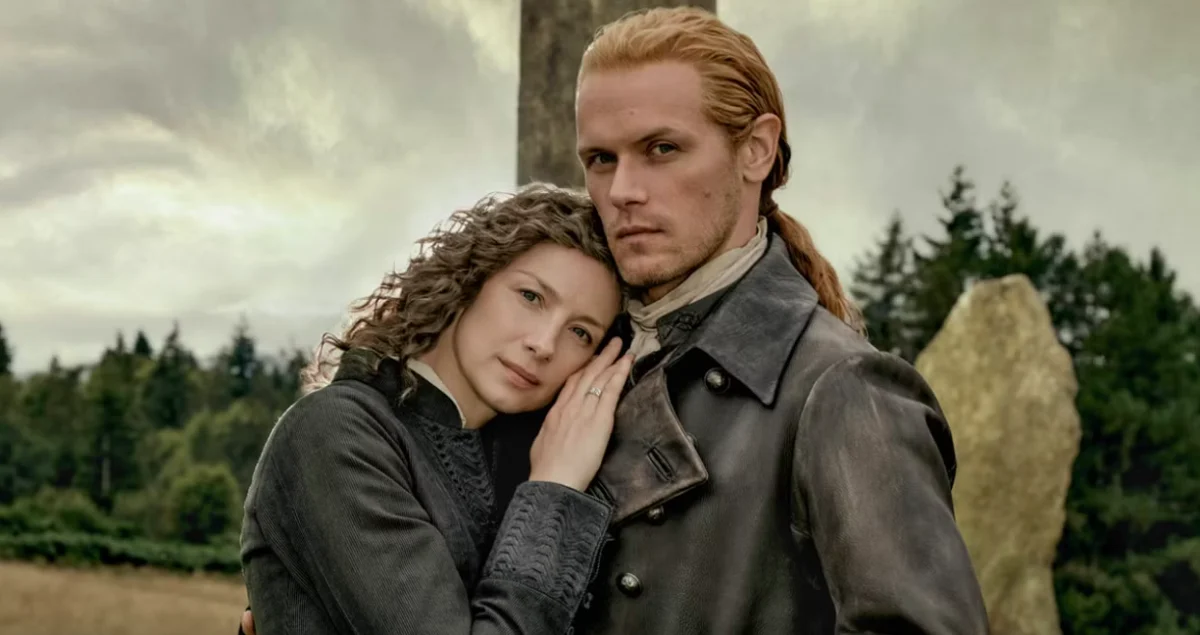
The seventh episode of the eighth and final season of Outlander, titled “Evidence of Things Not Seen,” has delivered what is arguably the most significant narrative departure from Diana Gabaldon’s source material in the show’s twelve-year history. In a move that has stunned both long-term viewers and readers of the book series, the character of Fergus Fraser, portrayed by César Domboy, met a tragic and heroic end during a fire in Savannah. This development marks a stark contrast to the events depicted in Gabaldon’s novels, where Fergus survives the American Revolution and remains a central figure in the ongoing literary saga.
The episode centers on the escalating tensions in the American colonies as the Revolutionary War nears its climax. Fergus and his wife, Marsali (Lauren Lyle), have established a life in Savannah, where Fergus operates a printing press. While the business is a legitimate enterprise, Fergus has also been utilizing his skills to produce seditious Patriot materials in secret. This political activism eventually makes the family a target for Loyalist retaliation. The resulting conflict culminates in a devastating fire at the Fraser residence and printing shop, leading to the death of one of the series’ most beloved characters.
A Major Departure from the Source Material
For readers of Diana Gabaldon’s multi-volume epic, the events of “Evidence of Things Not Seen” represent a fundamental shift in the "Outlander" canon. In the books, specifically within the events surrounding the American Revolution, a fire does occur, but the casualty is different. In the literary version, it is Fergus and Marsali’s young son, Henri-Christian, who perishes after falling from a roof during the blaze. Henri-Christian, who was born with dwarfism, faced significant persecution and superstition throughout his life, making his death in the books a poignant commentary on the intolerance of the era.
The television adaptation, however, chose to subvert these expectations. While the episode initially appears to follow the book’s trajectory—showing Fergus attempting to lower his sons, Germain and Henri-Christian, from a burning roof—it utilizes a narrative "fake-out." As Henri-Christian slips from his brother’s grasp, he is caught at the last moment by Roger MacKenzie (Richard Rankin). The relief is short-lived, however, as the structural integrity of the building fails, and Fergus falls through the burning roof to his death.
According to César Domboy, the decision to alter the storyline was driven by the necessity of providing closure for the character as the series approaches its conclusion. Speaking on the change, Domboy noted that the producers wanted to provide Fergus with a "heroic sendoff" that emphasized his growth from a Parisian pickpocket to a devoted father and revolutionary. In the context of the show’s final season, the writers felt that a sacrifice of this magnitude carried more weight than following the book’s specific tragedy.
The Chronology of Fergus Fraser’s Journey
To understand the impact of Fergus’s death, it is necessary to trace his decade-long arc within the series. Introduced in Season 2 as Claudel, a young pickpocket living in a Parisian brothel, the character was taken under the wing of Jamie Fraser (Sam Heughan). Jamie eventually renamed him Fergus and brought him into the Fraser family fold, where he became an indispensable ally during the Jacobite rising and the subsequent years of upheaval.
- Season 2 (Paris): Fergus is introduced as a resourceful orphan who assists Jamie and Claire in their attempts to thwart the Bonnie Prince Charlie’s rebellion.
- Season 3 (The Aftermath of Culloden): Following the Battle of Culloden, Fergus remains loyal to the Frasers. He eventually loses a hand to Redcoat soldiers while protecting Jamie, an event that solidifies his place as a true member of the family.
- Season 4-6 (The New World): Fergus travels to the American colonies with Jamie and Claire. He marries Marsali, the daughter of Laoghaire MacKenzie, and they begin a family. His struggles with his physical disability and his feelings of inadequacy as a provider are central themes during these seasons.
- Season 7-8 (The Revolution): Fergus finds his calling as a printer and a secret agent for the Patriot cause. His journey concludes in Savannah with his ultimate sacrifice.
This progression from a marginalized child to a man of conviction and a patriarch makes his death in Season 8 a culminating moment for his character development. By dying to save his children, Fergus fulfills the legacy of the Fraser name he was so proudly given by Jamie.
Production Details and Filming the Savannah Fire
The production of the fire sequence was one of the most ambitious set pieces of the final season. Filmed primarily at night, the scene required a large-scale practical set representing the Savannah print shop. To enhance the historical authenticity of the scene, the production utilized a colonial-era hand-pump fire engine and a vast number of background actors to simulate the chaos of a city under threat.
Lauren Lyle, who portrays Marsali, described the filming process as "huge and cinematic." The emotional weight of the scene was compounded by the time constraints of the shoot. Lyle revealed that the final moments of Marsali’s reaction to Fergus’s death were captured in a single, continuous take during the last seven minutes of a night shoot. This "guttural" and "real" reaction was intended to resonate with fans who have followed the couple’s journey since their introduction.
The episode also included a rare tender moment between Fergus and Marsali before the tragedy. The actors reportedly worked with intimacy coordinators to choreograph a scene that felt "playful" and "romantic," rather than just "performative." This was a deliberate choice to remind the audience of the couple’s enduring love before their final separation.
Reaction and Implications for the Fraser Family
The death of Fergus Fraser has immediate and profound implications for the remaining characters. Jamie Fraser, who viewed Fergus as his eldest son, is seen in the episode’s aftermath breaking down while constructing a casket. The loss is particularly poignant given that there are no remains to bury, a detail that underscores the total devastation of the fire.
For Marsali, the future remains uncertain. The episode hints at a subplot involving a potential inheritance; earlier in the season, it was revealed that Fergus was the unacknowledged son of a French dignitary. As a widow with four children in a volatile wartime environment, Marsali faces the pragmatic challenge of survival. Lauren Lyle suggested that the character might have to adopt a more "modern" and "selfish" mindset to protect her children’s future, possibly by claiming the French estate Fergus had previously ignored.
The broader impact on the Patriot cause in Savannah is also significant. Fergus’s death removes a key voice in the colonial press, potentially silencing a source of revolutionary fervor. However, as is often the case in wartime narratives, such a sacrifice may serve as a rallying cry for those remaining.
Comparison to Previous Major Deviations
While Outlander has generally remained faithful to Diana Gabaldon’s novels, it is not without its major departures. The most notable precedent for the death of Fergus is the Season 5 death of Murtagh Fitzgibbons (Duncan Lacroix). In the book series, Murtagh dies at the Battle of Culloden in 1746. However, the showrunners chose to keep the character alive for several more seasons, allowing him to reunite with Jamie in the American colonies before finally killing him off during the Battle of Alamance.
These deviations suggest a pattern where the television adaptation prioritizes character-driven emotional payoffs and thematic symmetry over strict adherence to the source material. By killing Fergus in Season 8, the show creates a high-stakes environment for the series finale, signaling to the audience that no character—regardless of their status in the books—is safe as the story concludes.
Fact-Based Analysis of the Series Finale Outlook
With the series finale set to air on May 15, the death of Fergus serves as a catalyst for the final narrative push. The show has now established that it is willing to close character arcs permanently to provide a sense of finality. The loss of Fergus removes a primary branch of the Fraser family tree, focusing the remaining story more tightly on Jamie, Claire, Brianna, and Roger.
From a critical perspective, the decision to kill Fergus rather than Henri-Christian shifts the emotional burden of the tragedy. While the death of a child is a recurring trope in historical drama to signify the harshness of the era, the death of a long-standing adult character like Fergus provides a different kind of weight. it allows for a reflection on the themes of fatherhood, legacy, and the price of political conviction—themes that have been central to Outlander since its inception in 2014.
As the series concludes, the focus will likely remain on how the Fraser family navigates the final stages of the American Revolution and whether they can find a permanent sense of peace in a world they have spent decades trying to change. For fans of the show, the loss of Fergus Fraser is a reminder that the journey toward that peace has come at a staggering cost.