The Earth is enveloped in a dynamic, invisible shield, a magnetic cocoon teeming with charged particles known as plasma. This vast region, the magnetosphere, is far from a static sanctuary. It constantly interacts with the Sun, a celestial powerhouse that relentlessly ejects streams of plasma and magnetic fields – the solar wind. These solar eruptions can propagate as waves and disturbances, rippling through the magnetosphere and, in some instances, directly impacting our planet. The consequences can range from stunning auroral displays to potentially disruptive events for our technological infrastructure, particularly the power grid, satellite operations, and communication systems. Understanding the intricate dance of these plasma waves is crucial for predicting and mitigating the effects of space weather.
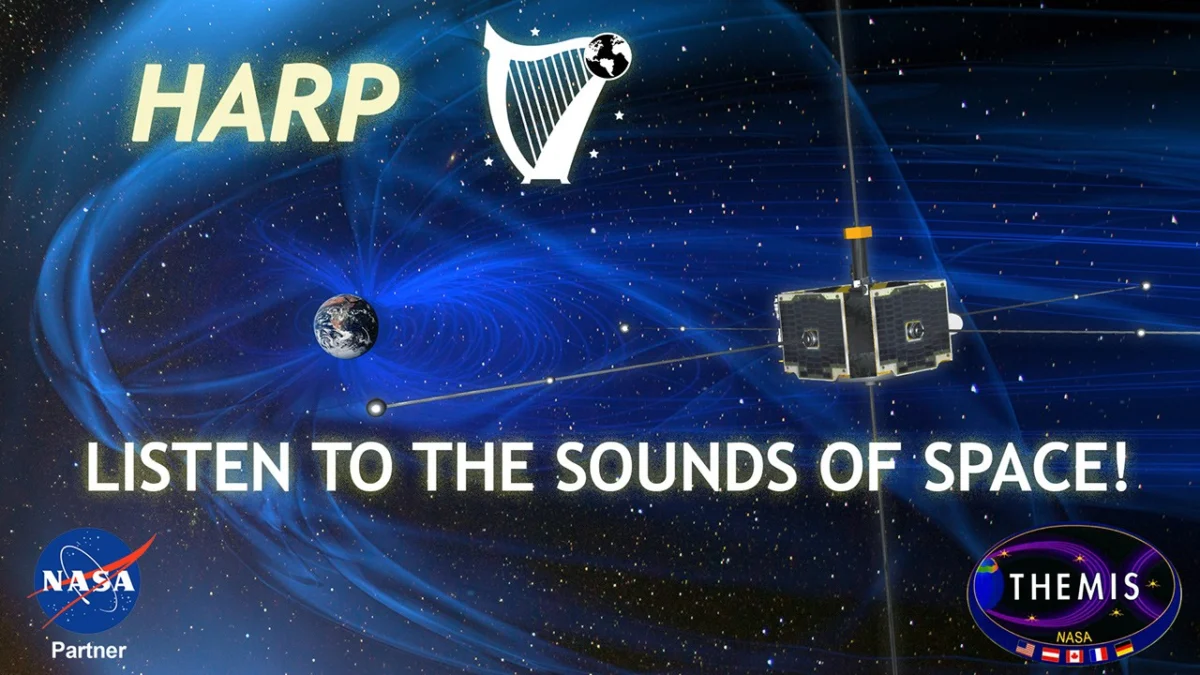
Scientists have long striven to unravel the complex physics governing these energetic phenomena. Now, a novel approach, spearheaded by NASA’s Heliophysics Audified: Resonances in Plasmas (HARP) citizen science project, has provided a fresh perspective. By translating the invisible language of magnetic field measurements into audible sound, the HARP team has empowered a global network of volunteers to listen to the symphony of our magnetosphere and contribute to cutting-edge space weather research. This unique methodology, akin to tuning a giant cosmic harp, has yielded surprising discoveries, revealing unexpected patterns in the behavior of plasma waves that play a significant role in shaping space weather.
The HARP Project: Listening to the Magnetosphere
The HARP project, initiated by NASA and now supported by the National Science Foundation, reimagined how scientific data could be accessed and analyzed. Instead of relying solely on complex graphs and charts, the researchers developed a system to convert raw magnetic field data, collected by space missions, into sound frequencies. This process, known as sonification, transforms numerical data into an auditory experience. The fundamental principle behind this translation is that different magnetic field strengths and wave frequencies correspond to different pitches. Generally, stronger magnetic fields and higher wave frequencies are translated into higher-pitched sounds, while weaker fields and lower frequencies produce lower pitches.
The team specifically focused on a particular class of plasma waves that are known to propagate through the magnetosphere and are integral to understanding energy transfer processes. These waves are often associated with substorms, energetic events where the Earth’s magnetic field lines reconnect, releasing vast amounts of energy. By listening to the sonified data, citizen scientists were tasked with identifying and categorizing these wave patterns. The expectation was that these waves, when propagating outwards from Earth, would exhibit a predictable acoustic signature: lower pitches closer to the planet, gradually increasing in pitch as they moved further away, reflecting the expected behavior of magnetic field strength and wave propagation in certain regions.
An Unexpected Melody: The Discovery of Reversed Pitch Patterns
The HARP project utilized data from NASA’s Time History of Events and Macroscale Interactions during Substorms (THEMIS) mission, a constellation of satellites designed to study the dynamics of Earth’s magnetosphere. The THEMIS mission, launched in 2007, has provided an unprecedented wealth of information about substorms and their associated phenomena.
When HARP volunteers began analyzing the sonified THEMIS data, they encountered a startling anomaly. While some plasma waves exhibited the anticipated pattern of increasing pitch with distance from Earth, a significant number revealed the exact opposite. Volunteers consistently reported hearing lower pitches emanating from regions farther from Earth and higher pitches from areas closer to the planet. This discovery directly contradicted the prevailing scientific expectations for these specific types of plasma waves.
"It was a moment of genuine surprise and excitement," remarked a senior scientist involved with the HARP project, who wished to remain anonymous due to the ongoing nature of the research. "We had a theoretical framework for how these waves should behave, and the citizen scientists, with their fresh ears and unbiased perspective, immediately flagged deviations that we, poring over data, might have overlooked or rationalized away. It’s a testament to the power of diverse approaches in scientific inquiry."
Implications for Space Weather Forecasting
This unexpected observation has profound implications for our understanding of space weather. Geomagnetic storms, the most significant manifestations of space weather, can have far-reaching consequences. During intense storms, charged particles from the Sun can penetrate deeper into the magnetosphere, inducing powerful electrical currents. These currents can overload power grids, leading to widespread blackouts, damage transformers, and disrupt communication networks, including GPS systems. They can also pose a radiation hazard to astronauts and satellites.
The discovery of these reversed pitch patterns suggests that the mechanisms governing the propagation and behavior of certain plasma waves within the magnetosphere are more complex than previously understood. Understanding why these waves exhibit this seemingly counterintuitive acoustic signature could unlock new insights into:
- Energy Dissipation Mechanisms: The way energy is transferred and dissipated within the magnetosphere is a key area of research. The reversed pitch patterns might indicate novel ways in which plasma waves lose or gain energy as they travel through different regions of space.
- Plasma Wave Interactions: The magnetosphere is a turbulent environment where various plasma waves interact with each other and with charged particles. The observed anomaly could be a result of these complex interactions, leading to unexpected wave propagation characteristics.
- Magnetospheric Structure: The distribution of plasma density and magnetic field strength varies significantly throughout the magnetosphere. The reversed pitch patterns could provide clues about localized structures or conditions that influence wave behavior in ways not previously accounted for.
A Citizen Scientist’s Journey: From Curiosity to a Passion for Physics
The success of the HARP project highlights the invaluable contribution that citizen scientists can make to scientific discovery. The project provided a platform for individuals with a passion for space and science to engage directly with real research data. The experience proved to be transformative for many, including one volunteer whose story was shared by the project organizers.
"I only signed up for this group because my friend was participating, but now I think I’m going to change my major to physics – this was just too cool," the volunteer stated, expressing a newfound enthusiasm for the field. This sentiment underscores the educational and inspirational impact of citizen science initiatives, fostering a new generation of scientists and researchers. The HARP project successfully engaged individuals from diverse backgrounds, equipping them with the skills to analyze complex scientific data and contributing to a deeper public understanding of heliophysics.
The HARP volunteers played a critical role throughout the project’s development. They were instrumental in:
- Developing the Audio Analysis Protocol: Their feedback was essential in refining the methods for translating magnetic data into sound and establishing clear criteria for identifying and categorizing wave phenomena.
- Beta Testing the Graphical User Interface (GUI): Volunteers helped ensure that the user-friendly interface for data analysis was intuitive and effective, making the complex task of data exploration accessible.
- Identifying and Labeling Plasma Waves: The collective efforts of the volunteers in meticulously identifying and labeling countless instances of plasma waves provided the raw material for the scientific discoveries.
These findings have now been formally documented in a new scientific article published in the peer-reviewed journal Frontiers in Astronomy and Space Sciences. This publication marks a significant milestone, validating the citizen scientists’ contributions and making the new understanding of plasma wave behavior accessible to the broader scientific community.
A Legacy of Discovery and Future Research
The HARP project, while no longer actively seeking volunteers, leaves a lasting legacy. The audio analysis protocols developed and the vast dataset of identified plasma waves will continue to be a valuable resource for researchers for years to come. The project has demonstrated the immense potential of sonification as a tool for scientific exploration and public engagement in heliophysics.
The National Science Foundation’s continued support for the project underscores the significance of this innovative approach to research. As scientists delve deeper into the implications of these reversed pitch plasma waves, the work initiated by HARP volunteers will undoubtedly contribute to more accurate space weather models and a more robust understanding of the dynamic environment that surrounds our planet. The invisible forces that shape our space weather are, it turns out, capable of producing a compelling, and sometimes surprising, cosmic soundtrack.