
The Unfolding Frontiers of Science and Technology: A Categorical Exploration of Innovation and Progress
Science and technology, inextricably linked forces, drive humanity’s understanding of the universe and our capacity to shape our reality. This symbiotic relationship, characterized by continuous exploration and invention, manifests across a vast spectrum of interconnected disciplines. Understanding these categories is crucial for comprehending the present trajectory of global development and anticipating future advancements. These fields are not monolithic but rather comprise intricate ecosystems of specialized inquiry, each contributing unique insights and practical applications. From the fundamental laws governing matter and energy to the sophisticated systems designed to augment human capabilities, the landscape of science and technology is both profoundly diverse and remarkably unified in its pursuit of knowledge and problem-solving.
At the foundational level, Physical Sciences form the bedrock upon which much of modern technology is built. This broad category encompasses disciplines like physics, chemistry, and astronomy. Physics, in its purest form, seeks to understand the fundamental constituents of the universe and the forces that govern their interactions. Subfields such as quantum mechanics explore the behavior of matter and energy at atomic and subatomic scales, leading to technologies like semiconductors, lasers, and advanced medical imaging. Thermodynamics, another crucial branch, underpins our understanding of energy transfer and conversion, vital for everything from power generation to engine design. The study of electromagnetism, famously articulated by Maxwell’s equations, forms the basis for radio, telecommunications, and electrical grids. Cosmology, a part of astronomy, investigates the origin, evolution, and structure of the universe, pushing the boundaries of our conceptual understanding and inspiring technologies for deep-space observation and data analysis. Chemistry, on the other hand, focuses on the composition, structure, properties, and reactions of matter. Organic chemistry, with its study of carbon-based compounds, is indispensable for pharmaceuticals, polymers, and materials science. Inorganic chemistry is crucial for catalysis, materials synthesis, and understanding geological processes. Physical chemistry bridges physics and chemistry, exploring the physical principles that govern chemical systems, leading to advancements in chemical engineering and reaction kinetics. The insights gleaned from these physical sciences directly inform the development of new materials, energy solutions, and computational paradigms.
Moving towards the realm of life and its intricate mechanisms, Life Sciences represent another pivotal category within the scientific and technological landscape. Biology, at its core, is the study of living organisms. Genetics and molecular biology have revolutionized our understanding of heredity and the molecular basis of life, paving the way for gene editing technologies like CRISPR-Cas9, personalized medicine, and the development of genetically modified crops. Biochemistry investigates the chemical processes within living organisms, crucial for drug discovery, understanding metabolic pathways, and developing diagnostic tools. Ecology studies the interactions between organisms and their environment, informing conservation efforts, agricultural practices, and climate change mitigation strategies. Neuroscience delves into the complexities of the brain and nervous system, driving advancements in artificial intelligence, brain-computer interfaces, and treatments for neurological disorders. Evolutionary biology sheds light on the history of life on Earth and the mechanisms of adaptation, providing insights for understanding disease resistance and developing new biotechnologies. The applications of life sciences are pervasive, impacting healthcare, agriculture, environmental management, and even the development of bio-inspired technologies.
The practical application of scientific principles to design, build, and maintain structures, machines, and systems falls under the umbrella of Engineering. This is a vast and multifaceted category, subdivided into numerous specialized fields. Civil engineering focuses on the design and construction of infrastructure, including bridges, buildings, dams, and transportation networks, essential for societal development and economic growth. Mechanical engineering deals with the design, analysis, manufacturing, and maintenance of mechanical systems, encompassing everything from engines and robotics to HVAC systems. Electrical engineering is concerned with the study and application of electricity, electronics, and electromagnetism, forming the backbone of modern communication systems, power grids, and computing. Chemical engineering applies principles of chemistry, physics, and engineering to design, develop, and operate industrial chemical processes, crucial for manufacturing plastics, fuels, pharmaceuticals, and countless other products. Computer engineering combines electrical engineering and computer science to design and develop computer hardware and software, driving the digital revolution. Aerospace engineering focuses on the design, development, testing, and production of aircraft, spacecraft, satellites, and missiles, pushing the boundaries of exploration and transportation. Biomedical engineering integrates engineering principles with medical and biological sciences to design medical devices, diagnostic equipment, and therapeutic strategies, revolutionizing healthcare. Environmental engineering addresses the design and implementation of solutions to environmental problems, including pollution control, waste management, and sustainable resource utilization, vital for planetary health. The constant innovation within engineering disciplines directly translates scientific discoveries into tangible technologies that improve our quality of life and address global challenges.
The burgeoning field of Information and Communication Technology (ICT) has fundamentally reshaped human interaction, commerce, and access to knowledge. This category encompasses the hardware, software, networks, and services that facilitate the creation, storage, processing, and dissemination of information. Computer science, the theoretical foundation of ICT, explores algorithms, data structures, programming languages, and computational theory, enabling the development of sophisticated software applications and operating systems. Software engineering focuses on the systematic development and maintenance of high-quality software. Data science and analytics leverage statistical methods and computational tools to extract meaningful insights from vast datasets, driving decision-making in various sectors. Cybersecurity, an increasingly critical subfield, focuses on protecting digital systems and data from unauthorized access, use, disclosure, disruption, modification, or destruction. Telecommunications engineering designs and manages the infrastructure for transmitting information, from cellular networks to fiber optic cables, enabling global connectivity. Artificial intelligence (AI) and machine learning (ML), transformative branches of computer science, are enabling machines to perform tasks that typically require human intelligence, such as learning, problem-solving, and decision-making, with applications ranging from autonomous vehicles to personalized recommendations. The internet and the World Wide Web, themselves monumental achievements in ICT, have democratized access to information and fostered unprecedented global collaboration.
Addressing the fundamental needs of sustenance and survival, Agriculture and Food Technology represent a critical intersection of science and human well-being. Modern agricultural practices have been profoundly transformed by scientific advancements. Agronomy, the science of soil management and crop production, utilizes soil science, plant physiology, and genetics to optimize yields and resource efficiency. Plant breeding and genetics enable the development of crop varieties with improved traits such as disease resistance, drought tolerance, and enhanced nutritional value. Agricultural engineering focuses on the design and application of machinery, irrigation systems, and post-harvest technologies to streamline production and reduce waste. Food science and technology are concerned with the safety, quality, and preservation of food, encompassing areas like food processing, packaging, and the development of novel food products. Biotechnology plays an increasingly significant role, with genetically modified organisms (GMOs) and precision agriculture techniques offering potential solutions to global food security challenges. The application of data analytics and sensors in precision agriculture allows for targeted application of water, fertilizers, and pesticides, minimizing environmental impact and maximizing efficiency. Sustainable agriculture practices, informed by ecological principles, are gaining prominence, seeking to balance productivity with environmental stewardship.
The ongoing quest to harness and manage Energy and Environmental Technologies is central to sustainable development and mitigating climate change. This category encompasses the scientific and technological endeavors focused on energy generation, storage, distribution, and the protection of natural resources. Renewable energy technologies, such as solar photovoltaics, wind turbines, and geothermal systems, are crucial for transitioning away from fossil fuels. Advances in materials science are driving the development of more efficient and cost-effective solar cells and battery technologies for energy storage. Nuclear engineering, while facing its own set of challenges, continues to explore advancements in fission and fusion power as potential low-carbon energy sources. Carbon capture and storage technologies aim to mitigate greenhouse gas emissions from industrial processes. Environmental engineering and science focus on understanding and addressing pollution, waste management, water treatment, and the restoration of degraded ecosystems. Climate modeling, powered by supercomputing and vast datasets, provides critical insights into the Earth’s climate system and the potential impacts of human activities. The development of sustainable transportation systems, including electric vehicles and advanced biofuels, is also a key area of focus.
The intricate interplay of Materials Science and Nanotechnology is driving innovation across nearly every sector. Materials science is the interdisciplinary field that studies the properties of matter and its applications, seeking to understand the relationship between the structure of materials at atomic and molecular levels and their macroscopic properties. This leads to the development of new alloys, polymers, ceramics, and composites with tailored characteristics for specific applications, from lightweight aircraft components to durable construction materials. Nanotechnology, a revolutionary field, involves the manipulation of matter on an atomic, molecular, and supramolecular scale, typically in the range of 1 to 100 nanometers. At this scale, materials exhibit unique physical, chemical, and biological properties that differ significantly from their bulk counterparts. Applications of nanotechnology are emerging in diverse fields, including advanced electronics, targeted drug delivery systems, novel catalysts, high-strength composites, and improved sensors. The ability to design and synthesize materials with precise control at the nanoscale opens up unprecedented possibilities for creating revolutionary technologies.
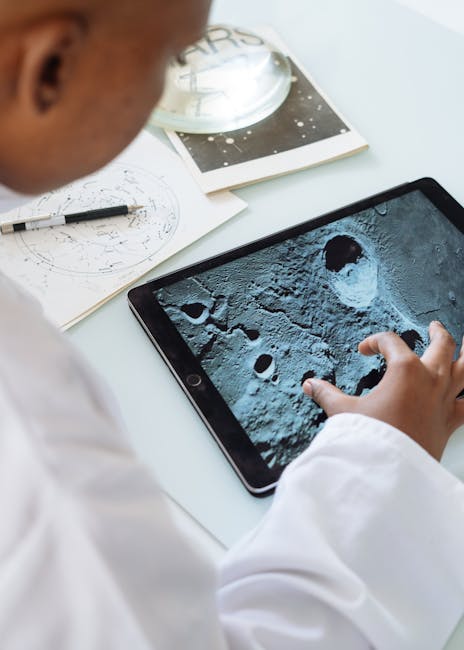
The ongoing exploration of Space Science and Technology expands our understanding of the cosmos and drives innovation with terrestrial applications. This category encompasses the scientific study of celestial objects, phenomena, and the universe, as well as the development of technologies for space exploration, observation, and utilization. Astronomy and astrophysics are fundamental to understanding the origins and evolution of the universe, searching for exoplanets, and probing fundamental questions about dark matter and dark energy. Rocketry and propulsion systems are essential for launching payloads into orbit and beyond. Satellite technology, a direct outgrowth of space research, has revolutionized communication, navigation (GPS), weather forecasting, earth observation, and remote sensing. Space exploration missions, both robotic and human, push the boundaries of engineering, materials science, and life support systems. The development of advanced telescopes and sensors for astronomical observation, often utilizing cutting-edge technologies from other fields, continuously expands our view of the universe. The technologies developed for space, from advanced materials to miniaturized electronics, often find valuable applications on Earth.
Finally, the continuous evolution of Robotics and Artificial Intelligence is blurring the lines between the physical and digital worlds, augmenting human capabilities and automating complex tasks. Robotics involves the design, construction, operation, and application of robots, which are programmable machines capable of carrying out a series of actions automatically. This field draws heavily from mechanical engineering, electrical engineering, and computer science. Artificial intelligence (AI), as previously mentioned, aims to create systems that can perform tasks typically requiring human intelligence. Machine learning, a subset of AI, enables systems to learn from data without explicit programming. The convergence of robotics and AI is leading to increasingly sophisticated autonomous systems, such as self-driving cars, industrial robots capable of complex assembly, and robotic surgeons assisting in delicate medical procedures. AI is also transforming fields like natural language processing, computer vision, and decision support systems, impacting everything from customer service to scientific research. The ethical considerations and societal implications of advanced robotics and AI are becoming increasingly important as these technologies become more integrated into our lives. The ongoing advancements across these interconnected categories of science and technology promise to continue reshaping our world in profound and often unpredictable ways, driving progress, solving challenges, and expanding the horizons of human endeavor.
