San Francisco, CA – In a significant unveiling at a chic venue near the iconic San Francisco piers, Sam Altman’s ambitious verification project, World, marked a pivotal moment in its evolution, dramatically expanding its scope and reach. The initiative, spearheaded by Tools for Humanity (TFH), announced a sweeping integration plan for its proprietary verification technology across a diverse array of public life sectors, beginning with a notable partnership with the globally recognized dating application, Tinder.
The announcement, made on Friday, detailed World’s strategic roadmap to embed its verification systems into dating apps, event and concert ticketing platforms, business organizations, email services, and numerous other facets of digital interaction. This expansion signals a proactive response to an increasingly complex digital landscape, characterized by the rapid proliferation of artificial intelligence and the growing challenge of distinguishing human users from automated agents.
Addressing the Looming AI Frontier
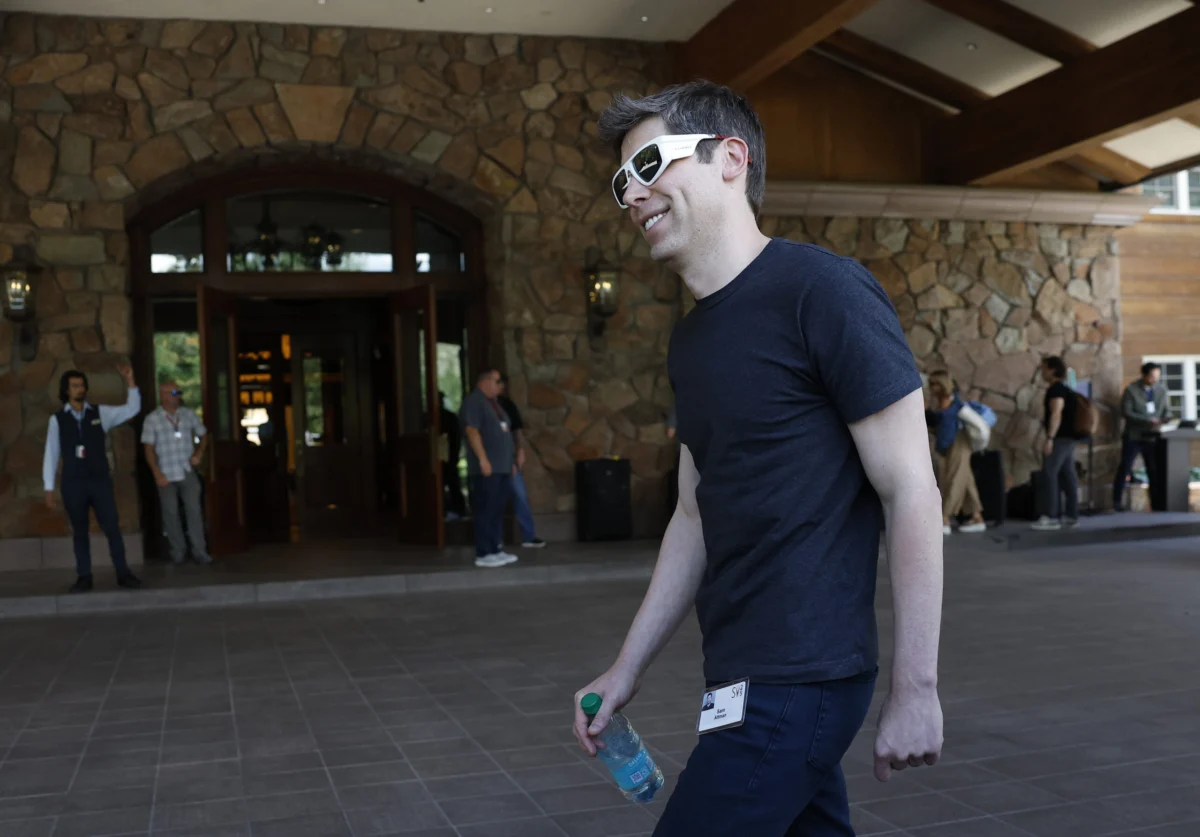
Sam Altman, a prominent figure in the technology world and a driving force behind World, addressed a packed audience at The Midway, emphasizing the urgent need for robust human verification mechanisms. "The world is getting close to very powerful AI, and this is doing a lot of wonderful things," Altman stated. "We are also heading to a world now where there’s going to be more stuff generated by AI than by humans. I’m sure many of you have had moments where you’re like, ‘Am I interacting with an AI or a person, or how much of each, and how do I know?’"
World’s core proposition lies in its ability to verify the existence of a real, living human user while meticulously safeguarding their anonymity. This is achieved through sophisticated cryptographic techniques, notably "zero-knowledge proof-based authentication." The outcome is the creation of what World terms "proof of human" tools – systems designed to authenticate human activity in an online environment increasingly populated by AI agents and bots.
The "Orb" and the Evolution of Verified Identity
At the heart of World’s verification apparatus is the "Orb," a distinctive spherical device engineered to scan users’ irises. This scan translates an individual’s iris into a unique, anonymous cryptographic identifier, known as a verified World ID. This ID serves as a passport to access World’s suite of services, though the platform also offers access through its dedicated app without requiring an Orb scan.
Altman’s remarks were concise, with much of the presentation deferred to World’s Chief Product Officer, Tiago Sada, and his team. The absence of TFH co-founder and CEO, Alex Blania, was noted, attributed to a recent, unexpected hand surgery.
Sada elaborated on the launch of the newest iteration of the World app, following the previous version’s introduction in December, which included features such as cryptocurrency payments and encrypted chat. The primary focus of the event, however, was the unveiling of World’s expanded integration capabilities.
Tinder Partnership Signals Mainstream Adoption

A key highlight was the confirmation of Tinder’s global rollout of World’s verification integration. This move follows a successful pilot program in Japan last year, where Tinder incorporated a World ID emblem into user profiles for those who had undergone World’s verification process. The global expansion will see this emblem authenticate users as real individuals on the popular dating platform, addressing concerns about fake profiles and bot activity. This partnership represents a significant step towards mainstream adoption for World’s technology, tapping into the vast user base of one of the world’s leading dating applications.
Revolutionizing Event Ticketing with Concert Kit
Beyond the dating sphere, World is making significant inroads into the entertainment industry with the introduction of "Concert Kit." This innovative feature empowers musical artists to allocate a specific number of concert tickets exclusively for World ID-verified humans. The objective is to combat the persistent problem of ticket scalping, where automated bots often monopolize ticket sales, leaving genuine fans struggling to secure seats. Concert Kit is designed for compatibility with major ticketing platforms like Ticketmaster and Eventbrite. To amplify its reach, World has secured partnerships with prominent artists such as 30 Seconds to Mars and Bruno Mars, both of whom are slated to implement Concert Kit for their upcoming tours. This initiative aims to ensure fairer access to live events for dedicated fans.
Broader Business and Security Integrations
The event also featured a series of announcements targeting the business sector. A forthcoming integration with Zoom aims to bolster the security of video conferencing by combating the threat of deepfake technology, ensuring that participants in business calls are indeed the individuals they claim to be. Furthermore, a collaboration with DocuSign is set to enhance the integrity of digital signatures, verifying that these crucial documents are executed by authentic users.
Navigating the Agentic Web and the Future of Online Identity
Looking ahead to the burgeoning "agentic web" – a future where AI agents will play a more prominent role in online activities – World is developing features such as "agent delegation." This capability will allow individuals to delegate their World ID to an AI agent, enabling the agent to perform online tasks on their behalf. In a strategic partnership with authentication firm Okta, World has developed a system, currently in beta, that verifies that an agent is operating under the direct authority of a human.
Gareth Davies, Okta’s Chief Product Officer, explained at the event that this system links a World ID to a specific agent. Consequently, when the agent interacts on the web, websites will be able to confirm that verified human activity is behind the behavior. This is a critical development for establishing trust and accountability in an increasingly automated online ecosystem.
Overcoming Scaling Challenges: A Multi-Tiered Approach to Verification
Despite its innovative technology, World has faced significant hurdles in achieving widespread adoption, largely attributed to the inherent complexities of its verification process. Historically, obtaining the highest tier of verification required an in-person visit to an Orb location for an iris scan – an experience that was often perceived as inconvenient and intrusive.
World has consistently sought to address these scaling challenges through a combination of enhanced accessibility and incentive structures. In the past, the project offered its cryptocurrency asset, Worldcoin, as an incentive for user sign-ups. Moreover, Orbs have been strategically placed in prominent retail chains, allowing users to complete verification while engaging in everyday activities like shopping. The company announced a significant expansion of Orb deployment in major U.S. cities, including New York, Los Angeles, and San Francisco. Additionally, World introduced a remote verification service, offering to bring an Orb to users’ locations.

Introducing Tiered Verification for Wider Applicability
Tiago Sada further elaborated on World’s strategy to tackle scaling issues by introducing tiered verification levels. The Orb verification remains the highest and most secure tier. Below this, World has offered a mid-level tier that utilizes an anonymized scan of a government-issued ID via its NFC chip.
The most recent innovation is a low-tier verification, described by Sada as "low friction" – meaning it requires minimal user effort, but also offers "low security." This tier involves a simple selfie verification process.
Selfie Check: Balancing Privacy and Security
The "Selfie Check" feature, presented by Sada’s team, is designed with user privacy at its forefront. Daniel Shorr, an executive at TFH, highlighted this aspect during the presentation: "Selfie is private by design. That means that we maximize the local processing that’s happening on your device, on your phone, which means that your images are yours."
While selfie verification is a common practice, it is also susceptible to fraud, with malicious actors known to employ spoofing techniques. Sada acknowledged this limitation: "Obviously, we do our best, and it’s like one of the best systems that you’ll see for this. But it has limits." He further explained that developers integrating World’s services can select the verification tier that best aligns with their specific security requirements, offering a flexible approach to identity verification.
Implications for the Digital Future
The ambitious expansion announced by World underscores a critical shift in how digital identity and human authenticity will be managed in the coming years. As AI capabilities continue to advance, the ability to reliably distinguish between human and artificial interactions will become paramount across all sectors of online life.
The integration with platforms like Tinder and the development of Concert Kit suggest a future where genuine human connection and experiences are prioritized and protected from automated manipulation. Similarly, business integrations with Zoom and DocuSign point towards a more secure and trustworthy digital workplace.
However, the success of World’s tiered verification system will ultimately depend on its ability to balance security, privacy, and user convenience. The challenges faced in scaling the highly secure Orb verification highlight the ongoing need for innovative solutions. The introduction of lower-tier verification methods, while expanding accessibility, also raises questions about the robustness of these systems against sophisticated attacks.
The broader implications extend to the very fabric of online trust. As AI becomes more sophisticated, the demand for verifiable human identity will only grow. World’s efforts to provide a scalable and adaptable solution position it as a key player in shaping the future of digital identity in an increasingly AI-driven world. The company’s trajectory suggests a determined push to establish its "proof of human" framework as a foundational element of the next generation of the internet, where authenticity and human agency are preserved.