
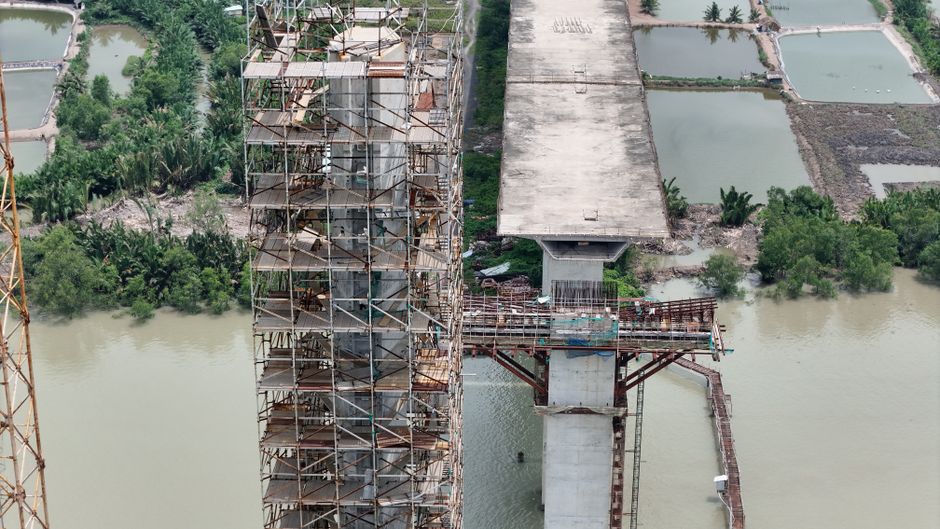
Triton MRT Project: Negotiating Trail Impacts of Bridge Construction for Sustainable Development
The Massachusetts Department of Transportation (MassDOT) embarked on the Merrimack River Transitway (MRT) project, a critical initiative to enhance public transportation and connectivity across the Merrimack Valley. A significant component of this ambitious undertaking involved the construction of new bridge infrastructure, which inevitably introduced complex challenges concerning the preservation and navigation of existing recreational trails. The Triton Marine Rail Transit (Triton MRT) team, responsible for overseeing a substantial portion of these bridge construction efforts, faced the crucial task of negotiating these trail impacts with a variety of stakeholders, including trail user groups, local municipalities, state agencies, and environmental organizations. This article delves into the strategies, considerations, and outcomes of Triton MRT’s negotiation process, highlighting best practices for minimizing disruption and fostering long-term trail sustainability in the face of large-scale infrastructure development.
The initial phase of impact assessment for Triton MRT bridge construction involved a meticulous inventory and analysis of all identified recreational trails within and adjacent to the project’s footprint. This process went beyond simply mapping existing paths; it required a deep understanding of trail usage patterns, user demographics, and the ecological sensitivity of the areas they traversed. Trail inventories typically included identifying the type of trail (e.g., multi-use path, hiking trail, cycling route, equestrian trail), its surface material, its historical significance, and its connectivity to broader trail networks. This detailed data formed the bedrock for all subsequent negotiation and mitigation efforts. Identifying critical wildlife corridors, sensitive habitats, and culturally significant sites adjacent to or intersecting with trails was paramount. Triton MRT recognized that these ecological and cultural assets were as vital to the negotiation process as the trails themselves, often requiring tailored mitigation strategies that extended beyond mere path rerouting.
Engaging stakeholders early and often was a cornerstone of Triton MRT’s successful negotiation strategy. This proactive approach aimed to build trust, gather diverse perspectives, and foster a collaborative environment. A multi-tiered stakeholder engagement framework was established, encompassing public information sessions, dedicated working group meetings, and individual consultations. Trail user groups, ranging from local cycling clubs and hiking associations to broader recreational advocacy organizations, were invited to provide direct input on potential impacts and preferred mitigation measures. Municipal representatives, responsible for local trail maintenance and land use planning, offered crucial insights into existing ordinances and community concerns. State agencies, including the Department of Conservation and Recreation (DCR) and the Massachusetts Environmental Policy Act (MEPA) office, provided regulatory guidance and ensured alignment with state environmental and recreational policies. Environmental organizations, with their deep expertise in local ecosystems, played a vital role in identifying potential ecological risks and advocating for protective measures. The feedback loop was designed to be continuous, with information shared transparently and revisions to mitigation plans communicated effectively.
One of the most significant challenges in negotiating trail impacts is the inherent conflict between the need for temporary construction access and the desire for uninterrupted trail use. Triton MRT’s approach to this challenge involved a hierarchy of mitigation strategies. The preferred strategy was avoidance, whereby construction activities were planned to completely steer clear of existing trails whenever feasible. This often required complex engineering solutions and careful phasing of construction to minimize the project’s spatial footprint. When avoidance was not possible, the next tier of mitigation focused on minimization. This involved employing techniques to reduce the duration and intensity of trail disruption. Examples included using temporary bridges or underpasses to maintain trail continuity, employing dust suppression measures to mitigate airborne particulate matter, and carefully scheduling noisy or disruptive activities to coincide with periods of lower trail usage, if such patterns could be reliably identified.
For unavoidable trail closures or significant diversions, the negotiation process shifted to developing robust detour and access plans. Triton MRT understood that simply closing a trail was not an acceptable outcome. Comprehensive detour routes were designed, often in collaboration with trail user groups, to ensure that alternative pathways were safe, clearly marked, and offered a comparable recreational experience. Signage was a critical element, with clear, visible, and consistent signage employed to guide users along detour routes and inform them of the reasons for the temporary closure. Where temporary detours were not feasible or posed significant safety risks, Triton MRT explored options for creating entirely new trail segments to replace those that would be permanently impacted by bridge construction. This required significant upfront investment in design, environmental review, and construction, but it often resulted in improved trail infrastructure and enhanced recreational opportunities in the long run.
A key negotiation point revolved around the long-term restoration and enhancement of trail systems post-construction. Triton MRT committed to not only restoring trails to their pre-construction condition but also to implementing improvements that would enhance their usability and durability. This included upgrading trail surfaces to more resilient materials, improving drainage systems to prevent erosion, and installing new amenities such as benches, informational signage, and waste receptacles. The negotiation process involved identifying specific restoration goals with trail user groups and municipal partners, ensuring that the post-construction trail environment met or exceeded community expectations. This commitment to long-term stewardship was a critical factor in gaining stakeholder buy-in and fostering a sense of shared ownership over the project’s outcomes.
Environmental mitigation was an integral and often complex aspect of the negotiation process. Bridge construction, particularly in proximity to rivers and wetlands, presented risks to sensitive ecosystems. Triton MRT worked closely with environmental agencies and conservation groups to develop and implement comprehensive environmental mitigation plans. These plans often included measures such as the establishment of buffer zones to protect riparian habitats, the implementation of strict erosion and sediment control protocols, the use of environmentally friendly construction materials, and the restoration of disturbed areas with native vegetation. Negotiations around these measures involved detailed site-specific assessments, the identification of potential impacts on threatened and endangered species, and the development of monitoring programs to ensure the effectiveness of mitigation efforts. The inclusion of ecological restoration as part of the project’s scope, often involving the creation of new habitat or the enhancement of existing ones, became a valuable negotiation tool, demonstrating a commitment to environmental preservation that resonated with various stakeholders.
A significant portion of the negotiation revolved around the establishment of clear communication channels and feedback mechanisms throughout the construction lifecycle. Triton MRT recognized that transparency was paramount to maintaining positive relationships with stakeholders. Regular progress updates were provided through various channels, including project websites, email newsletters, and public meetings. A dedicated point of contact was established for trail-related inquiries and concerns, ensuring that user feedback was promptly addressed and incorporated into ongoing decision-making. This responsiveness fostered a sense of partnership and demonstrated a genuine commitment to mitigating negative impacts. When unforeseen issues arose, such as unexpected trail damage or increased noise levels, Triton MRT proactively communicated these challenges to stakeholders and collaboratively developed solutions.
The negotiation process also had to address the financial implications of trail impact mitigation. Triton MRT understood that effectively addressing trail impacts required dedicated funding. The project budget allocated resources for trail analysis, design of mitigation measures, construction of temporary detours, permanent trail restoration, and long-term enhancements. Negotiations sometimes involved discussions about the scope of these investments, balancing the desire for comprehensive mitigation with the overall project cost. However, Triton MRT generally approached these discussions from a perspective of long-term value, recognizing that investing in robust trail mitigation not only satisfied regulatory requirements but also fostered goodwill and contributed to the broader success of the MRT project by ensuring continued recreational access and environmental health.
The long-term success of the Triton MRT bridge construction project, from a trail impact perspective, hinges on a commitment to ongoing monitoring and adaptive management. Even with the most thorough planning and negotiation, unforeseen circumstances can arise. Triton MRT established protocols for monitoring the condition of restored trails, the effectiveness of environmental mitigation measures, and user satisfaction. This data-driven approach allows for adaptive management, where mitigation strategies can be adjusted as needed based on real-world performance. For example, if erosion issues are observed on a restored trail segment, additional stabilization measures can be implemented. Similarly, if trail user feedback indicates ongoing accessibility challenges, further adjustments to signage or routing can be made. This commitment to continuous improvement ensures that the legacy of the MRT project includes a resilient and enhanced trail network for future generations.
In conclusion, the Triton MRT project’s approach to negotiating the trail impacts of bridge construction provides a valuable case study in sustainable infrastructure development. By prioritizing early and inclusive stakeholder engagement, employing a hierarchy of mitigation strategies, committing to long-term restoration and environmental stewardship, and maintaining transparent communication throughout the process, Triton MRT successfully navigated complex challenges. The successful outcome demonstrates that large-scale infrastructure projects can coexist with and even enhance valuable recreational resources, fostering a balance between development needs and the preservation of public spaces. The lessons learned from Triton MRT’s experience offer a roadmap for future projects seeking to minimize disruption and maximize positive outcomes for both infrastructure and community-based trail systems.
