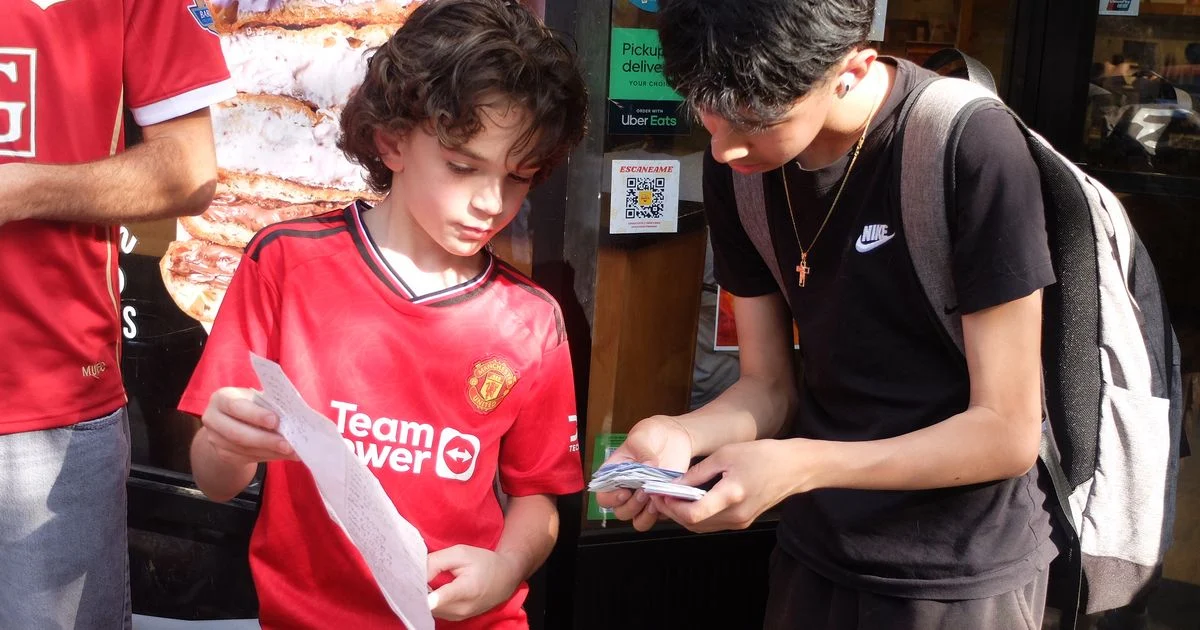
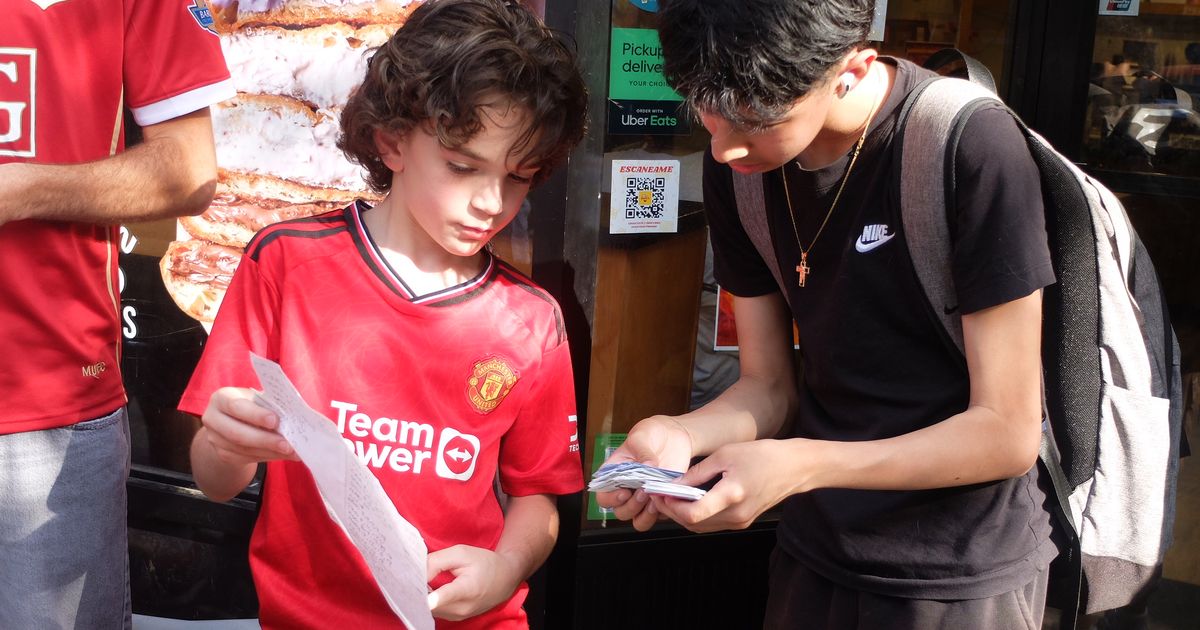
On the bustling sidewalks of Jackson Heights, Queens, a neighborhood often described as the most diverse square mile in the world, a unique economic and social ecosystem emerges every four years. Outside the Uruguayan restaurant El Chivito D’Oro, located at the intersection of 84th Street and 37th Avenue, the typical rhythm of New York City traffic is eclipsed by a specialized gathering of collectors. Dozens of children, parents, and seasoned enthusiasts congregate daily to participate in a ritual that has spanned generations: the trading of Panini World Cup stickers. As the 2026 FIFA World Cup unfolds across North America, this corner has solidified its reputation as the unofficial headquarters for soccer aficionados seeking to complete their commemorative albums.
The phenomenon is centered on the Italian collectibles company Panini, which has produced the official FIFA World Cup sticker album for every tournament since 1970. For the 2026 edition, the stakes and the scale have reached unprecedented levels. With the tournament expanding to include 48 nations, the current album requires a staggering 980 stickers to complete, covering every player, team emblem, and host stadium across the United States, Mexico, and Canada. While these stickers are distributed through major retailers like Target, Walgreens, and Amazon at approximately $2 per pack, the "blind box" nature of the product—where consumers do not know which stickers are inside a sealed packet—makes the act of trading an absolute necessity for those hoping to fill all 980 slots without spending thousands of dollars.
The Cultural Significance of the Panini Tradition
The tradition of collecting Panini stickers is deeply rooted in the cultural fabric of Latin America and Europe. In countries like Colombia, Mexico, Argentina, and Uruguay, the release of the World Cup album marks the unofficial start of the tournament season. It is a hobby that permeates schools, offices, and public plazas. However, in the United States, where the sports memorabilia market has historically been dominated by baseball, basketball, and American football cards, soccer collectibles have traditionally occupied a niche space.
The 2026 World Cup has catalyzed a shift in this dynamic. With the tournament being hosted on home soil and the recent "Messi effect" significantly boosting the profile of Major League Soccer (MLS), the Panini craze has transitioned from an immigrant-led tradition to a broader mainstream interest. In Jackson Heights, a neighborhood with a high concentration of residents from South and Central America, the meetup at 84th Street serves as a bridge between these two worlds. It is a place where Spanish and English phrases like "Qué te falta?" and "Whatchu got?" mingle in the air, reflecting a shared obsession that transcends linguistic barriers.
The Mechanics of the Jackson Heights Trading Hub
The gathering at El Chivito D’Oro is not a formal event but a spontaneous, community-driven marketplace. Since the 2010 World Cup in South Africa, the corner has evolved into a reliable hub due to the presence of "professional" traders. These individuals are devoted collectors who source stickers in bulk directly from Panini or through secondary markets, maintaining exhaustive inventories of duplicates. By setting up tables and folders, they provide a structured environment where amateurs can find specific "hard-to-get" stickers, such as team foils or global superstars like Lionel Messi and Kylian Mbappé.
While these professional traders do sell individual stickers to cover their costs, many emphasize that their presence is primarily about community service. The revenue generated is often marginal compared to the time invested; the true value lies in maintaining a local tradition. The crowd typically begins to form as early as 10:00 a.m. on weekends, peaking around 5:00 p.m. as residents return from work or finish their weekend errands. At any given hour, upwards of 60 people can be found huddled in small groups, clutching hand-written lists of numbers that correspond to the missing entries in their albums.
Generational Bonds and Personal Narratives
For many participants, the sticker album is more than a book of images; it is a vessel for family history and personal milestones. Sophia Ballinas, a 23-year-old Spanish teacher from Forest Hills, exemplifies this generational connection. Having started her first album as a child with her father, a Mexican immigrant, Ballinas views the 2026 tournament as an opportunity to finally achieve a goal that eluded her in her youth. "Growing up, I never had enough money to complete an album," Ballinas noted. Now an adult with her own income, she frequents the Jackson Heights corner to secure the final stickers she needs, though she admits she still enjoys the nostalgia of asking her father to buy her a pack.
The social landscape of the corner also highlights the changing roles within immigrant families. Diana Peralta, 42, and her son David Orellana, 24, moved to Jackson Heights from Quito, Ecuador, six years ago. In Ecuador, the pair were avid collectors, but after immigrating, they struggled to find a community to trade with during the 2022 World Cup in Qatar. This year, they have found their place at the 84th Street meetup. The roles have shifted with time: David now handles the active negotiations and swapping, while his mother carefully places each newly acquired sticker into the album, ensuring every corner is perfectly aligned.
Similarly, the Julia family demonstrates how the hobby has expanded beyond traditional soccer fans. Kevin Julia, 32, grew up identifying as a "baseball guy," but the influence of his Latino friends in high school eventually drew him into the world of soccer collectibles. This year, he has brought his father into the fold. "He loves blind boxes," Kevin said, describing how the thrill of opening packs has become a bonding experience for the two of them. The act of trading in Jackson Heights has become a Father’s Day tradition for the family, creating memories that Kevin believes will outlast the tournament itself.
The Mathematical Challenge of Completion
The drive to trade is fueled by the daunting mathematical odds of completing an album through individual purchases alone. Statistical analyses of previous Panini collections suggest that to fill a 600-sticker album without trading, a collector would need to purchase approximately 900 to 1,000 packs on average to account for the high probability of duplicates. With the 2026 album featuring 980 stickers, the number of required packs would likely double, making completion financially unfeasible for the average person.
The Jackson Heights meetup functions as a decentralized exchange that corrects this market inefficiency. By pooling their duplicates, the community ensures that stickers which are "trash" to one person become "treasure" to another. This is particularly evident among the younger participants. Marco Gonzalez, 16, has spent the last month teaching his 9-year-old brother, Mason, the art of the trade. Mason now leads their negotiations, navigating the crowd with a list of missing numbers and engaging with collectors twice his age. Their father, Gary, watches from the sidelines, noting that the hobby has provided a unique platform for his sons to develop social skills and bond over a shared objective.
Impact on Local Identity and the Urban Landscape
The "World Cup of Stickers" in Jackson Heights is a testament to the power of public space in New York City. The sidewalk outside El Chivito D’Oro serves as a "third place"—a social environment separate from home and work where community ties are forged. For residents like 20-year-old Julian Cruhigger, who has been coming to the corner since the 2014 World Cup, the evolution of the scene reflects the growth of the neighborhood itself. Cruhigger, who now lives in Long Island, travels back to Queens specifically for the trading atmosphere. "It definitely did tie me closer to my Colombian roots," he said, reflecting on how the hobby has anchored his identity even as his physical location has changed.
The proliferation of sticker stands—now appearing on almost every block in the vicinity—indicates the economic vitality of the hobby. It provides a seasonal boost to local street vendors and restaurants, as traders often spend hours in the area, purchasing food and drinks between sessions.
Conclusion and Broader Implications
As the 2026 World Cup continues, the scene in Jackson Heights offers a microcosm of the tournament’s broader impact on American culture. What was once a localized immigrant tradition has become a vibrant, multi-generational phenomenon that reflects the country’s growing embrace of global soccer. The Panini sticker album, while a commercial product, serves as a catalyst for social cohesion, family bonding, and the preservation of cultural heritage.
The "professional" traders, the eager children, and the nostalgic parents gathered on the corner of 84th Street are engaged in a pursuit that is ostensibly about paper and adhesive, but is fundamentally about belonging. In a city as fast-paced as New York, the slow, deliberate process of searching for a single missing player provides a rare moment of connection. Whether or not every collector finishes their 980-sticker album, the community they have built on a Queens sidewalk remains a definitive victory for the spirit of the World Cup.