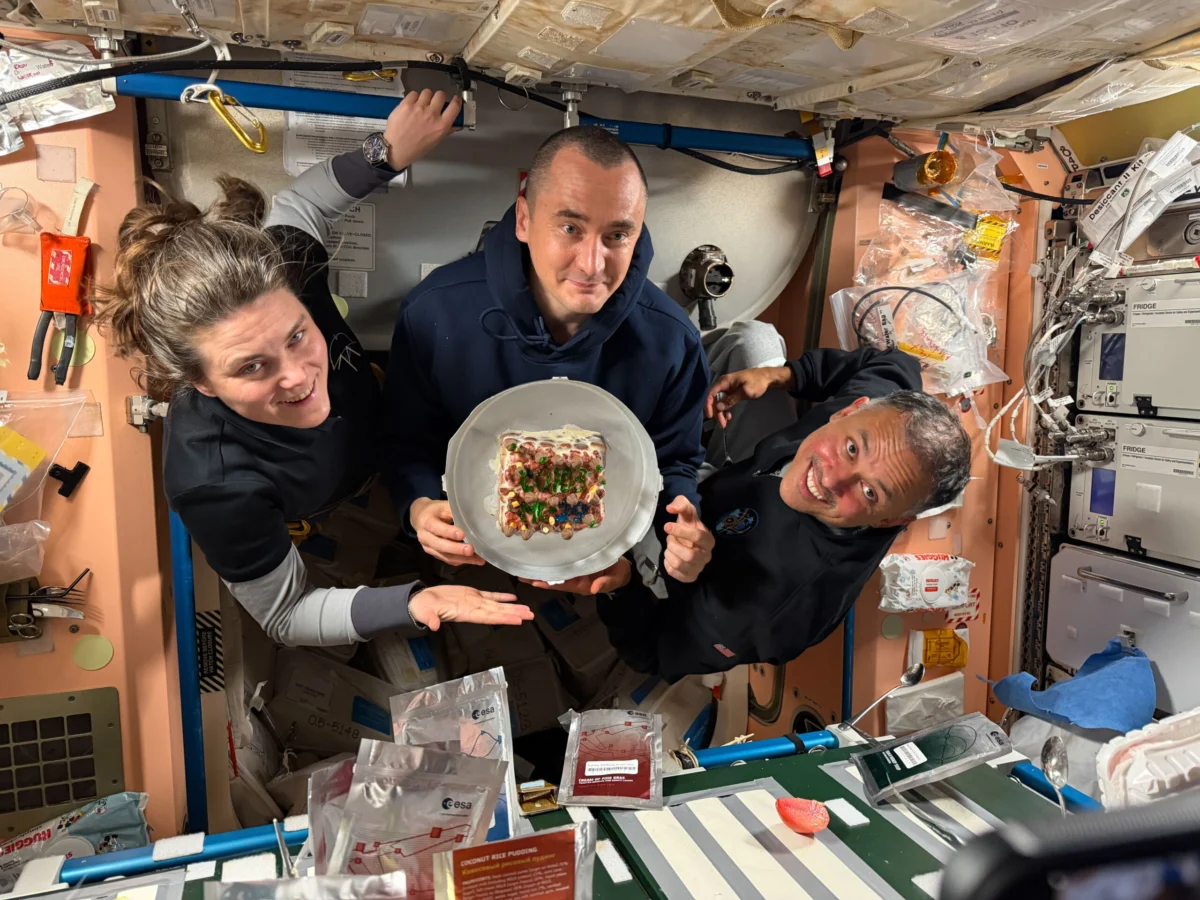
The newest contingent of astronauts and cosmonauts aboard the International Space Station (ISS), Expedition 74, has officially commenced their extended mission, marking a significant milestone in ongoing international cooperation in low-Earth orbit. The trio, comprising Roscosmos cosmonauts Anna Kikina and Pyotr Dubrov, alongside NASA astronaut Anil Menon, celebrated their successful arrival on July 14, 2026, with a celebratory cake shortly after reaching the orbiting laboratory on July 18, 2026. This marks the beginning of their approximately eight-and-a-half-month stay, during which they will contribute to a diverse array of scientific research and operational tasks.
A Seamless Transition to the Orbiting Laboratory
The journey to the ISS began with a powerful launch from the Baikonur Cosmodrome in Kazakhstan on July 14, 2026. The precise timing of the launch and subsequent rendezvous with the space station underscores the advanced capabilities of the Soyuz spacecraft and the meticulous planning involved in human spaceflight operations. Upon docking, the crew was welcomed by their fellow Expedition 74 members, embarking on a period of intense activity that balances the demands of pioneering scientific inquiry with the fundamental challenges of adapting to life and work in microgravity.
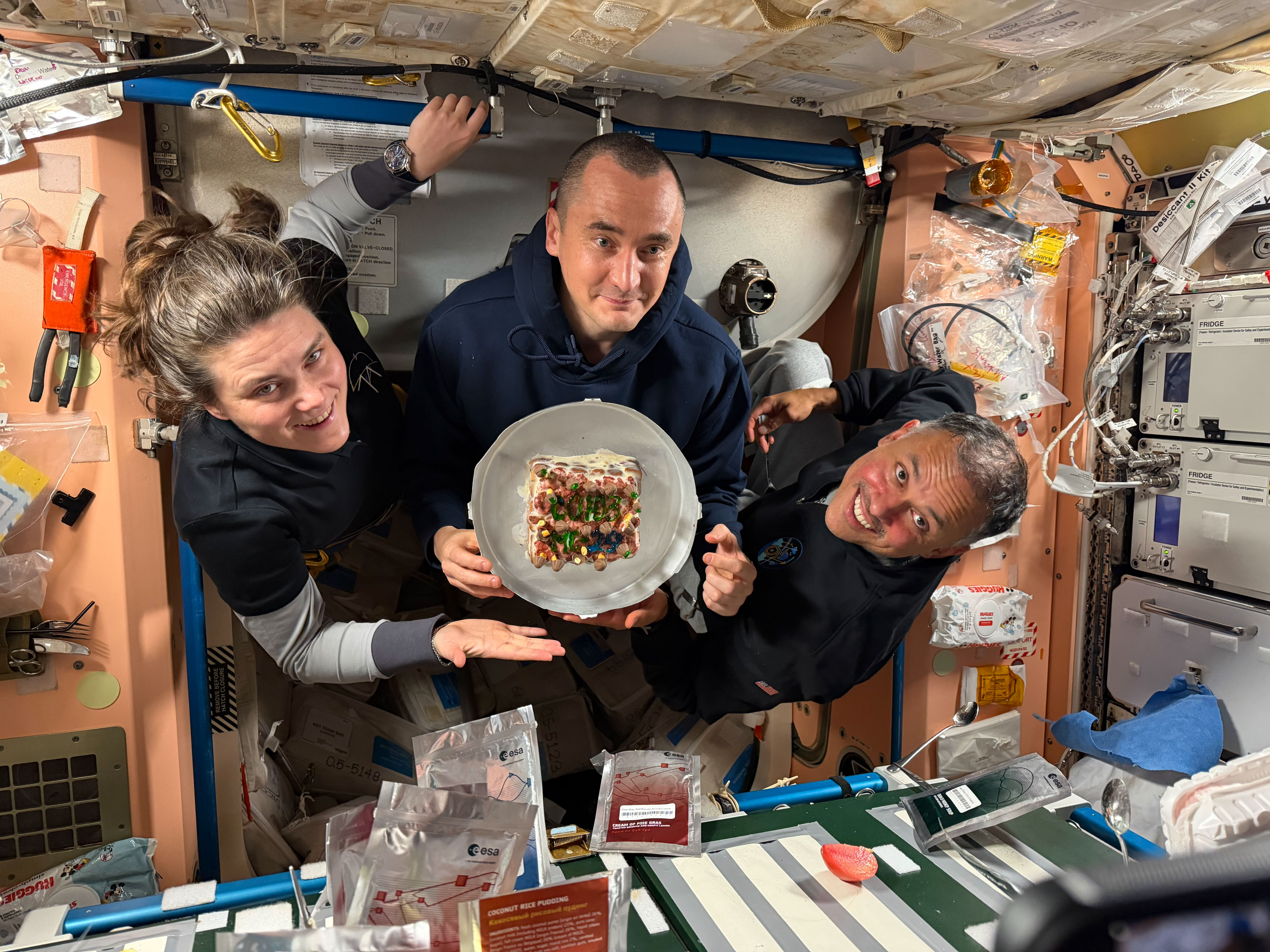
The image capturing the moment of celebration, taken on July 18, 2026, depicts Kikina, Dubrov, and Menon posing with a cake, a poignant symbol of their shared achievement and the camaraderie that is essential for long-duration space missions. This tradition, while seemingly informal, highlights the human element of space exploration, acknowledging the personal sacrifices and triumphs involved in venturing beyond Earth’s atmosphere. Their presence aboard the ISS signifies the continuation of a vital international partnership, with agencies like NASA and Roscosmos working collaboratively to advance scientific understanding and technological innovation.
Expedition 74: A Mandate for Discovery and Innovation
The primary objective of Expedition 74, like its predecessors, is to leverage the unique environment of the ISS to conduct groundbreaking scientific research across a multitude of disciplines. Astronauts and cosmonauts serve as the hands and eyes for scientists on Earth, performing experiments that range from fundamental physics and biology to advanced materials science and Earth observation. The microgravity environment of the ISS allows for phenomena to be studied in ways that are impossible on Earth, leading to discoveries that have implications for human health, technological development, and our understanding of the universe.
During their eight-and-a-half-month tenure, Kikina, Dubrov, and Menon will be integral to a packed schedule of scientific investigations. These experiments are often the culmination of years of planning, development, and testing by research teams worldwide. The astronauts’ role in executing these complex procedures with precision and adaptability is critical to the success of each study. Furthermore, as they familiarize themselves with the intricacies of living and working aboard the station, they are simultaneously honing their skills to become proficient in the operation of the ISS itself, a complex orbiting laboratory that requires constant monitoring and maintenance.
Background and Context: The enduring Legacy of the ISS
The International Space Station represents one of the most ambitious and successful collaborative projects in human history. Launched in 1998, it is a testament to the power of international cooperation, with major contributions from the United States (NASA), Russia (Roscosmos), Europe (ESA), Japan (JAXA), and Canada (CSA). The station has been continuously inhabited since November 2000, providing an unparalleled platform for scientific research and technological development in low-Earth orbit.
The ISS orbits the Earth approximately 16 times per day, traveling at a speed of roughly 17,500 miles per hour. This constant motion allows for extensive observation of our planet and provides a unique vantage point for astronomical studies. Over its operational lifespan, the ISS has hosted thousands of scientific experiments, contributing to advancements in fields such as medicine, materials science, and climate research. It has also served as a vital testbed for technologies destined for future deep-space missions, including those planned for the Moon and Mars.
The crew rotation system, such as the one undertaken by Expedition 74, is a cornerstone of the ISS’s sustained operations. Astronauts and cosmonauts typically serve missions lasting between six months and a year, ensuring a continuous presence of skilled personnel aboard the station. The selection and training of these individuals are rigorous, encompassing extensive technical education, physical conditioning, and psychological preparation to withstand the challenges of long-duration spaceflight.
Chronology of Arrival and Early Mission Activities
- July 14, 2026: Expedition 74 crew members Anna Kikina, Pyotr Dubrov, and Anil Menon launch from the Baikonur Cosmodrome in Kazakhstan aboard a Soyuz spacecraft. The launch occurs as planned, initiating their journey to the International Space Station.
- July 14, 2026: Following a multi-orbit rendezvous, the Soyuz spacecraft successfully docks with the International Space Station. The crew performs ingress procedures and is greeted by the existing ISS crew.
- July 18, 2026: The Expedition 74 crew members, now in their second week aboard the ISS, share a moment of celebration, posing with a cake to commemorate their arrival and the beginning of their mission.
- Ongoing: The crew begins the intensive process of familiarizing themselves with the station’s complex systems and initiating their planned scientific research program. This phase involves adapting to microgravity and mastering the operational procedures required for their experiments and daily tasks.
Supporting Data and Operational Metrics
The International Space Station is a marvel of engineering, with a total mass of approximately 929,787 pounds (421,700 kilograms) and a living and working volume comparable to a six-bedroom house. Its power is generated by vast solar arrays, spanning an area of 27,000 square feet, capable of producing up to 120 kilowatts of electricity. This energy powers the station’s life support systems, scientific equipment, and communication capabilities.
The station’s orbital altitude typically ranges between 220 and 270 miles (354 to 435 kilometers) above Earth’s surface. The continuous maintenance of this orbit requires periodic reboosts, often performed by Russian Progress cargo vehicles or by the thrusters of visiting spacecraft. Over its operational history, the ISS has served as a platform for over 3,000 research studies from more than 100 countries, highlighting its global significance.
The duration of the Expedition 74 mission, approximately eight and a half months, is typical for long-duration stays on the ISS. These extended periods allow astronauts and cosmonauts to accumulate significant experience in microgravity research and to contribute meaningfully to ongoing scientific endeavors. The physiological effects of prolonged exposure to microgravity are a key area of study, informing strategies to mitigate potential health risks for future space explorers, particularly those undertaking long voyages to other planets.
Official Statements and Reactions
While specific official statements directly commenting on the Expedition 74 crew’s initial weeks might be released through official channels by NASA and Roscosmos, the general sentiment surrounding such arrivals is one of continued commitment to space exploration and international collaboration.
A spokesperson for NASA, when reached for comment on typical mission starts, might state: "The safe arrival of our astronauts and cosmonauts aboard the International Space Station is a testament to the dedication and expertise of our international partners. Expedition 74’s crew is now poised to contribute significantly to the vital scientific research conducted on the station, pushing the boundaries of human knowledge and technological innovation. We are proud of the enduring partnership that makes these missions possible."
Similarly, a representative from Roscosmos might emphasize the collaborative spirit: "The ongoing collaboration with NASA and other international agencies on the International Space Station remains a cornerstone of our space program. The arrival of cosmonauts Anna Kikina and Pyotr Dubrov, alongside their NASA colleague, signifies the continuation of this vital international endeavor. We look forward to their contributions to science and exploration in orbit."
These inferred statements reflect the consistent public messaging from space agencies regarding the importance of the ISS and the value of international cooperation in achieving common goals in space.
Broader Impact and Future Implications
The work undertaken by Expedition 74 aboard the International Space Station has far-reaching implications, extending beyond the immediate scientific discoveries. The research conducted in microgravity contributes to a deeper understanding of fundamental biological processes, which can lead to advancements in medicine and healthcare on Earth. For instance, studies on bone density loss and muscle atrophy in space can inform treatments for osteoporosis and age-related conditions.
Furthermore, the ISS serves as a crucial testing ground for technologies essential for future deep-space exploration. Innovations in life support systems, advanced materials, and propulsion technologies developed for the station can pave the way for human missions to Mars and beyond. The experience gained by astronauts and cosmonauts during long-duration missions also provides invaluable data on the psychological and physiological challenges of extended space travel, informing the development of strategies to ensure the well-being of future interplanetary explorers.
The continued operation of the ISS, supported by crews like Expedition 74, reinforces the importance of international collaboration in addressing complex global challenges and pursuing ambitious scientific endeavors. In an era where global cooperation is increasingly vital, the ISS stands as a powerful symbol of what can be achieved when nations work together towards a common, aspirational goal. The data gathered and the experiences gained during these missions will undoubtedly shape the future of space exploration for decades to come.