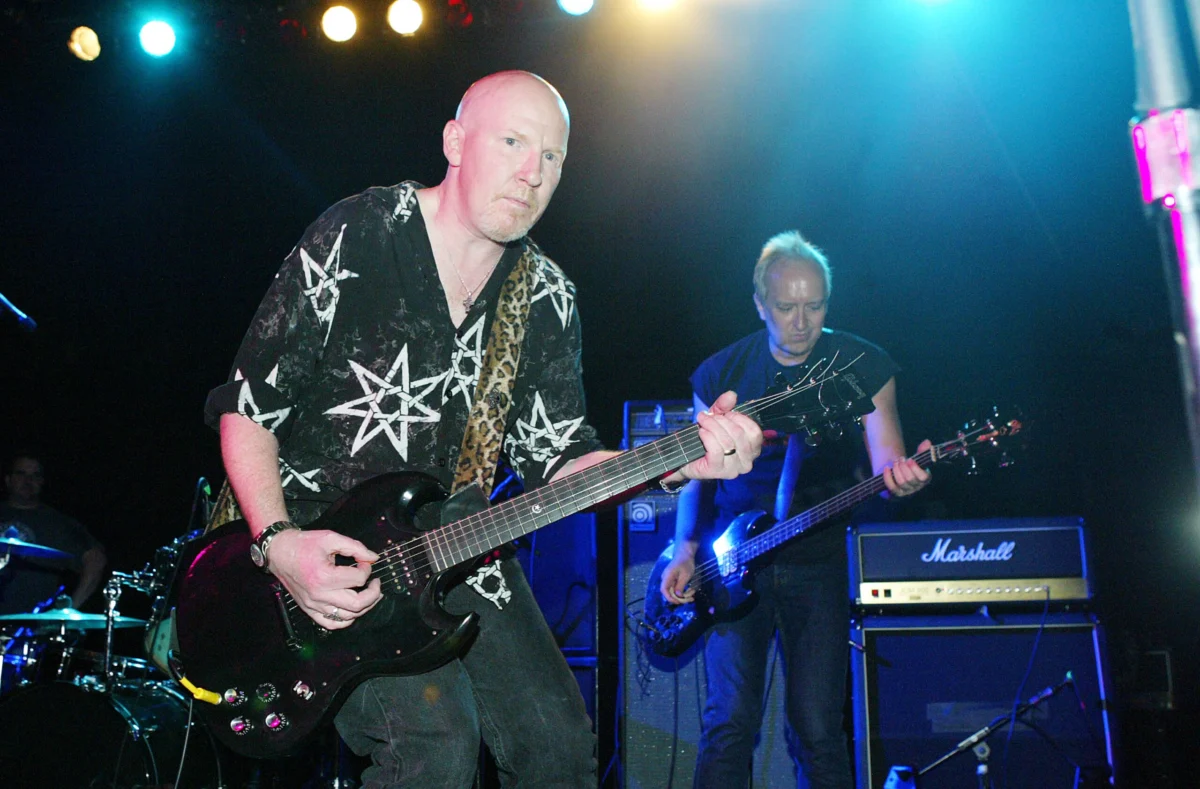
Eugene Richard O’Connor, the trailblazing punk rock guitarist universally known by his stage name Cheetah Chrome, has died at the age of 71. His passing on Sunday was officially confirmed by his bandmates in a heartfelt statement shared on Instagram, plunging the global punk community into mourning for one of its foundational architects. Chrome was widely celebrated for his fierce, high-energy guitar playing, which helped define the abrasive, aggressive sound of first-wave American punk.
The remaining members of the Dead Boys expressed their profound grief over the loss of their longtime friend and collaborator. In a collective statement, Tony, Chris, Mark, and the broader Dead Boys family paid tribute to his indelible musical legacy and his personal character. "We are incredibly sad to announce the news of the passing of our beloved friend and bandmate Cheetah Chrome," the band wrote. "Cheetah was a true original, an architect of the punk rock movement. A one-man hurricane tearing up the musical landscape with his feral guitar riffs and manic energy. Beyond all that, Cheetah was also just a really sweet guy that loved rock ‘n’ roll."
The band extended their condolences to Chrome’s grieving family, friends, and legions of fans worldwide, emphasizing that his uncompromising musical contributions will endure and continue to inspire future generations of musicians. The family has requested privacy as they navigate the difficult period following his death. Chrome is survived by his wife, Anna O’Connor, and his 14-year-old son, Rogan, both of whom reside in Nashville, Tennessee, where the musician spent his later years.
From Midwestern Roots to the Birth of Punk
Born in Cleveland, Ohio, Eugene Richard O’Connor developed an affinity for raw, high-volume rock and roll during the early 1970s, a period when mainstream popular music was dominated by polished arena rock and progressive compositions. Finding kindred spirits who shared a distaste for corporate music production, Chrome immersed himself in the burgeoning underground scene of his home state.
In 1974, Chrome joined forces with other seminal figures of the Ohio underground to form Rocket from the Tombs, a short-lived but massively influential protopunk band that also featured future Pere Ubu frontman David Thomas and Cheetah’s future Dead Boys bandmate Peter Laughner. Although Rocket from the Tombs released very little official material during its initial run, the group’s uncompromising ethos, blistering volume, and cynical worldview laid the critical groundwork for both the Cleveland punk scene and the broader national movement.
Following the dissolution of Rocket from the Tombs, Chrome and vocalist Stiv Bators partnered with drummer Johnny Blitz to form Frankenstein. Shortly thereafter, the trio relocated to New York City at the invitation of Dead Boys manager and promoter Craig Leon, officially rebranding themselves as the Dead Boys. New York’s notorious CBGB club—the epicentre of the American punk explosion alongside venues like Max’s Kansas City—became their stomping ground. The Dead Boys quickly distinguished themselves from their CBGB contemporaries, such as Television and the Patti Smith Group, through a level of physical violence, onstage nihilism, and sonic brutality that pushed the boundaries of even the punk genre.
Chronology of the Dead Boys
The career of the Dead Boys was marked by explosive creativity, internal friction, and commercial frustration. A chronological overview of the band’s trajectory highlights their turbulent history:
1974: Cheetah Chrome joins the influential Cleveland protopunk outfit Rocket from the Tombs, establishing his reputation as a formidable guitarist.
1975–1976: Chrome, Stiv Bators, and Johnny Blitz form Frankenstein, subsequently relocating to New York City and transforming into the Dead Boys.
1977: The band releases their debut studio album, Young, Loud and Snotty, via Sire Records. The record features signature tracks like Sonic Reducer, which becomes an enduring punk anthem.
1978: The Dead Boys release their sophomore album, We Have Come for Your Children, produced by Felix Pappalardi. Despite critical praise for its aggressive production, the album fails to achieve mainstream commercial success.
1979: Facing mounting pressures, commercial stagnation, and internal conflicts, the Dead Boys officially disband, though they briefly reconvene for contractual obligation recordings.
1980s–2010s: Chrome embarks on various solo projects, collaborates with other punk luminaries, and eventually relocates to Nashville. The Dead Boys reunite intermittently over the decades for special live performances, though no new studio albums are recorded.
2027: Plans had been formally established for the band to embark on a 50th-anniversary tour celebrating the legacy of their debut album.
Musical Legacy and Cultural Impact
The cultural impact of Cheetah Chrome and the Dead Boys extends far beyond their modest commercial sales during the 1970s. Their debut album, Young, Loud and Snotty, is widely regarded by music historians and critics as a masterpiece of first-wave punk. The track Sonic Reducer, featuring Chrome’s iconic, jagged opening guitar riff, has been covered by dozens of subsequent rock and punk bands, including Pearl Jam, the Foo Fighters, and Guns N’ Roses.
While British punk bands like the Sex Pistols and The Clash captured mainstream media attention through political provocation and fashion, American punk acts like the Dead Boys leaned heavily into shock value, visceral performance art, and pure sonic aggression. Chrome’s guitar work was central to this aesthetic. Eschewing traditional blues-based solos in favor of screeching feedback, rapid-fire downpicking, and distorted distortion pedals, he helped codify the sonic template for hardcore punk, grunge, and alternative rock that would emerge in the 1980s and 1990s.
In his later years, Chrome remained active in the music community, embracing Nashville’s diverse musical landscape while remaining an elder statesman of punk. He published an autobiography, Cheetah Chrome: Dead Boy on the Road, in 2010, detailing the hedonism, struggles, and triumphs of the 1970s punk explosion with characteristic candor and wit.
Broader Industry Reaction and Implications
News of Chrome’s passing prompted an immediate outpouring of grief and remembrance across social media from contemporary musicians, critics, and younger artists influenced by his work. Figures from across the spectrum of alternative and punk rock shared archival photographs, performance footage, and personal anecdotes underscoring his warmth, humility, and dedication to the craft of rock and roll.
Industry analysts note that the loss of first-wave punk pioneers like Cheetah Chrome marks the gradual fading of a foundational generation of artists who fundamentally reshaped popular culture. As these iconic figures pass away, the responsibility of preserving, archiving, and contextualizing the origins of punk rock falls increasingly to historians, cultural institutions, and dedicated fans.
The planned 2027 fiftieth-anniversary tour celebrating the release of Young, Loud and Snotty now takes on a deeply poignant significance for the surviving members and the band’s global fanbase. While the loss of Chrome leaves an irreplaceable void in the lineup, his recorded output, his blistering guitar tones, and the enduring ethos of the Dead Boys will continue to resonate, serving as a testament to a musician who helped change the course of modern music history.