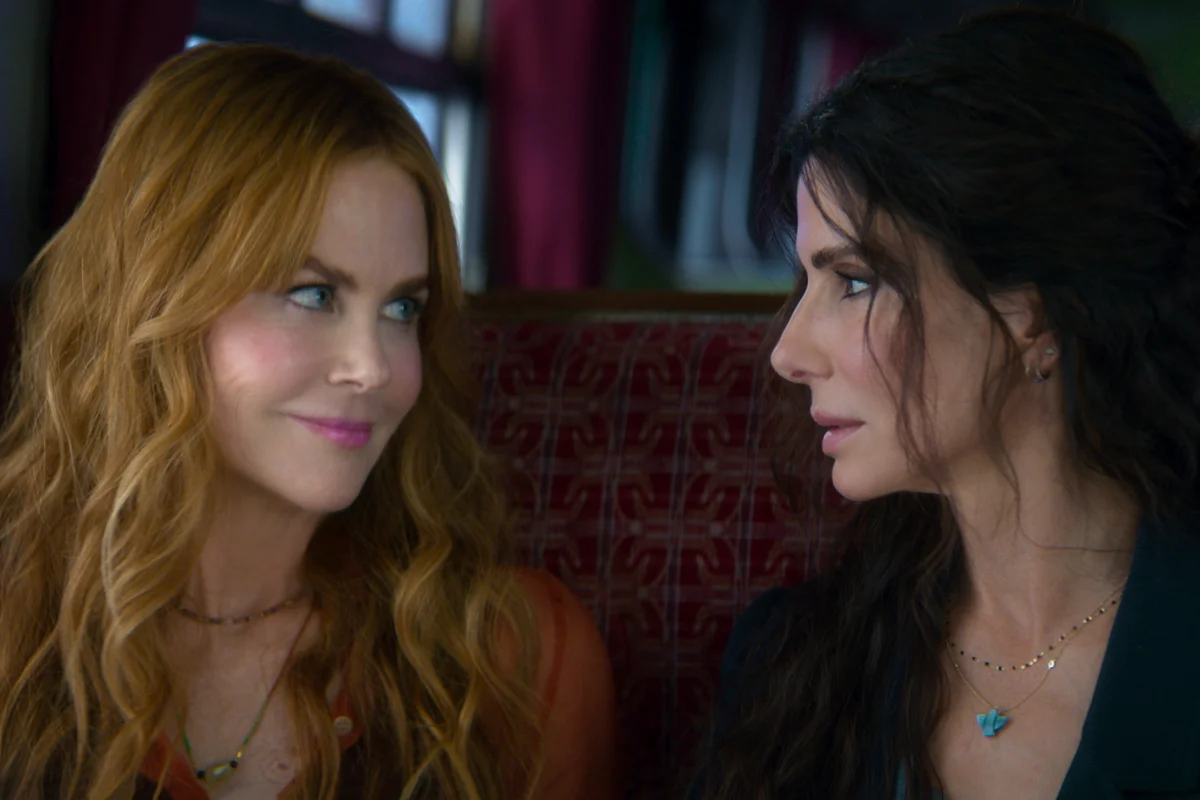
The release of Practical Magic 2 has ignited a familiar debate surrounding the divide between critical reception and audience adoration. Debuting on review aggregation platforms with a modest approval rating of 34 percent, the Susanne Bier-directed sequel has faced harsh evaluations from mainstream film reviewers. The project arrives 28 years after the beloved 1998 original, reuniting Academy Award winners Sandra Bullock and Nicole Kidman as the magical Owens sisters, Sally and Gillian. Yet, while professional critics have targeted the film’s visual choices, screenplay adjustments, and tonal direction, the reception highlights a broader cinematic phenomenon: the enduring strength of nostalgic franchises built upon foundational themes of sisterhood and community rather than traditional critical acclaim.
Chronology and Plot Development of the Sequel
The narrative of Practical Magic 2 picks up decades after the events of the original film, centering on the ongoing struggles of the Owens family lineage. The central conflict arises when Sally’s daughters, Kylie and Antonia—portrayed respectively by Joey King and Maisie Williams—discover that their latent magical abilities are real and that the family’s centuries-old curse remains unbroken. According to familial lore, any man who falls in love with an Owens woman meets an untimely demise.
The plot accelerates when Kylie’s partner, played by Xolo Maridueña, sustains critical injuries in an automobile accident and lapses into a coma. Desperate to dismantle the curse before it claims another life, Kylie travels to London, prompting Sally and Gillian to embark on a rescue mission. Along the way, the sisters enlist the expertise of a magic historian, played by Lee Pace, to navigate the complexities of international witchcraft and ancestral hexes. This transatlantic shift represents a distinct departure from the isolated New England aesthetic that defined the initial cinematic adaptation of Alice Hoffman’s literary universe.
Critical Consensus Versus Fan Expectations
Reviewers have compiled a comprehensive list of grievances regarding the sequel’s execution. Chief among the criticisms is the lighting design, which trades the moody, autumnal atmosphere of the 1998 picture for brighter, harsher visual framing. Furthermore, critics have noted that computer-generated imagery diminishes the understated, practical effects that grounded the original film’s mystical elements.
The relocation from the iconic Massachusetts Victorian home to foreign settings has also drawn negative attention, with reviewers questioning the narrative necessity of the London sequence. Additional points of contention include a runtime of 130 minutes—substantially longer than its predecessor—and the recasting of key secondary roles. Evan Rachel Wood and Alexandra Artrip, who portrayed Bullock’s daughters in the 1998 release, were replaced by King and Williams to align with the age requirements established in Hoffman’s 2021 sequel novel, The Book of Magic. This creative decision, while faithful to the source material, drew public commentary from original cast members and left some dedicated followers disappointed by the lack of cameo appearances.
Despite these production choices, the film’s core audience has rallied behind the project. While professional assessments characterize the narrative as bloated and tonally uneven, fan demographics have embraced the continuation of the characters’ journeys. Audience approval metrics on aggregate sites stand in stark contrast to professional reviews, reflecting a phenomenon common among cult classic revivals where emotional resonance supersedes technical cinematic standards.
Historical Context of the 1998 Original
To understand the trajectory of Practical Magic 2, industry analysts frequently look back at the rocky production and release history of the original 1998 film. Directed by Griffin Dunne and based on Alice Hoffman’s 1995 novel, the first installment was met with severe skepticism by contemporary reviewers. Critics struggled to categorize the film’s blend of romantic comedy, supernatural drama, and dark tragedy, leading to widespread negative notices upon its theatrical rollout.
Reflecting on the initial release, principal cast members and producers have noted the intense scrutiny the film faced. Producer Denise Di Novi has frequently cited the institutional resistance and gender-based bias present in Hollywood during the late 1990s, recalling reviews that criticized the project simply for assembling an ensemble cast dominated by women. Despite these obstacles, the film gradually cultivated a dedicated following through home video distribution, late-night cable broadcasts, and holiday viewings. Over nearly three decades, the movie evolved from a commercial and critical disappointment into a celebrated cultural touchstone, recognized for its exploration of female solidarity, generational trauma, and domestic independence.
Industry Implications and Box Office Projections
The commercial performance of Practical Magic 2 challenges the assumption that negative critical notices preclude financial success for legacy sequels. Early box office tracking indicates a robust opening weekend, with projections estimating a domestic haul exceeding $30 million. This performance suggests that the target demographic—audiences invested in the intellectual property’s nostalgic value—remains largely insulated from professional critical consensus.
The disconnect between critics and audiences in this release underscores a shifting paradigm in modern entertainment economics. Studios increasingly rely on established intellectual properties with built-in fanbases, betting that emotional attachment to characters and themes will drive theatrical attendance regardless of critical reviews. In the case of Practical Magic 2, the production team leaned directly into the aesthetic markers that endeared the original to its base, including themes of familial protection, rebellious independence, and supernatural sisterhood.
Analysis of Franchise Longevity
The durability of the Practical Magic franchise offers insight into how demographic loyalty can sustain a property across generations. While professional film criticism often prioritizes narrative economy, tonal consistency, and technical innovation, fandom ecosystems frequently value comfort, emotional continuity, and representation.
The sequel’s ability to mobilize an audience—manifested through strong opening weekend ticket sales and high user-generated approval ratings—demonstrates that cultural relevance is not exclusively governed by critical validation. As media companies continue to mine past decades for recognizable titles, the reception of Practical Magic 2 serves as a case study in the resilience of cult classics, proving that the bond between viewers and foundational comfort films can outlast critical consensus by decades.