Oscar-winning actor Nicolas Cage has ignited a widespread debate across social media and entertainment circles following a candid critique of the modern superhero genre. Speaking at Fan Expo Dallas, the veteran actor did not hold back his thoughts on the Marvel Cinematic Universe (MCU), drawing an unconventional comparison between blockbuster cinematic spectacles and professional wrestling. While Cage prefaced his remarks with a conciliatory nod, asserting that his critique came from a place of affection, his comments have sharply divided fans, industry analysts, and observers alike, particularly given Cage’s own extensive history with comic book adaptations across film and television.
The remarks, which quickly circulated online via reports from independent outlets and fan forums, center on the repetitive nature of contemporary franchise filmmaking and the physical demands placed upon performers. Cage’s commentary reflects a growing fatigue among certain segments of both audiences and veteran actors who perceive modern studio blockbusters as formulaic exercises in digital effects rather than narrative-driven storytelling. The discourse surrounding his statements underscores a broader, ongoing cultural conversation about the dominance of superhero franchises in the global box office and the evolving definition of Hollywood stardom.
A Closer Look at the Dallas Remarks
During his panel appearance at Fan Expo Dallas, Cage addressed the realities of modern tentpole production with characteristic candor. Addressing the convention audience, the actor reflected on what he observes when watching high-budget franchise productions populate the screen.
"I do say this with love," Cage told the convention attendees. "When I see these 50-plus and otherwise intelligent and remarkably gifted thespians putting on these ridiculous outfits and getting ready for the fight — let’s face it, it’s all cutting to the fight — it’s hard for me not to be reminded that the MCU is becoming a well-funded and glorified WWE."
The comparison to World Wrestling Entertainment immediately resonated across digital platforms. Critics of the MCU seized upon Cage’s assessment, arguing that it highlights the predictability of modern action sequences, which frequently rely on heavily choreographed, computer-generated clashes rather than character development or grounded narrative stakes. Conversely, defenders of the franchise pointed out the immense logistical challenges, physical endurance, and dramatic acting required of performers who must deliver emotional performances inside motion-capture suits or complex physical prosthetics while navigating green-screen environments.
Cage’s Own Comic Book Legacy
The irony of Cage’s critique has not been lost on commentators, given the actor’s prominent footprint within the superhero and comic book adaptation space. While Cage has never formally appeared within the official continuity of the Marvel Cinematic Universe, his involvement with Marvel intellectual property spans multiple decades and formats.
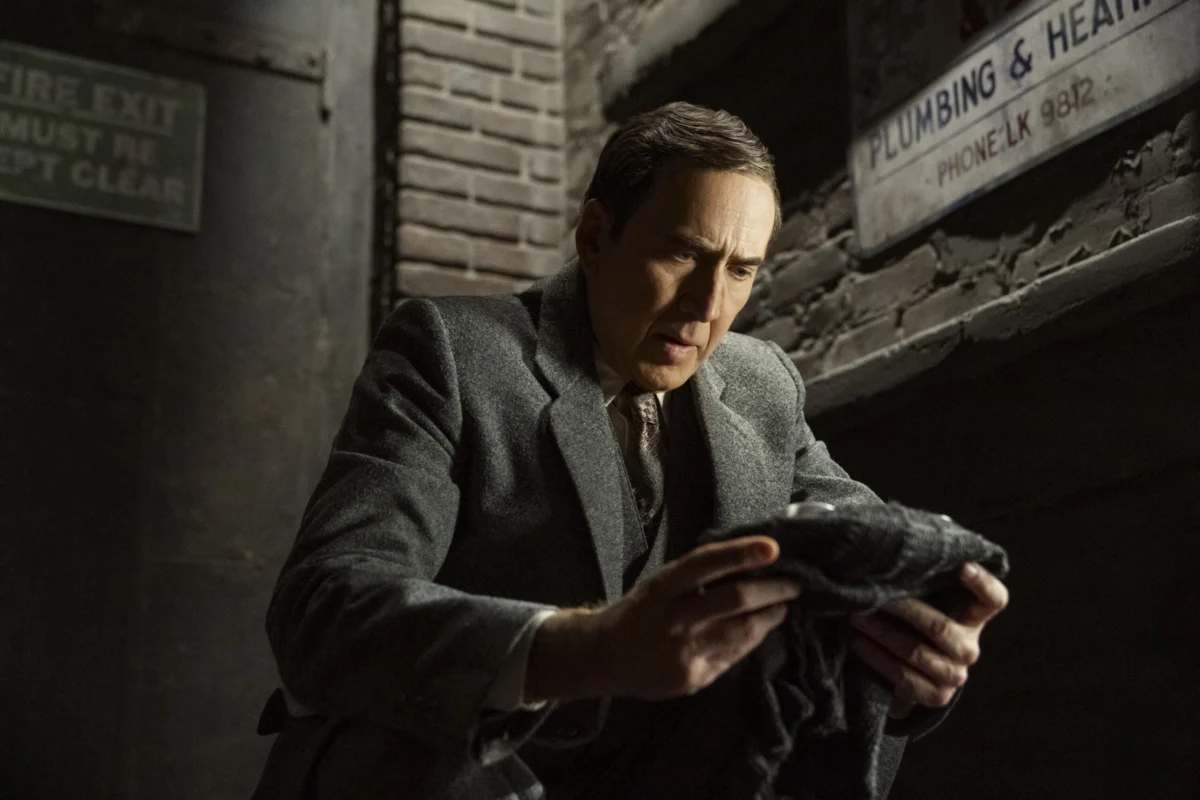
Most recently, Cage starred as the title character in Sony Pictures’ live-action series Spider-Noir. The ambitious television project, developed for Amazon Prime Video, adapted the dark, pulp-inspired Marvel Comics character Spider-Man Noir. The series took place during the Great Depression and featured Cage as Ben Reilly, described as a seasoned, down-on-his-luck private investigator in 1930s New York City. The character is forced to grapple with his complicated past life following a deeply personal tragedy, serving as the metropolis’s sole superhero during a period of economic and social turmoil.
However, Spider-Noir faced a short-lived run on television. Following its initial eight-episode first season, Amazon Prime Video officially canceled the series, preventing it from expanding into a multi-season franchise. Despite the show’s cancellation, Cage’s venture into television was notable for its distinct artistic vision and departure from standard superhero aesthetics.
Prior to Spider-Noir, Cage cemented his place in comic book cinema history by portraying Johnny Blaze, the supernatural antihero Ghost Rider, in two feature films. He first played the character in director Mark Steven Johnson’s 2007 feature Ghost Rider, which performed strongly at the box office despite mixed critical reception. He reprised the role five years later in the 2012 sequel, Ghost Rider: Spirit of Vengeance, directed by Mark Neveldine and Brian Taylor.
The character of Ghost Rider is now officially slated to join the Marvel Cinematic Universe under the guidance of Marvel Studios President Kevin Feige. In a high-profile casting development, actor Ryan Gosling is set to assume the mantle of the supernatural biker. The upcoming MCU Ghost Rider project, to be directed by filmmaker Shawn Levy, holds a confirmed placeholder on the studio’s theatrical release calendar for July 28, 2028. This upcoming integration demonstrates the enduring commercial viability of properties Cage helped introduce to mainstream cinematic audiences years prior.
Artistic Ambitions Behind Spider-Noir
Cage’s approach to the Spider-Noir television series offers further context regarding his relationship with the genre. Speaking to entertainment media outlets prior to the show’s premiere, the actor revealed that he was drawn to the project not by its inherent superhero DNA, but by the stylistic ambitions of its creators.
Developed for television by Oren Uziel, the series was conceived with a deliberate black-and-white aesthetic, drawing heavy inspiration from classic film noir cinema and the visual motifs of German expressionism. Cage sought to channel the cinematic presence of Hollywood icons from the golden era of motion pictures.
"I wanted to try to create an essence of some of my favorite old world actors because I wanted to embody that style — Bogart, Cagney, Edward G. Robinson — and designed my performance to fit within the black-and-white format," Cage explained during promotional interviews for the series.
The actor admitted that transitioning into a leading role for a serialized television project presented significant personal and professional risks. He noted that the creative experiment of merging classic cinematic archetypes with comic book lore made him apprehensive about the show’s reception.
"It was scary, and it was risky," Cage continued. "I was constantly worried that I was going to get fired, because I was doing this thing of channeling old actors and colliding it with Stan Lee’s masterpiece that is Spider-Man to create this Roy Lichtenstein pop-art sensation of sorts. I didn’t know until I finally saw the eight episodes whether it was going to work."
The Artistic Tension Between Prestige Cinema and Franchise Blockbusters
Cage’s critique taps into a broader, ongoing debate within the global film community regarding the dominance of intellectual property-driven franchises over traditional, mid-budget dramatic filmmaking. Over the past decade and a half, prominent filmmakers and veteran actors—including Martin Scorsese, Ridley Scott, and Jodie Foster—have publicly questioned the cultural footprint of superhero cinema, often comparing the genre to theme park attractions rather than traditional cinema.
Proponents of the Marvel Cinematic Universe argue that the franchise provides immense economic stability for the global film industry, employing thousands of craftspeople, visual effects artists, and technicians while keeping theatrical exhibition alive through periods of profound industry disruption. Furthermore, supporters note that the MCU has frequently recruited critically acclaimed, Academy Award-winning actors and visionary independent directors, allowing them to infuse large-scale blockbusters with unique directorial sensibilities and complex thematic explorations.
Conversely, critics suggest that the standardized production pipelines of modern studio franchises can lead to creative homogenization. The heavy reliance on digital pre-visualization, tightly controlled corporate oversight, and mandatory narrative setups for future sequels can sometimes overshadow individual artistic expression. Cage’s reference to the "glorified WWE" speaks directly to this concern, suggesting that when dramatic stakes are reduced to repetitive, rhythmically edited action set-pieces, the distinction between athletic entertainment and narrative art begins to blur.
Implications for the Future of Comic Book Adaptation
As the entertainment landscape continues to shift in response to changing audience demographics, streaming economics, and shifting box office trends, the commentary from respected veterans like Nicolas Cage carries considerable weight. Studios are increasingly forced to balance the reliable profitability of established superhero franchises with the growing demand for original, risk-taking storytelling.
The cancellation of Spider-Noir after a single season illustrates the precarious nature of high-budget television production, even when backed by recognizable intellectual property and acclaimed talent. At the same time, the upcoming integration of characters like Ghost Rider into the MCU under filmmakers such as Shawn Levy indicates that major studios remain fully committed to expanding and interconnecting their cinematic universes through 2028 and beyond.
Whether Cage’s remarks will prompt any formal response from Marvel Studios executives or creative personnel remains to be seen. However, the viral nature of his comments demonstrates that the dialogue surrounding the artistic merits, cultural impact, and industrial mechanics of modern superhero cinema remains as vibrant and contentious as ever.