The rapid evolution of artificial intelligence and the increasing sophistication of digital data harvesting have triggered a fundamental shift in the real estate sector. As homeowners become more protective of their digital footprints, and brokerages seek to shield their proprietary listing data from Large Language Models (LLMs), a significant "data gap" is emerging. This trend toward digital privacy is creating an unforeseen crisis for property appraisers, who rely on a transparent and accessible Multiple Listing Service (MLS) ecosystem to perform the precise valuations required for mortgage lending. As the industry moves toward more rigorous reporting standards, the friction between consumer privacy and the need for data-driven precision is threatening the efficiency and cost-effectiveness of the entire housing transaction process.
The Evolution of the Digital Privacy Movement
The shift toward private listings and data scrubbing began in earnest over the last three years, accelerated by two distinct drivers. First, the proliferation of generative AI tools has caused many brokerages to fear that their listing data—photos, descriptions, and price histories—could be scraped to train third-party models without consent or compensation. Second, a broader cultural shift has emboldened consumers to demand the removal of "digital breadcrumbs" once a sale is finalized.
In response, many agents have begun advising sellers to list properties as "private exclusives" or to strip interior photographs from public-facing portals immediately upon closing. While these practices offer a degree of comfort to sellers concerned about permanent records of their living spaces, they disrupt the workflow of the appraisal profession. Appraisers, who must often look back at comparable sales (comps) to justify current valuations, are increasingly finding their digital resources hollowed out, leaving them with limited context regarding the actual condition or quality of homes that have recently sold.
UAD 3.6: A Higher Bar for Data Granularity
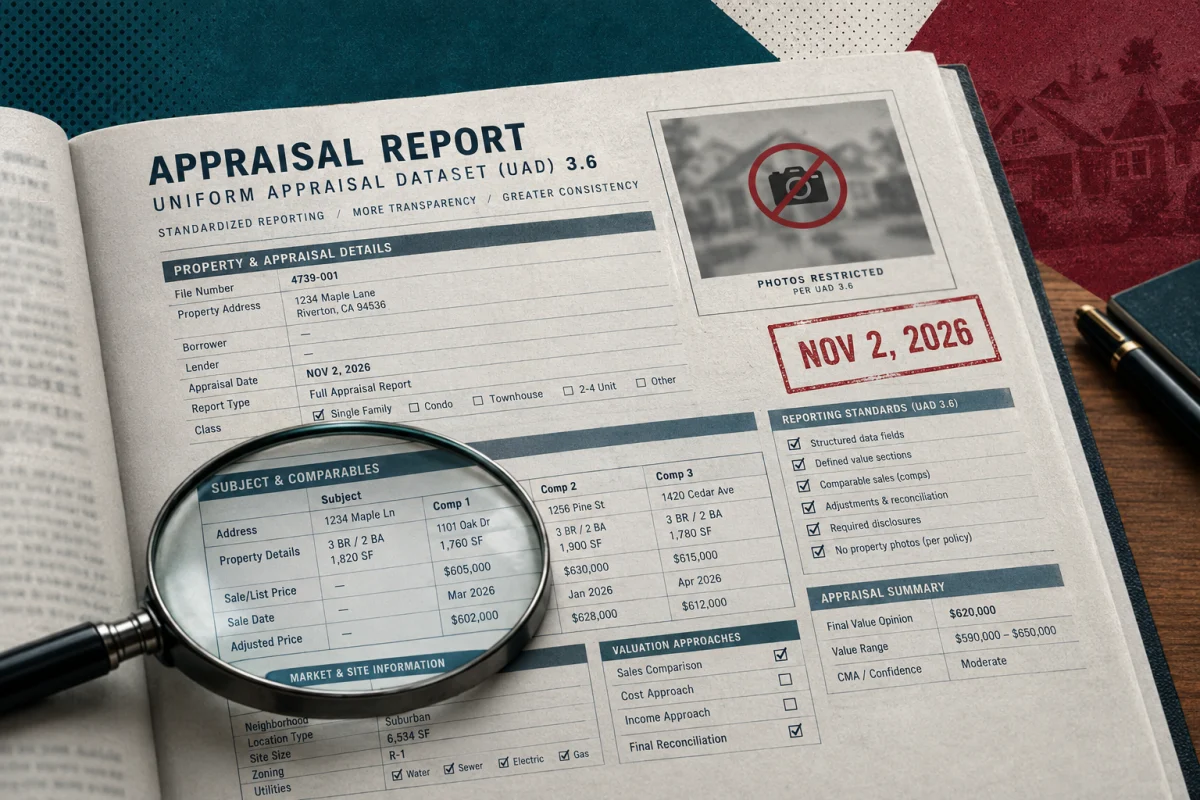
The timing of this data scarcity could not be more challenging for the valuation industry. Under the Uniform Appraisal Dataset (UAD) 3.6, scheduled for implementation on November 2, the requirements for data collection are becoming significantly more stringent. Appraisers are transitioning away from narrative-based descriptions toward a highly structured, granular format. This new mandate requires the selection of specific, standardized data points from digital dropdown menus for nearly every feature of a property, from structural metrics to the quality of finishes.
For appraisers, the transition to UAD 3.6 is intended to improve consistency and enable better automated risk modeling for lenders and government-sponsored enterprises (GSEs). However, the policy creates a paradox: as the federal government and lending institutions demand more granular, high-resolution data to fuel these new forms, the marketplace is simultaneously restricting access to that very information. Without access to historical interior photos, floor plans, and accurate records of past renovations, appraisers are being asked to provide "data-driven precision" while operating in an environment of increasing informational obscurity.
The Economic and Logistical Ripple Effect
The inability to access comprehensive historical data is not merely a technical inconvenience; it is a direct contributor to the rising costs of housing transactions. When an appraiser cannot verify the condition of a comparable sale through an MLS photo archive, they must pursue alternative methods to ensure their valuation is credible.
In many instances, this requires manual investigation. Appraisers may be forced to contact agents involved in previous transactions to verify if a home was, for instance, remodeled in 1973 or 2023—a distinction that can swing a property’s value by tens of thousands of dollars. This labor-intensive process adds significant time to each appraisal assignment. Given that appraiser fees are often calculated based on the complexity and time required for a report, these administrative burdens inevitably trickle down to the consumer. In a housing market already plagued by affordability challenges, adding hundreds of dollars in appraisal-related costs to the closing process acts as an additional, unnecessary barrier to homeownership.
Balancing Consumer Privacy and Market Transparency
Recognizing the growing disconnect, various regional MLS organizations have begun to implement policies that attempt to bridge the gap. Rather than allowing for the total deletion of data, organizations like the California Regional MLS (CRMLS), Canopy MLS, and Flexmls have introduced nuanced privacy controls. These systems allow for the removal of interior images from public-facing portals (IDX feeds) to satisfy consumer privacy concerns, while maintaining those images within the internal, password-protected MLS database for use by licensed appraisers and agents.
The Council of Multiple Listing Services (CMLS) has emerged as a key mediator in this debate. A spokesperson for the organization recently emphasized that consumer privacy and appraisal transparency need not be mutually exclusive. By adopting "best practice" guidelines, MLSs can effectively ring-fence sensitive property data, ensuring it remains available for valuation purposes without exposing the homeowner’s interior living space to the general public or unauthorized AI scrapers.
The Broader Implications for Public Trust
Beyond the immediate logistical hurdles, there is a mounting concern regarding the "forced" role of the appraiser in the modern transaction. Historically, the appraiser has been an independent expert tasked with providing an unbiased assessment of market value. If the industry continues to move toward a model where necessary data is hidden, the appraiser is transformed into a "data scavenger," forced to negotiate with listing agents for basic information.
This dynamic risks creating tension at the "front door" of the transaction. If an appraiser is viewed as an intruder demanding excessive documentation because the digital record is incomplete, the professional relationship between the appraiser and the homeowner—and the overall perception of the appraisal process—suffers.
Furthermore, the long-term risk of a shift toward private listings is a gradual degradation of market transparency. If a significant percentage of the market moves off-MLS, the "comparable sales" used to anchor the entire valuation system become skewed. When the public, lenders, and policymakers lose the ability to see true exposure times, price adjustments, and interior condition metrics, the overall integrity of the housing market’s pricing mechanism is weakened.
Conclusion: A Call for Synchronized Standards
The current "push and pull" between the privacy-conscious seller and the data-hungry appraiser represents a significant growing pain for the real estate industry. While the drive for digital privacy is an understandable reaction to the ubiquity of AI, it cannot come at the expense of the foundational data that sustains the mortgage market.
Industry leaders suggest that the path forward lies in standardizing the "privacy-preserving" approach: ensuring that data is protected from public view while remaining fully accessible to the qualified professionals who keep the wheels of the economy turning. Unless the industry can align its privacy protocols with the rigorous data standards required for modern valuation, the result will be a less efficient, more expensive, and less transparent housing market for all stakeholders involved. The challenge for the coming year will be to ensure that in our rush to protect personal data, we do not accidentally dismantle the infrastructure that makes fair and accurate property valuation possible.