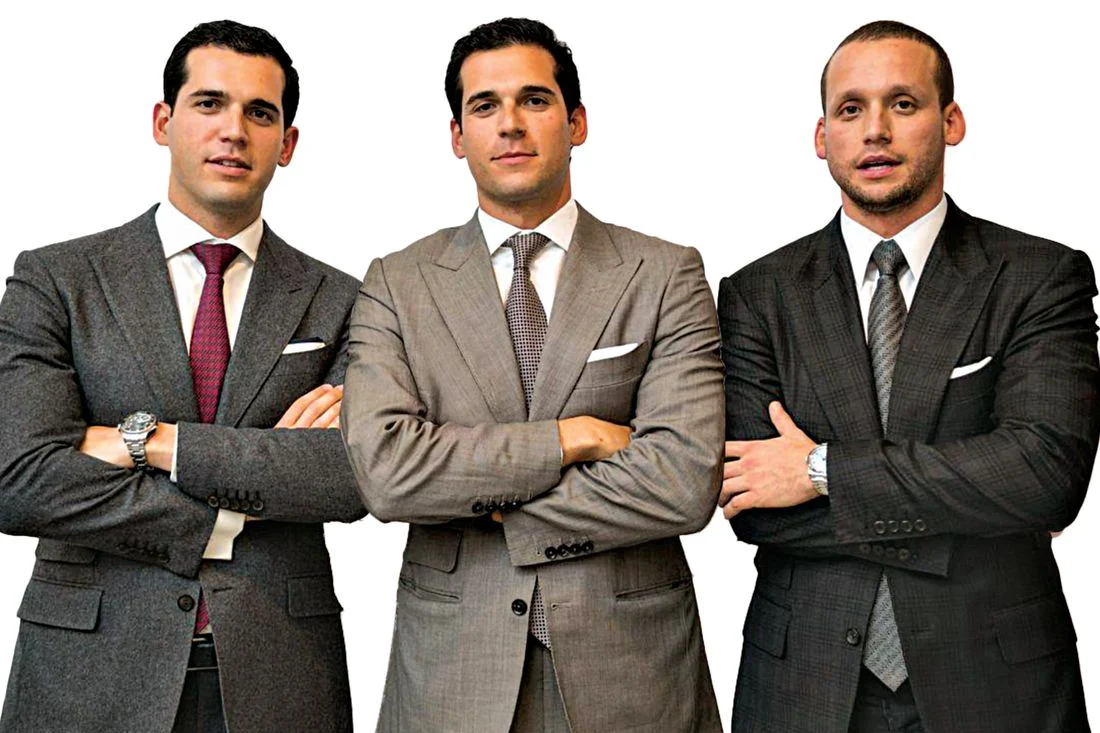
The meteoric rise and catastrophic fall of Oren, Alon, and Tal Alexander stand as one of the most chilling exposés in the annals of modern luxury real estate. For decades, the Alexander brothers operated at the very apex of the global property market, brokering multi-million-dollar transactions for billionaires, celebrities, and titans of industry across New York and Miami. Yet, beneath the veneer of impeccably tailored suits, private jet travel, and headline-grabbing sales lay a dark, systemic pattern of predatory behavior. Following a federal jury’s verdict finding the brothers guilty on all ten counts of sex trafficking and sexual assault, the full scope of their crimes has come to light, exposing an industry that repeatedly chose profits over protection.

The Foundations of an Empire: Bal Harbour Beginnings and the Kent Security Playbook
The trajectory of the Alexander family was forged in Bal Harbour, an affluent enclave on the northern tip of Miami Beach, where parents Shlomy and Orly Alexander settled after emigrating from Israel in the 1970s. Shlomy and Orly built their fortunes through Kent Security, founded in the early 1980s, which rapidly evolved into one of the largest security contractors in South Florida. Kent provided guards for gated communities, high-profile events like parties at the Versace mansion, and municipal buildings.
Former employees and associates describe a corporate culture driven by aggressive tactics, intimidation, and an unwavering belief that success justified any means necessary. These lessons were absorbed by the Alexander boys—Oren, Alon, Tal, and Niv—during Friday-night Shabbat dinners that functioned more like corporate boardrooms. While Shlomy eventually transitioned from security into real estate development, building high-end spec homes, his sons cultivated a reputation as high school bullies who took pleasure in intimidating peers.

Long before they conquered Manhattan, rumors shadowed the brothers through South Florida’s tight-knit communities. Classmates and local residents were routinely warned about the Alexanders’ behavior at parties, particularly regarding the safety of young women. Despite multiple police interviews and disciplinary reports during their high school years—including allegations involving a 2003 gang assault—the brothers remained largely untouched, insulated by wealth, social status, and a pervasive local attitude that viewed them as untouchable.
The Manhattan Ascendancy: From Boutique Rentals to Billionaires’ Row
Following their college years, the brothers converged on New York City, leveraging family connections to break into the hyper-competitive Manhattan real estate market. Oren secured an entry-level position at Prudential Douglas Elliman, capitalising on an introduction made by Douglas Elliman chairman Howard Lorber, who had met Shlomy Alexander at a spec home on Indian Creek Island in Miami.

The timing coincided with the post-Great Recession rebound and the emergence of the "celebrity broker" phenomenon. Capitalizing on their youthful charisma, physical appearance, and relentless self-promotion, Oren and Tal founded the Alexander Group—affectionately dubbed the "A-Team"—under the Elliman umbrella. They manufactured hype around high-profile listings, such as a record-breaking $47 million sale on Indian Creek Island in 2012, and later, Ken Griffin’s historic $240 million purchase at 220 Central Park South in 2019.
Their client roster read like a who’s who of global wealth, including entertainment icons, private equity moguls, and international magnates. By 2022, the brothers felt secure enough to leave Douglas Elliman alongside other defectors to launch "Official," an ultra-luxury brokerage designed exclusively for the top one percent of wealth holders.

A Decades-Long Trail of Assault and Institutional Blindness
Parallel to their professional ascendancy was a chronic, escalating pattern of sexual violence. Investigators and journalists have since documented allegations spanning from their high school years in Florida to their tenure as elite brokers in New York and Miami. Victims have stepped forward with harrowing accounts of being drugged, cornered, and assaulted by one or multiple brothers at private residences, hotels, and post-party gatherings.
Despite these egregious allegations, institutional safeguards failed repeatedly. Former colleagues and industry insiders have revealed that whispers, rumors, and even explicit warnings about the brothers circulated widely within high-end real estate circles. Women working in the industry were privately cautioned never to leave their drinks unattended around the Alexanders. Although isolated complaints and disturbing anecdotes occasionally reached executive suites—such as a resurfaced 2009 blog post detailing an alleged assault—senior leadership at firms like Douglas Elliman maintained that formal complaints of sexual assault were never officially filed or addressed. The immense commission revenues generated by the A-Team frequently acted as a shield, granting them a de facto "Teflon" status within a cutthroat industry.

The Collapse: Legal Reckoning and Federal Conviction
The facade began to crumble in March 2024, when civil lawsuits filed by initial survivors Kate Whiteman and Rebecca Mandel exposed the extent of the alleged abuse to the public. As investigative reports by major journalistic outlets multiplied, a flood of additional women came forward, bringing the total number of accusers to staggering levels. The mounting public pressure and social media scrutiny forced Oren and Tal to step down from Official in mid-2024.
Subsequent federal investigations escalated the matter from civil litigation to criminal prosecution. In March 2026, a federal jury found all three Alexander brothers guilty on all ten counts of sex trafficking and sexual assault. The verdict marked a definitive end to their decades-long evasion of accountability. Federal prosecutors are currently pushing for life sentences for Oren, Alon, and Tal ahead of their sentencing hearing scheduled for October 27, 2026.

Broader Implications and Industry Impact
The downfall of the Alexander brothers has sent profound shockwaves through the luxury real estate sector, prompting intense introspection regarding corporate governance, ethical oversight, and the protection of vulnerable individuals within high-net-worth circles. For years, the industry’s obsession with gross commissionable income and celebrity culture fostered an environment where toxic behavior and criminal acts were systematically overlooked or suppressed.
Legal experts and industry analysts note that the case serves as a watershed moment, dismantling the illusion that elite financial success or social status can permanently shield individuals from the rule of law. Furthermore, the fallout has permanently tarnished the reputations of institutional leaders and firms that fostered or ignored the brothers’ conduct. As the legal proceedings conclude with impending life sentences, the legacy of the Alexander team remains a stark reminder of the human cost of institutional complicity and the enduring pursuit of justice by survivors.