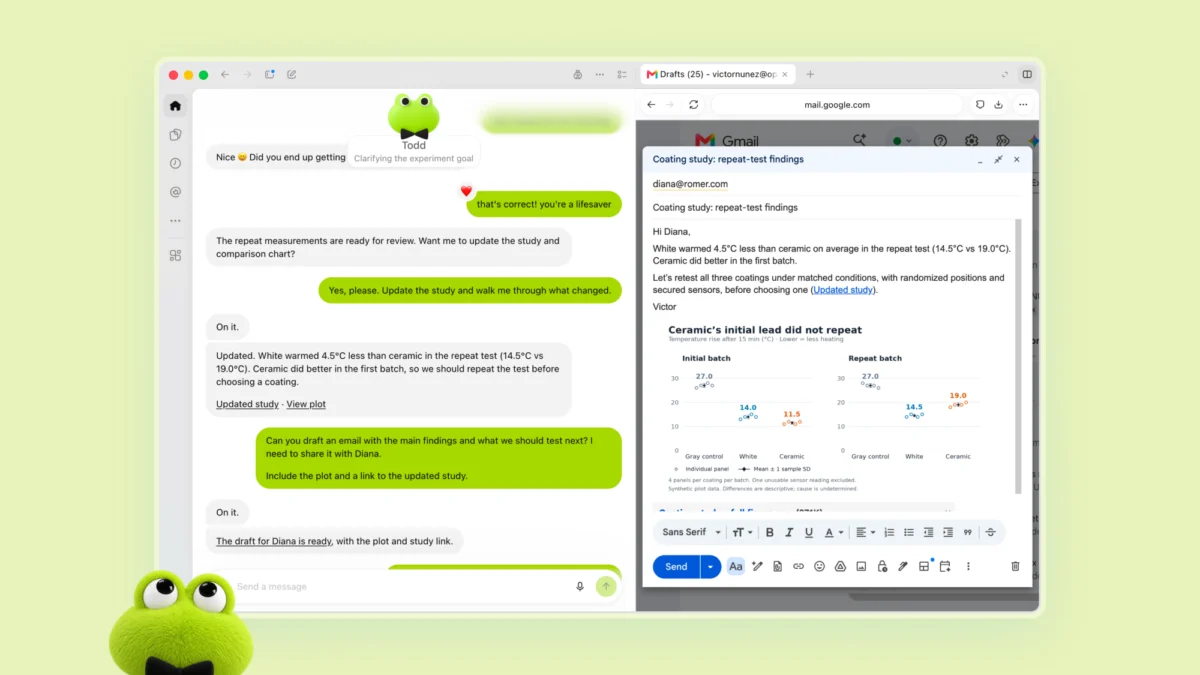
OpenAI has officially entered the race for adorable artificial intelligence mascots, unveiling its personalized digital companions known as "Dots" during its annual DevDay conference. Unveiled less than a week after competitor Meta Platforms introduced its own cheerful mascot, Jolly, to represent the Muse AI assistant, OpenAI’s Dots introduce a uniquely customizable aesthetic to autonomous agent technology. These colorful, highly personalizable digital characters are designed to serve as round-the-clock digital assistants, marking a major leap forward in how humans interact with powerful frontier intelligence models.
Powered by OpenAI’s advanced GPT-6 Astra framework, Dots are not merely traditional conversational chatbots. Instead, they function as always-on, autonomous agents equipped with dedicated cloud computing environments. According to technical specifications shared by OpenAI during the DevDay keynote, these agents are engineered to learn from continuous user feedback over extended periods, actively working toward complex professional and personal goals on a 24-hour basis. By blending high-level autonomous task execution with whimsical character design, OpenAI is attempting to bridge the gap between intimidating enterprise software and approachable consumer technology.

Meet the Little Guys: Personalization and Design Philosophy
The aesthetic implementation of Dots relies heavily on playful anthropomorphism. Official rollout imagery depicts the digital agents in a vibrant palette of pink, blue, green, yellow, and purple. To enhance user connection, each character features distinct accessories and visual traits—such as tiny berets, glasses, headphones, and bow ties—giving them individual flair.
While OpenAI showcased pre-set examples bearing names like Iggy, Felipe, Todd, Alfred, and Jojo, the platform grants users total autonomy to rename and customize their digital companions. Marketed by the company as an "extension of you," these agents are trained to adapt to individual thought patterns, workflows, and stylistic preferences. Users can seamlessly interface with their Dots across a diverse suite of productivity tools, including ChatGPT, Slack, and Microsoft Teams, or engage with them dynamically via voice calls.
This strategy taps into a broader psychological trend within Silicon Valley. By wrapping advanced, resource-intensive machine learning architectures in cute, approachable interfaces, tech giants are actively attempting to lower the barrier to entry for complex automation. For professionals juggling heavy workloads, endless email threads, and fragmented project timelines, the prospect of an assistant that retains long-term contextual memory is inherently appealing. Attaching a familiar, charming face and a customizable name to that utility builds an immediate sense of trust and comfort, potentially accelerating user adoption before consumers have fully evaluated the underlying software’s technical limitations.

Guardrails, Supervision, and Operational Safety
Despite their playful appearances, Dots operate as powerful software agents capable of executing background tasks across connected applications. Recognizing the inherent risks of granting AI systems deep access to personal and professional digital environments, OpenAI has built a multi-layered security and permission architecture into the Dots platform.
During setup, users maintain granular control over which third-party applications their assigned Dot can access. Furthermore, individuals can establish strict operational parameters dictating whether the agent must request explicit approval before executing a command or whether it is permitted to act independently. OpenAI demonstrated that background tasks, such as proactive research, utilize read-only tools to minimize unintended disruptions. Additionally, high-security actions—such as modifying account passwords or executing financial transactions—remain strictly restricted, requiring direct human authorization.
OpenAI leadership has remained transparent regarding the current limitations of the technology. In official documentation released alongside the DevDay keynote, the company explicitly noted that Dots remain prone to computational errors and hallucinations, advising users to thoroughly review all consequential work generated by the agents. This caveat underscores a central tension in modern software design: balancing the efficiency of full automation with the persistent necessity of human oversight.

The Broader Industry Context and Competitive Landscape
The simultaneous push toward character-driven AI agents by both OpenAI and Meta highlights a converging product strategy across the technology sector. As generative artificial intelligence transitions from standalone chat interfaces to proactive, multi-application agents, companies are searching for effective ways to humanize software.
Meta’s introduction of Jolly for the Muse assistant set an immediate precedent for friendly, persona-driven AI interactions. By countering with Dots at DevDay 2026, OpenAI has signaled that the battle for consumer loyalty will not be fought on raw benchmark scores alone, but on user experience, emotional resonance, and interface design.
Industry analysts note that personalizing AI agents serves a dual purpose. Beyond marketing appeal, custom avatars and names help users mentally compartmentalize different workflows. For instance, a user might maintain one Dot configured specifically for software engineering tasks wearing technical accessories, and another outfitted for creative writing or scheduling.

However, this rapid anthropomorphization also introduces complex psychological and legal considerations. Experts in human-computer interaction caution that highly charming interfaces can cultivate misplaced trust, leading users to overestimate an agent’s reliability or overlook algorithmic biases and security vulnerabilities.
As OpenAI continues to scale the deployment of GPT-6 Astra and its associated agent ecosystems, the company faces mounting scrutiny not only from the market and regulatory bodies, but also within the courtroom. Ziff Davis, the parent company of technology publication Mashable, previously filed a landmark copyright infringement lawsuit against OpenAI in April 2025 over the unauthorized usage of copyrighted content in training foundational models.
Ultimately, OpenAI’s introduction of Dots demonstrates a calculated bet on human psychology. By transforming raw computational power into approachable, custom-tailored characters complete with berets and bow ties, the company is betting that the future of work won’t just be automated—it will have personality.