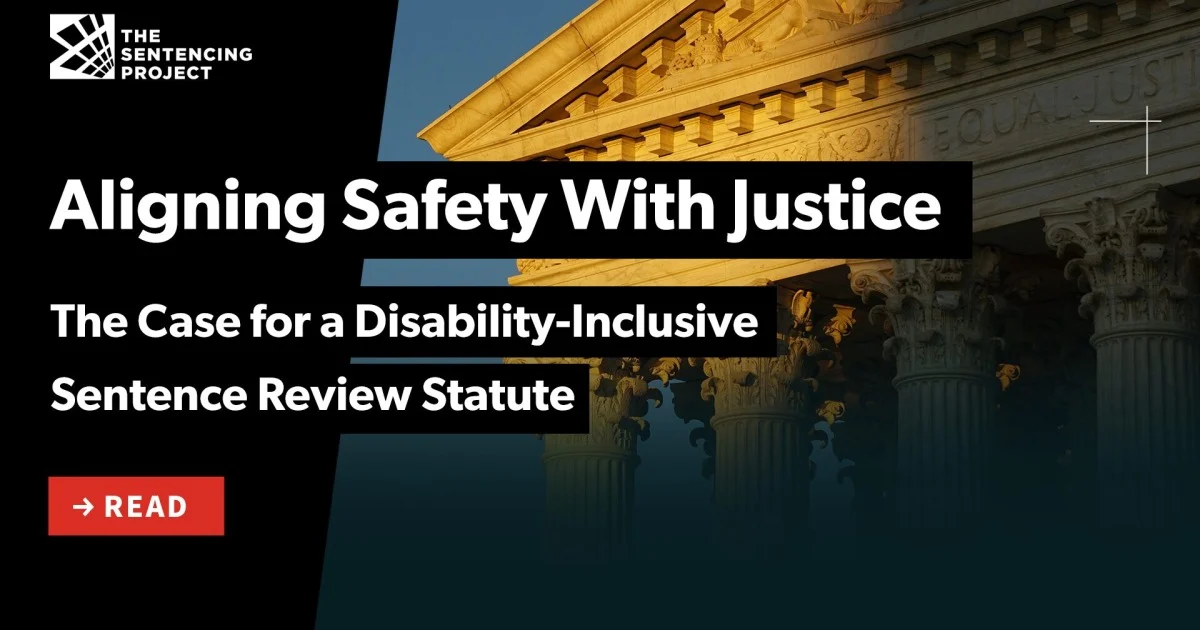
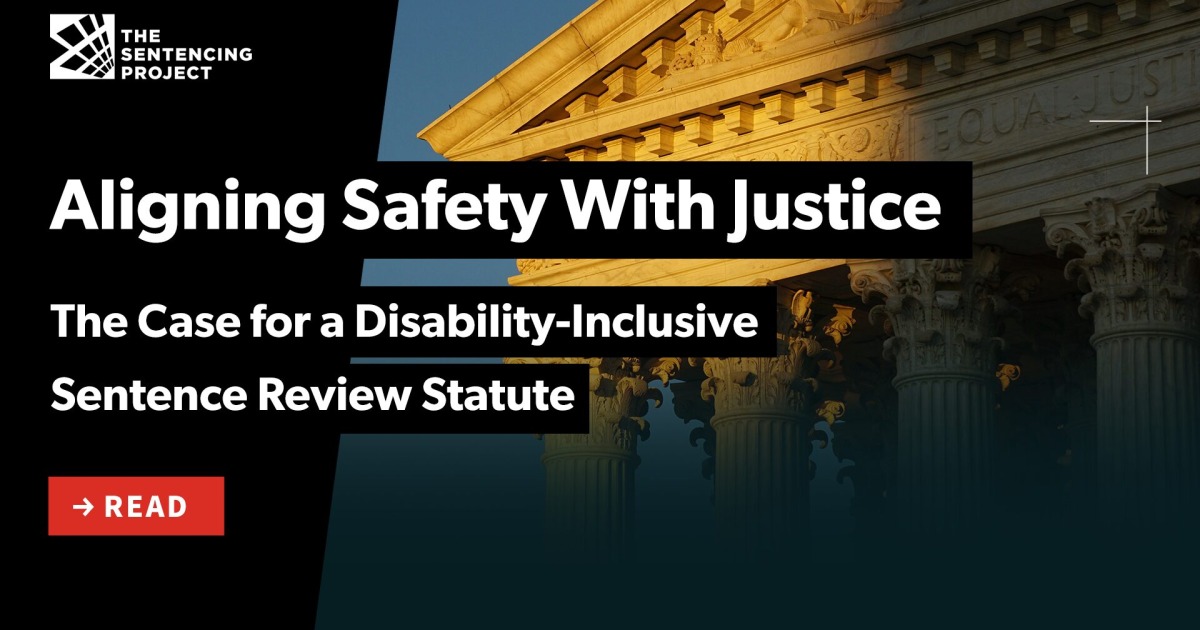
The Sentencing Project has formally proposed the adoption of "disability second look" statutes across American jurisdictions, a legislative initiative designed to provide incarcerated individuals with physical, cognitive, or social disabilities a meaningful opportunity for sentence review. This proposal arrives at a critical juncture in the national discourse on mass incarceration, as recent data indicates that people with disabilities are disproportionately represented in jails and prisons, facing systemic barriers that complicate both their legal defense and their prospects for rehabilitation.
The Overrepresentation Crisis
Current statistical analysis reveals a significant disparity between the general population and the incarcerated population. According to data cited by The Sentencing Project, individuals within state and federal prisons are approximately 2.5 times more likely to report one or more impairments compared to the general public. While roughly 15% of the average U.S. adult population lives with a disability, that figure jumps to 38% among those behind bars.
This overrepresentation is not a result of higher crime rates among the disabled population. Rather, researchers point to a systemic failure in how law enforcement and the courts interact with individuals who have varying cognitive or physical needs. From the moment of arrest, people with disabilities are more likely to be targeted by law enforcement, often due to misunderstandings regarding behavior, communication styles, or mobility. Once in the system, these individuals frequently encounter obstacles to due process, including an inability to fully participate in their own defense or access the necessary accommodations required by federal law.
The Legislative Gap
While many states and the federal government have recognized the need for "second look" legislation—laws that allow for judicial review of long-term sentences after a set period—these provisions have historically been applied to specific groups such as young offenders, veterans, or survivors of domestic violence. Despite the documented vulnerability of the disabled population, they remain conspicuously absent from these reform efforts.
The proposed model statute seeks to rectify this by creating a legal pathway for sentence review for those whose disabilities were a contributing factor in several key areas. Under the proposal, eligibility would be extended to individuals whose disabilities impacted the nature of their offense, their conduct during legal proceedings, their ability to navigate the prison environment, or their capacity to develop and execute effective reentry plans.
Chronology of the Legal Landscape
The movement for sentencing reform has evolved over the last decade, shifting from a focus solely on mandatory minimums to a broader critique of long-term incarceration.
- Pre-2010s: The "tough on crime" era established a rigid sentencing structure, leaving little room for judicial discretion or the consideration of personal health or cognitive factors.
- 2015–2020: A wave of state-level reforms began to acknowledge that youth and trauma can mitigate culpability, leading to the first generation of "second look" laws.
- 2024: Advocacy groups began highlighting the specific intersection of disability rights and criminal justice, identifying the lack of accommodations as a violation of the spirit, if not the letter, of the Americans with Disabilities Act (ADA) within custodial settings.
- 2026: The Sentencing Project formalizes its model statute, calling for a systemic overhaul of how courts evaluate the culpability of defendants with documented impairments.
The Rationale for Reform
The core of the proposal rests on the principle of proportionality. If the criminal legal system purports to account for mitigating factors—such as age or past trauma—then it must logically account for disabilities that fundamentally alter a person’s perception, behavioral control, or ability to communicate.
"Courts and lawmakers understand that the criminal legal system must account for circumstances and personal characteristics that reduce an individual’s culpability," states the policy framework. However, the current reality is that a disability often serves as a double burden: it may contribute to the initial offense, and it may subsequently prevent the individual from accessing the very rehabilitative programming—such as educational or vocational training—required to demonstrate their fitness for parole.
Furthermore, research suggests that the risk of recidivism decreases significantly with age, regardless of disability status. Data indicates that after seven years without a new arrest, the risk profile of an individual with a criminal record becomes virtually indistinguishable from that of a person with no criminal history. By ignoring this maturation process and failing to provide a review mechanism for those with disabilities, the justice system often keeps individuals incarcerated long after they have ceased to pose a threat to public safety.
Mandatory Training and Structural Implementation
The proposal goes beyond mere sentence review by advocating for mandatory, comprehensive training for the entire legal apparatus. The Sentencing Project argues that a statute alone is insufficient if the front-line actors—law enforcement officers, prosecutors, judges, and defense counsel—are not equipped to recognize and accommodate disabilities.
The proposed training curriculum would focus on:
- De-escalation: Recognizing the signs of cognitive or social disabilities to prevent unnecessary arrests.
- Legal Obligations: Ensuring that all parties understand their duties under the ADA to provide accommodations, such as sign language interpreters, clear communication strategies, or medical support during legal proceedings.
- Judicial Discretion: Providing judges with the tools to assess how a disability may have influenced a defendant’s behavior or their interaction with the justice system.
Broader Implications and Public Policy
The call for disability-inclusive second look laws occurs against a backdrop of increasing legal challenges to extreme sentencing. Recent developments in states like Pennsylvania, where the status of over 1,100 felony murder cases remains in flux, demonstrate the volatility of current sentencing structures. As courts grapple with the constitutionality of life-without-parole sentences, the addition of a disability-focused review process could provide a necessary legal mechanism to resolve cases that would otherwise remain trapped in procedural deadlock.
Legal analysts note that the introduction of such statutes could face opposition based on concerns regarding judicial resources. Critics might argue that adding another category for sentence review will overwhelm already strained court dockets. However, proponents contend that the long-term fiscal costs of incarcerating individuals who require specialized medical and cognitive care—often at a higher cost than the general prison population—far outweigh the costs of judicial review hearings.
Furthermore, the integration of disability rights into criminal justice reform aligns with broader national efforts to move away from purely punitive models. By focusing on the "second look," the system acknowledges that individuals are capable of growth and that legal outcomes should reflect the reality of a person’s circumstances, including their health and neurological status.
Conclusion
The proposal from The Sentencing Project represents a significant shift toward a more nuanced, inclusive, and equitable legal system. By codifying the rights of individuals with disabilities to have their sentences reviewed, jurisdictions can begin to correct a longstanding oversight that has contributed to the over-incarceration of some of the most vulnerable members of society.
As lawmakers consider these recommendations, the challenge will be to balance the necessity of public safety with the moral and legal imperatives of ensuring that the justice system treats all citizens with fairness and dignity. Whether these model statutes will be adopted remains to be seen, but the conversation surrounding the intersection of disability and the carceral state is clearly reaching a point where inaction may no longer be a sustainable policy choice. Through the combination of legislative review, mandatory training, and a commitment to understanding the complexities of human behavior, the criminal legal system may eventually move toward a model that prioritizes both justice and rehabilitation.