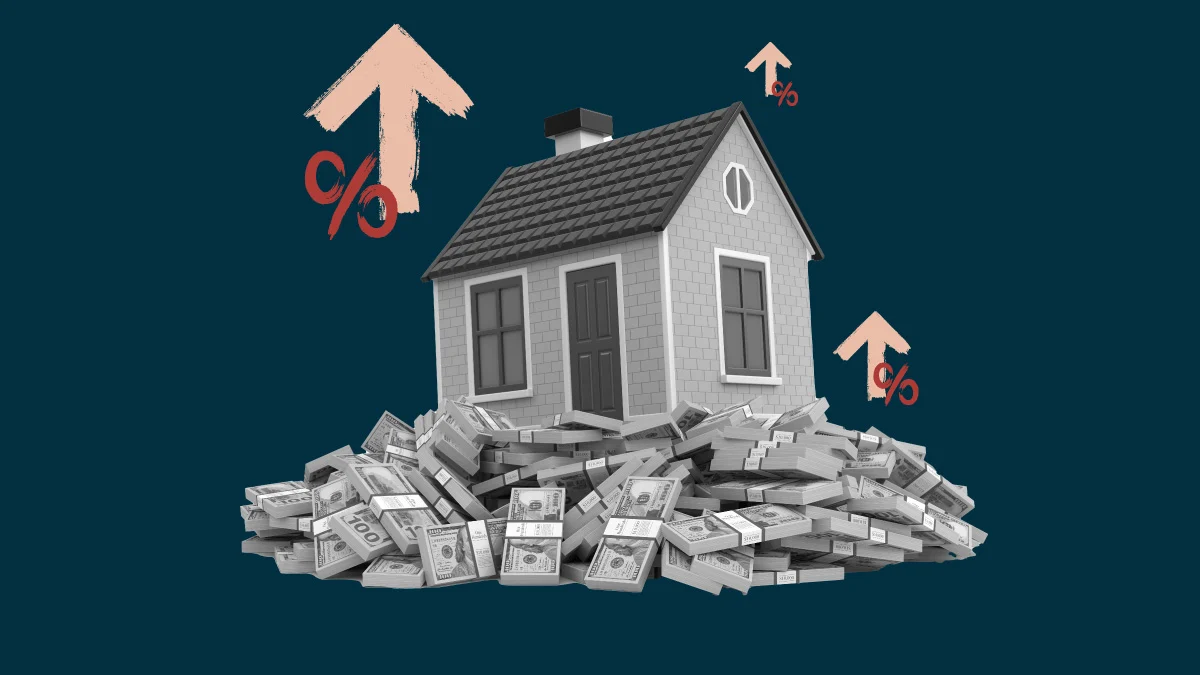
The United States housing market is currently navigating one of its most volatile periods in recent history, as mortgage rates have surged to 7.49% before stabilizing at 7.43%. This rapid escalation follows a turbulent week in the bond market, characterized by intense geopolitical friction in the Middle East and a pivot toward hawkish rhetoric from Federal Reserve officials. As investors recalibrate their expectations for economic policy and global stability, the housing sector faces a “perfect storm” of rising borrowing costs, cooling buyer demand, and a fragile inventory landscape that is failing to keep pace with market needs.
The Geopolitical Catalyst: Oil, Conflict, and Yields
The primary driver of the recent volatility in the 10-year Treasury yield—the benchmark against which mortgage rates are priced—has been the escalating conflict involving Iran. Since the breakdown of the Memorandum of Understanding (MOU) in June, financial markets have observed an unprecedented correlation between geopolitical headlines and the pricing of risk. The 10-year yield has become increasingly sensitive to energy prices, as instability in the Middle East poses a direct threat to global oil supply chains.
The recent military escalation, highlighted by Houthi strikes on Saudi Arabian infrastructure, has acted as a force multiplier for bond market anxiety. Historically, periods of conflict typically trigger a “flight to safety” that pushes bond prices up and yields down. However, the current environment is unique: the market is simultaneously contending with resilient economic data and a Federal Reserve that appears increasingly unwilling to signal a dovish turn. With President Trump recently rejecting a peace proposal from Iran—only to suggest subsequent, uncertain talks—the uncertainty is expected to persist at least until the conclusion of the midterm elections.
Market analysts are closely watching the 5.40% threshold on the 10-year Treasury yield. Should the current geopolitical drama push yields toward this level, the industry standard forecast suggests that 8% mortgage rates will become a near-term reality rather than a speculative risk.
Mortgage Spreads: The Critical Indicator of Market Health
While headlines often focus exclusively on mortgage rates, industry professionals are monitoring mortgage spreads with equal intensity. The spread represents the difference between the 10-year Treasury yield and the average 30-year fixed mortgage rate. During the pandemic-era recovery, these spreads widened to historic levels due to market uncertainty and liquidity issues.
In the current environment, spreads have remained relatively stable, fluctuating around 1.98%. This is a crucial observation; if these spreads were to widen significantly, it would indicate a systemic breakdown in mortgage market liquidity, which would push rates even higher regardless of Treasury performance. While current levels are higher than the historic norm of 1.60% to 1.80%, their relative stability is currently the only factor preventing rates from breaching the 8% mark even faster. Economists suggest there is approximately 20 to 40 basis points of potential "tightening" remaining in these spreads, which could act as a buffer against further Treasury volatility, provided the market remains calm.
Inventory Dynamics and the Seller’s Dilemma
The national housing inventory has exhibited uncharacteristic lethargy throughout 2026. Typically, inventory growth correlates with declining mortgage demand, but the current market is witnessing a unique tension. As rates climb above the 7% threshold, the traditional incentive for buyers to enter the market diminishes, yet the "lock-in effect"—where existing homeowners refuse to sell because they are holding onto sub-4% mortgage rates—continues to suppress the supply of available homes.
New listings data provides further evidence of this stagnation. In a healthy market, peak periods typically see between 80,000 and 100,000 new listings per week. While the 2026 data has occasionally hit these benchmarks, the current climate of uncertainty is causing many potential sellers to delay listing their properties until after the midterms. This lack of inventory is preventing a deeper correction in home prices, even as demand softens under the weight of higher borrowing costs.
Evaluating Demand: Pending Sales and Purchase Applications
The impact of rising rates is most visible in the cooling of buyer demand. Weekly pending sales data, which acts as a leading indicator for actual home sales 30 to 60 days in the future, has shown its first significant, non-holiday-related decline of the year. When mortgage rates exceed 6.64%, the affordability threshold for a significant portion of the buyer pool is breached, and at 7.43%, the barrier becomes prohibitive.
Purchase application data corroborates this cooling trend. Recent reports indicate a 1% week-over-week decline, but more importantly, an 11% drop on a year-over-year basis. This data is particularly telling because it compares current demand to a period when interest rates were significantly lower. The widening gap suggests that the market is finally beginning to respond to the reality of higher for longer interest rates, moving away from the heightened activity levels seen in the latter half of 2025.
Price-Cut Percentages and the Outlook for Home Values
A critical metric for tracking market health is the percentage of homes receiving price reductions. Historically, about one-third of all listed homes undergo a price adjustment before closing. Throughout the first half of 2026, this percentage remained lower than the previous year. However, as mortgage rates have stabilized above 7%, the market is seeing a reversal of this trend.
Home price appreciation, which had been resilient for much of the year, is now facing downward pressure. While original forecasts for 2026 predicted a national home price decline of roughly 0.62%, actual performance in the first three quarters showed marginal growth of 1% to 2%. Current market conditions, however, are forcing a reassessment. With mortgage rates hovering near 7.5%, the upward momentum in home prices has largely evaporated, and market analysts believe the year could end closer to the original, more pessimistic forecast.
The Week Ahead: A Convergence of Economic Indicators
The coming week is expected to be a crucible for the financial markets. Investors are bracing for a series of high-impact events that could dictate the trajectory of interest rates through the remainder of the year. The “Jobs Week” report, which includes crucial non-farm payroll data, is expected to provide the Federal Reserve with the necessary evidence to justify its current hawkish stance.
Beyond labor data, the market is tracking several key economic releases, including the latest inflation metrics and updated home price indexes. These figures will be cross-referenced against the ongoing narrative from Fed officials, who have been active in managing market expectations through frequent public appearances.
The overarching theme remains the interplay between global conflict and domestic economic policy. With President Trump’s administration signaling further talks with Iran, the market is trapped in a cycle of “wait and see.” This ambiguity, combined with the unpredictability of the midterm election outcomes, suggests that the period of heightened volatility in the housing and bond markets is far from over.
For potential buyers, the current environment demands extreme caution. The combination of elevated mortgage rates, restricted inventory, and economic uncertainty creates a high-risk landscape where timing the market is increasingly difficult. For the broader economy, the housing sector’s inability to find a stable equilibrium remains a significant headwind to long-term growth, as the costs of capital continue to recalibrate to a new, higher reality. As the nation moves into the final quarter of 2026, all eyes will remain on the 10-year yield, the primary bellwether for the future of the American housing market.