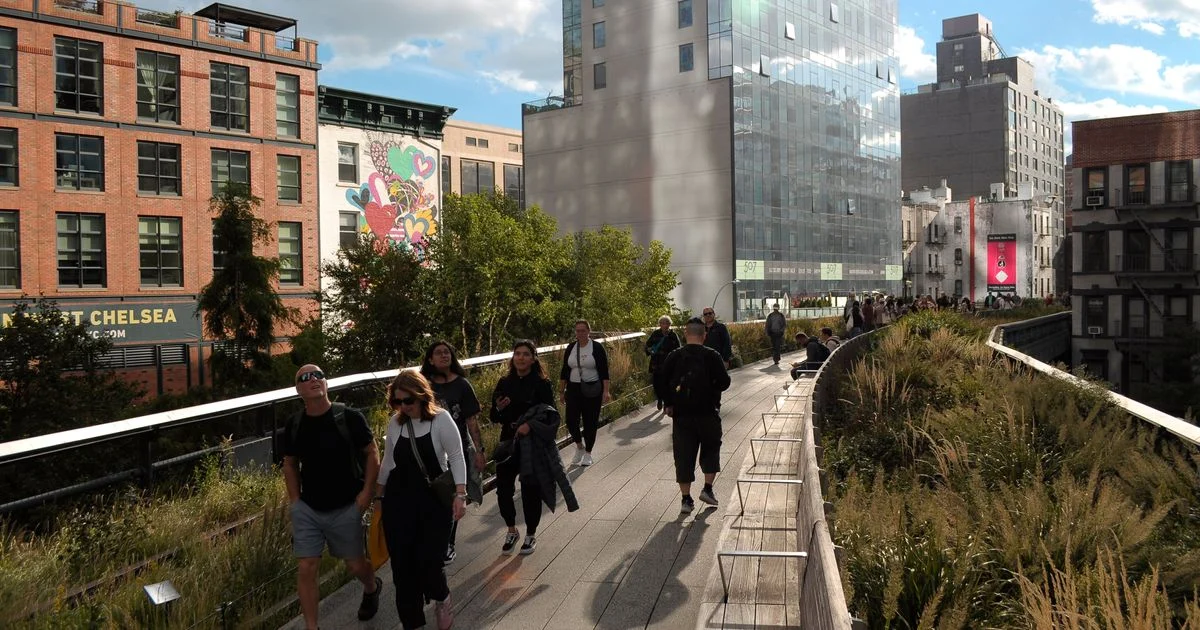
Seventeen years after welcoming its first visitors to a converted stretch of industrial railway on Manhattan’s West Side, New York City’s beloved High Line has officially reached completion. The final piece of the 1.5-mile linear park—a newly designed garden nestled within the northernmost section known as the Rail Yard Preserve at 34th Street—is slated to open next month. This milestone marks the first time since the park’s debut in 2009 that the entire elevated corridor will be entirely free of construction scaffolding and temporary sheds, signifying the end of a long, transformative chapter in urban landscape architecture.
The Final Piece: The 34th Street Rail Yard Garden
The concluding phase of construction introduces 2,561 square feet of meticulously planned planting beds to the park’s northern terminus. Designed by renowned Dutch landscape architect Piet Oudolf, who spearheaded the naturalistic aesthetic across the entire High Line, the new garden blends seamlessly into the park’s established visual identity.
Unlike the majority of the elevated park, which relies on a restrictive 18-inch layer of soil laid directly atop the historic steel tracks, this final pocket is uniquely planted in-ground. The plant palette features a resilient mix of sedges, grasses, and Heuchera villosa “Autumn Bride”—a specific cultivar of coral bells characterized by velvety light-green leaves and delicate white blooms that emerge in the late summer and early autumn. In total, landscape design team Field Operations has integrated 52 distinct species of trees and shrubs into the layout.
Despite its serene horticultural design, the setting is unmistakably urban. The garden is flanked by a bustling roadway on one side and a large surface parking lot on the other. Yet, this sharp juxtaposition between tranquil greenery and raw city grit has defined the High Line’s character since its inception, offering visitors an intentional pause amid the density of West Chelsea and Hudson Yards.
According to Friends of the High Line, the Rail Yard Preserve—encompassing the stretch between 30th and 34th Streets, bounded by Eleventh and Twelfth Avenues—previously received only minimal maintenance and basic weed control rather than the rigorous, curated horticultural intervention applied elsewhere along the route. With this final phase, the 34th Street entrance has received upgraded landscaping and improved pedestrian signage along Twelfth Avenue to create a more welcoming gateway for the millions of annual visitors.
A Chronology of Transformation: 1934 to 2026
The realization of the High Line is the culmination of decades of advocacy, engineering, and master planning that reshaped the real estate and cultural landscape of Manhattan’s West Side:
- 1934: The first trains operate on the West Side Elevated Line, designed to remove dangerous freight trains from street-level traffic on Tenth and Eleventh Avenues.
- 1980: The final freight train runs along the line, carrying a shipment of frozen turkeys. The elevated railway is subsequently abandoned.
- 1999: Non-profit advocacy group Friends of the High Line is co-founded by neighborhood residents Robert Hammond and Joshua David, who campaign to save the historic infrastructure from demolition.
- 2009: Phase 1 of the High Line opens to the public, stretching from Gansevoort Street to 20th Street, instantly capturing global acclaim and sparking an international trend in linear park design.
- 2011: Phase 2 opens, extending the park northward to 30th Street.
- 2014: Phase 3 opens, wrapping around the historic rail yards to 34th Street and connecting with the emerging Hudson Yards mega-development.
- 2016–2025: Continuous localized construction, infrastructural adjustments, and adjacent private developments necessitate ongoing scaffolding and intermittent closures along various sections of the park.
- October 2026: Friends of the High Line and municipal officials announce the completion of the 34th Street garden and the reopening of the long-shrouded Prairie Terrace at 17th Street.
- November 2026: The final garden opens to the public, marking the complete structural and horticultural realization of the park.
Overcoming Obstacles: The Reopening of the Prairie Terrace
In tandem with the debut of the 34th Street garden, the park has also restored the Prairie Terrace at 17th Street. This section had spent nine years shrouded beneath scaffolding due to adjacent real estate construction projects.
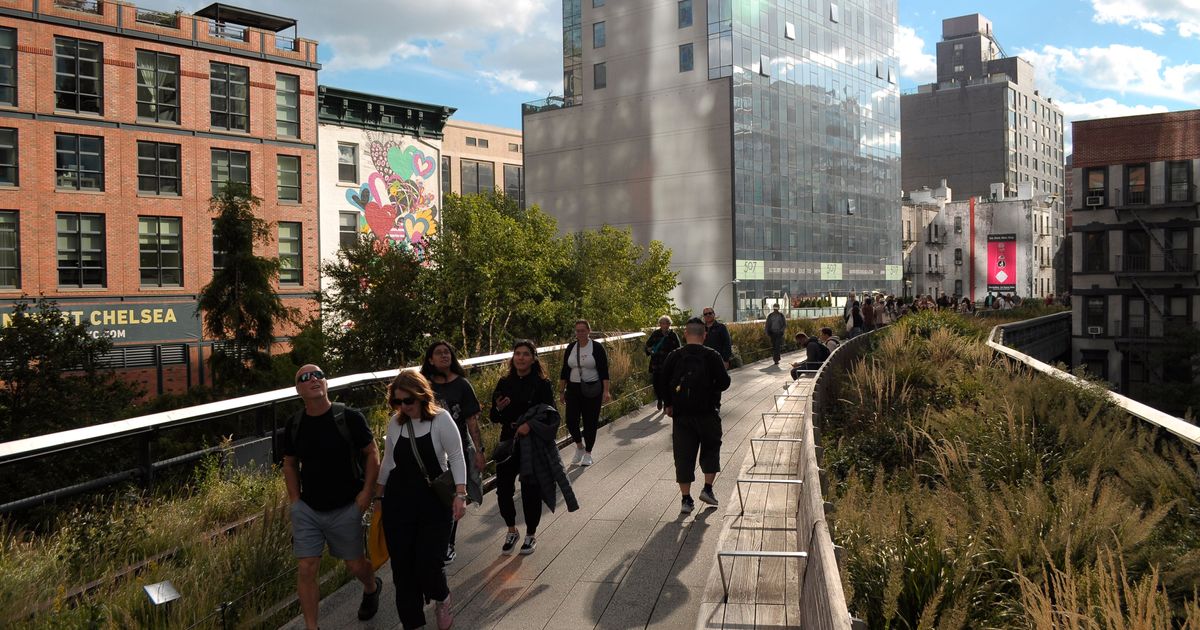
Because the surrounding skyline grew denser during the terrace’s closure, altering the amount of direct sunlight reaching the elevated deck, horticulturists had to completely rethink the plant selection. The newly installed flora—including blackhawks big bluestem, great globe thistle, sea holly, and black-eyed Susans—were specifically chosen for their ability to thrive within these modified light patterns.
Richard Hayden, the High Line’s senior director of horticulture, highlighted the significance of the moment in an interview with the New York Times. “When the 34th Street garden opens, the entire High Line will be open and there will not be a construction shed anywhere on it for the first time in anybody’s memory,” Hayden noted.
Economic and Urban Implications
The completion of the High Line carries profound implications for urban design and real estate economics in New York City. Over the past seventeen years, the park has served as a powerful catalyst for neighborhood transformation. When the project began, West Chelsea was characterized by aging industrial warehouses, auto-repair shops, and quiet commercial blocks.
Today, the corridor is lined with avant-garde architecture designed by globally renowned starchitects—including Zaha Hadid, Frank Gehry, Renzo Piano, and Thomas Heatherwick. Property values along the West Side skyrocketed in what urban economists frequently refer to as the "High Line effect," demonstrating how strategic public-private green infrastructure can generate billions of dollars in private investment and municipal tax revenue.
Furthermore, the park’s success catalyzed a global wave of urban adaptive reuse projects. Cities across the United States and internationally—from Chicago’s Bloomingdale Trail (The 606) to Seoul’s Seoullo 7017—have looked to the High Line as a blueprint for transforming obsolete industrial relics into vibrant public amenities.
Looking Ahead: Stewardship and Maintenance
With construction officially concluded, the focus for Friends of the High Line and the New York City Department of Parks and Recreation shifts entirely to long-term stewardship. Maintaining an elevated, weather-exposed garden network with millions of annual visitors requires rigorous, ongoing horticultural management.
As the final planting beds take root at 34th Street, the park enters a new era. No longer an evolving construction site with shifting boundaries and temporary barriers, the High Line stands fully realized—a completed urban sanctuary suspended above the relentless pace of Manhattan.