The homebuilding industry is currently navigating a period of significant recalibration as cooling demand, fluctuating interest rates, and moderating sales prices force developers to reconsider their long-term land acquisition strategies. As margins for error tighten, the once-distinct boundaries between operational strategy and tactical execution are blurring, prompting industry leaders to adopt more granular, real-time approaches to deal evaluation. Among these, Toll Brothers has distinguished itself by proactively tightening its underwriting bar, an approach that is increasingly influencing not just where the company builds, but how it structures transactions in an environment where many competitors find themselves hampered by land inventory acquired during the peak of the post-pandemic housing boom.
The Shift Toward Disciplined Underwriting
The current state of the U.S. housing market is defined by a search for a stabilizing floor. Following years of aggressive growth, particularly in Sun Belt markets, homebuilders are now contending with the cooling effects of elevated mortgage rates and a cautious buyer demographic. Data from the U.S. Census Bureau and recent market reports indicate that while the luxury sector has shown relative resilience, the broader housing market is experiencing a decline in absorption rates.
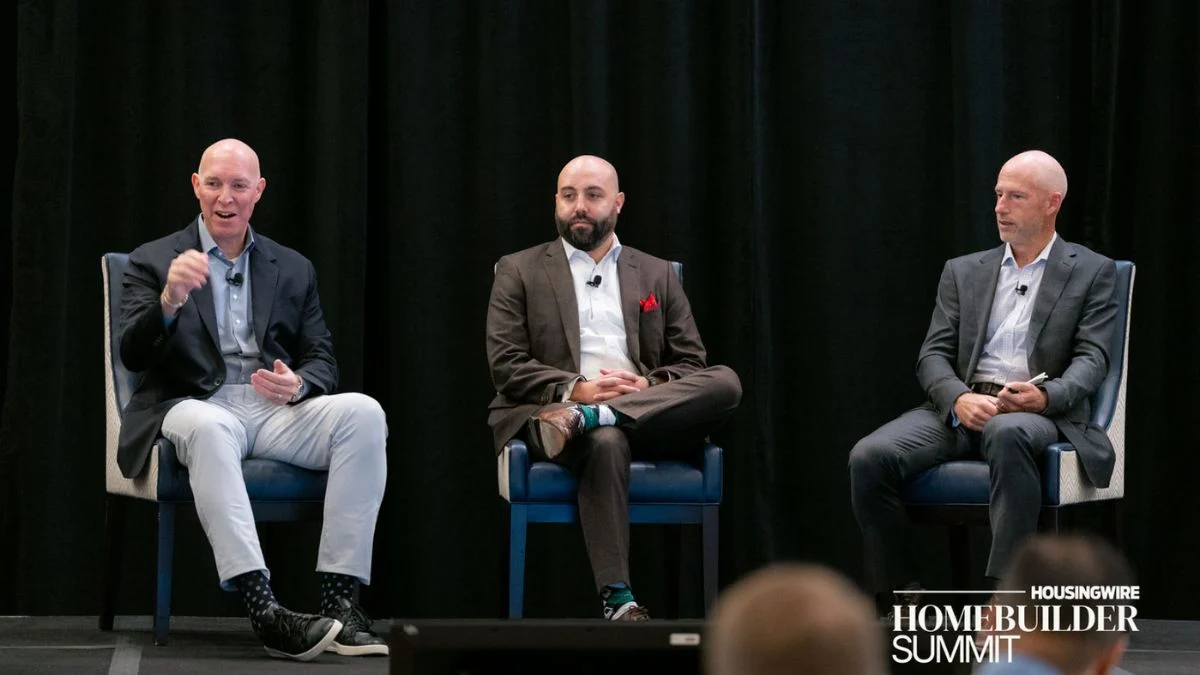
Toll Brothers, which maintains a national average sales price of approximately $1 million, began its pivot toward more conservative underwriting criteria several years ago. Rob Paul, group president for Texas and Arkansas, and Dustin Bowersett, vice president of land acquisition for the company’s Central Florida division, recently outlined this strategic evolution during the HousingWire Homebuilder Summit. The event, which served as a forum for industry leaders to discuss the challenges of the current economic cycle, highlighted a consensus: the days of relying on rapid appreciation to justify land premiums are over.
The company’s updated strategy focuses on a dual-metric approach, scoring potential land acquisitions based on a rigorous combination of projected gross margins and internal rates of return (IRR). Unlike previous models that might have relied on long-term growth forecasts, the current Toll Brothers framework prioritizes data from the last 60 to 90 days. By discounting the performance metrics of the previous spring—a period characterized by different economic conditions—the company ensures its current acquisitions are stress-tested against the realities of today’s market.
The Main and Main Advantage: A Focus on Prime Real Estate
The "Main-and-Main" philosophy, a cornerstone of the Toll Brothers business model, has proven particularly effective in the current climate. By focusing on superior, established locations, the company minimizes the risks associated with peripheral, exurban developments. While production builders aggressively expanded into fringe markets—such as Polk County, Florida—during the COVID-19 building surge, Toll Brothers maintained its focus on core, high-barrier-to-entry locations.
The logic behind this strategy is supported by shifting buyer psychology. As market conditions tighten, buyers demonstrate a clear "flight to quality." They are increasingly risk-averse, preferring established communities with existing infrastructure, proximity to top-tier school districts, and high quality-of-life indicators. In contrast, fringe markets that once thrived on the promise of affordability are now seeing a sharp decline in demand. In some instances, land in these outlying areas has seen its value proposition evaporate entirely as the gap between prime and peripheral locations widens.
For Toll Brothers, this means that even if the broader market experiences a downturn, its inventory remains anchored in areas where demand is historically less elastic. This geographic selectivity serves as a hedge against the volatility that is currently impacting builders with significant exposure to outer-ring developments.
Navigating the Relationship-Based Land Market
Despite the integration of sophisticated Geographic Information System (GIS) and AI-driven analytical tools, the acquisition of high-quality land remains a deeply personal, relationship-based business. While platforms like Acres allow for faster due diligence and the identification of off-market opportunities, the core of the transaction process continues to rely on long-standing connections with land sellers and local brokers.
Bowersett estimates that roughly 90% of his division’s deals are sourced through established relationships. This process often involves years of cultivation, where developers monitor the personal and professional circumstances of landowners, waiting for the optimal moment to propose a sale. Furthermore, the Toll Brothers brand carries significant weight; sellers often prefer to partner with a nationally recognized firm because it provides a level of legitimacy to their community that smaller or less established builders cannot match.
This reputation acts as a barrier to entry for competitors, effectively keeping Toll Brothers at the top of the call list for prime parcels. However, as the market cools, this "brand advantage" is supplemented by the company’s ability to act as a reliable partner in a sector where many deals are beginning to break down due to financing issues or unrealistic expectations.
Market Implications: The Secondary Pipeline
A notable development in the current housing cycle is the emergence of a "secondary pipeline" of land. Many builders who purchased land parcels at the height of the market are now finding that their project-level returns have deteriorated. This has forced some developers to divest portions of their holdings to stabilize their balance sheets.
Toll Brothers is uniquely positioned to capitalize on these situations. By acting as a discriminating buyer, the company can selectively acquire the most desirable portions of these projects—often the most luxurious or prime lots—at valuations that reflect the current, more conservative market reality.
While land sellers have historically been resistant to price reductions, clinging to valuations from three years ago, the structural reality of the market is forcing a change. While there has been little relief on base lot prices, sellers are increasingly demonstrating flexibility in terms of transaction structure. This includes adjusted takedown schedules and performance-based payment plans, which allow builders to manage their cash flow in alignment with actual sales velocity.
Broader Economic Context and Outlook
The housing market is currently in a state of transition that mirrors the broader macroeconomic environment. The Federal Reserve’s interest rate policy, combined with persistent inflation in construction materials and labor, has created a complex landscape for residential construction. According to the National Association of Home Builders (NAHB), builder confidence has remained fragile, reflecting concerns over the cost of capital and the purchasing power of the average consumer.
The strategic shift seen at companies like Toll Brothers suggests that the industry is entering a period of "professionalization" in land acquisition. The reliance on intuition is being replaced by data-driven, risk-adjusted underwriting. This shift is not merely a reaction to current headwinds but a structural change in how builders view their long-term viability. By prioritizing conservative hurdle rates, geographic core-competency, and long-term seller relationships, the industry is attempting to build a buffer against future cycles.
The long-term implications of this approach are significant. As builders like Toll Brothers raise their underwriting standards, the cost of capital for speculative development will likely rise, potentially leading to a more consolidated industry. Smaller builders with less access to capital or less sophisticated underwriting capabilities may find themselves increasingly sidelined, unable to compete for the best locations or navigate the complexities of deal structuring in a high-rate environment.
Conclusion: A Disciplined Path Forward
Toll Brothers’ current approach offers a blueprint for navigating a softening market: maintain strict underwriting standards, prioritize prime locations that appeal to luxury buyers, and leverage long-standing relationships to secure advantageous deals. By resisting the temptation to pursue growth for growth’s sake in peripheral markets, the company has positioned itself to withstand potential volatility.
As the housing industry looks toward the next fiscal year, the focus will likely remain on stability rather than expansion. The lessons learned during the recent post-pandemic boom—that rapid growth can quickly become a liability when the cycle turns—are now deeply embedded in the strategic planning of the nation’s largest homebuilders. For Toll Brothers, the path forward is clear: the focus remains on quality over quantity, ensuring that every land acquisition is not only viable in the current environment but resilient enough to endure the challenges of an unpredictable future.