The rapid and disruptive emergence of generative artificial intelligence across the creative industries has triggered profound introspection among career animators, forcing a global dialogue regarding the irreplaceable value of human emotion in storytelling. Despite relentless technological encroachment, the consensus among elite cinematic storytellers remains overwhelmingly resolute: the intricate, laborious soul of animation cannot, and should not, be replicated by algorithms.
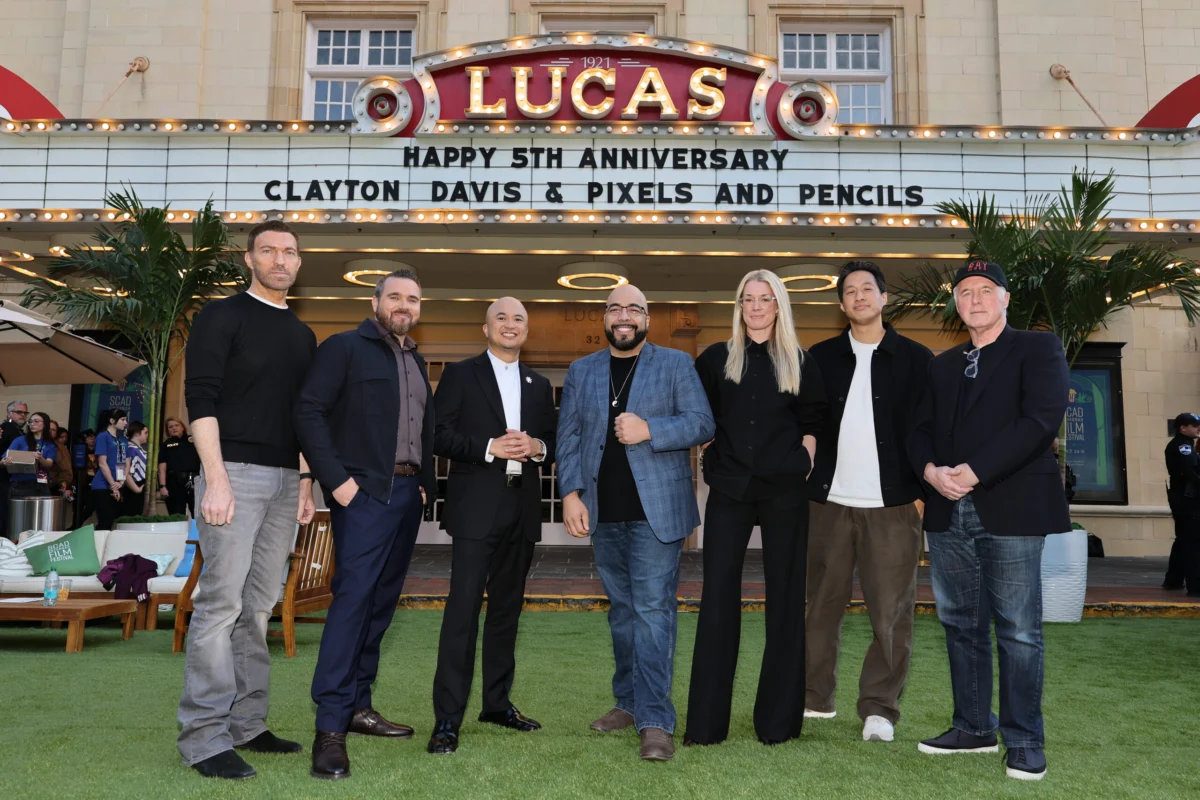
This overarching sentiment anchored the prominent "Pixels and Pencils" panel discussion held in Savannah, Georgia. Hosted by Variety in official partnership with the prestigious SCAD Savannah Film Festival, the packed industry event brought together a roster of visionary directors and studio heads. Moderated by Variety’s Clayton Davis, the Monday afternoon panel served as both a technical masterclass and a passionate defense of traditional craftsmanship, drawing an audience of aspiring student filmmakers, industry veterans, and pop-culture enthusiasts eager to understand how the medium’s top tier plans to navigate an increasingly automated future.
The high-profile panel featured a powerhouse line-up of creators representing major studios and independent entities alike. Among them were Brad Bird discussing Netflix’s long-gestating "Ray Gunn"; Daniel Chong representing Pixar’s upcoming project "Hoppers"; Joel Crawford and Januel Mercado breaking down DreamWorks Animation’s visually eclectic "Forgotten Island"; Travis Knight offering rare insights into Laika’s meticulous stop-motion feature "Wildwood"; and Leah Nelson detailing the collaborative hurdle-jumping required for the Independent Film Company’s "Tangles."
Opening the event, Meg Weichman, the artistic manager of SCAD’s Theatres and Festivals, framed the discussion as an essential celebration of the distinct imagination, artistry, and grueling human collaboration necessary to construct extraordinary cinematic worlds from thin air.
The Art of Fabricating Realities from Ground Zero
To truly understand why the animation community pushes back so aggressively against the promise of instant artificial generation, one must examine the staggering baseline labor required to build an animated feature film. Unlike live-action filmmaking, which relies on pointing a camera at physical sets, natural lighting, and tangible actors, animation demands the complete conceptual fabrication of an alternate universe.
Pixar’s Daniel Chong illuminated this reality for the Savannah audience, pointing out the exhaustive scope of constructing a fully realized animated environment. Every set piece, individual background character, fragment of floating cloth, single strand of hair, and shifting atmospheric nuance must be meticulously generated from absolute zero.
"There’s no camera you can point at," Chong emphasized during the panel. "It’s just completely fabricated and made and created, and that’s a pretty amazing thing, because that’s one of the reasons why I think these movies take so long, is because they have to create their own world."
This foundational construction phase translates to astronomical production timelines. While a standard live-action blockbuster might move from script to screen in roughly 18 to 24 months, animated features routinely require multiple years of concentrated effort. In extreme cases, the journey can span decades.

Brad Bird’s "Ray Gunn," a passion project slated for Netflix that boasts high-profile voice work from Academy Award nominees Sam Rockwell and Scarlett Johansson, took roughly 30 years to reach its finalization stage—a timeline marked by shifting industry landscapes, technological evolutions, and periods where the film was sidelined before Bird could finally secure the right conditions to bring his vision to life.
Yet, rather than viewing this prolonged development cycle as a administrative burden, filmmakers argue that the sheer amount of lived human experience poured into a project is precisely what infuses it with lasting resonance. Bird noted that a compelling narrative cannot be manufactured in a vacuum; it must draw directly from the authentic experiences of its creators. "You can’t create the illusion of life without having one," Bird stated, defining the core directive of the animator’s profession as building a bridge to something genuinely new for the audience.
The Pain and Magic of Manual Craftsmanship
The debate over the automation of art is further compounded when examining physical animation mediums that reject digital shortcuts entirely, such as stop-motion. Laika’s Travis Knight detailed the staggering logistical realities of bringing "Wildwood" to life through traditional frame-by-frame manipulation.
The production required an astonishing 2,800 distinct shots, a process Knight frankly characterized as a "pain," yet one steeped in undeniable artistic romance. Unlike computer-generated imagery, where artists can easily manipulate elements across layers or utilize digital rigging to quickly adjust scenes retroactively, stop-motion is inherently linear and unforgiving.
"Stop motion is progressive. You start on frame one and you work your way all the way through in slow motion until you have a performance," Knight explained to the captive audience. "There is something extraordinarily magical about being a part of that."
This deliberate, friction-heavy workflow stands in direct ideological opposition to the tech industry’s current marketing push toward frictionless generation. When tech advocates and software developers boast about producing complex assets with a single click of a button or bypassing traditional pipelines through shortcut algorithms, seasoned animators recognize that the elimination of friction is often the elimination of art.
"When you see people taunting that, ‘Oh, I can make this with the click of a button,’ or, ‘I can do this with these shortcuts,’ I think we just have to have faith that these processes are the way they are, and they’re as hard as they are to make for a reason," Chong argued. "Because that’s what makes these movies great and that’s what makes them resonate with humans."
Form Follows Function: Narrative-Driven Visual Styles
Moving beyond the philosophical debate of automation, the panel dove deeply into the technical and creative choices that define modern animation aesthetics. The directors stressed that stylistic choices—whether a project leverages traditional 2D animation, cutting-edge 3D rendering, classic stop-motion, or textured claymation—should never be arbitrary marketing decisions. Instead, visual language must serve the emotional core of the script.
Januel Mercado of DreamWorks Animation detailed how the studio approached "Forgotten Island," explaining that the narrative dictated the visual journey of the characters rather than corporate directives or stylistic trends. This narrative-first philosophy enabled the creative team to seamlessly incorporate diverse visual tributes, pulling dynamic stylistic cues from traditional anime and manga traditions to visually represent distinct character perspectives during crucial narrative sequences.

Co-director Joel Crawford expanded on this design philosophy, noting that "Forgotten Island" explores the complex mechanics of human memory and how individuals process and internalize past events. Because human beings reflect upon their memories through vastly different emotional lenses and unreliable perspectives, shifting the film’s animation style depending on who happened to be holding the narrative spotlight at any given moment provided an invaluable storytelling opportunity.
"To have the animation style switch up depending on who the teller of the memory is was just a really exciting opportunity," Crawford said.
Overcoming Misconceptions: Directing Without Drawing
The conversation also challenged public misconceptions regarding the hierarchical structure of animation production and the diverse skill sets required to helm a major feature. For independent filmmakers entering the space, such as "Tangles" director Leah Nelson, succeeding as a director does not always require formal technical proficiency as an illustrator or traditional animator.
Instead, Nelson shared how she had to leverage entirely different creative disciplines to bridge the gap between her internal vision and the execution capabilities of her production team. Lacking the ability to sketch complex character movements from scratch, Nelson relied heavily on physical performance, acting out scenes herself and capturing reference footage to visually communicate intent, pacing, and emotional beats to her artists.
"What I had to do, because I’m not an animator, was do everything else to communicate the vision — anything I could think of to communicate to my team what I hoped for and what I wanted to fight for," Nelson noted. "I used all the other tools I could think of. I did a lot of acting references. I filmed myself doing the actions if I couldn’t draw it."
Broader Industry Implications and the Road Ahead
As generative artificial intelligence continues its aggressive push into Hollywood post-production suites, storyboarding software, and concept art pipelines, the stance articulated at the SCAD Savannah Film Festival highlights a deep ideological fracture within the entertainment sector. While corporate entities look toward generative tools as a means to compress production timelines and significantly slash labor overhead costs, the creative vanguard views the human element not as an expensive bottleneck to be optimized away, but as the foundational lifeblood of the medium.
The uncertainty hanging over the future of the animation workforce remains palpable, fueled by ongoing union negotiations, intellectual property concerns regarding AI training data, and studio restructuring. Addressing the next generation of artists seated in the festival auditorium, Brad Bird offered pragmatic counsel: rather than fearing the shifting technological tides or blindly adopting shortcuts, emerging creators must focus on mastering the fundamental ins and outs of animation theory, storytelling structure, and human observation.
Ultimately, the consensus emerging from the "Pixels and Pencils" panel suggests that while algorithms may eventually learn to mimic the surface-level aesthetics of cinematic movement, they will remain fundamentally incapable of replicating the lived human struggles, accidental breakthroughs, and emotional sacrifices that transform a sequence of rendered frames into an enduring cultural touchstone.