Chinatown residents, local business owners, and community advocacy groups have escalated their ongoing battle against the construction of a massive borough-based jail in Lower Manhattan. Filing a lawsuit in the Manhattan Supreme Court, plaintiffs are seeking to permanently halt disruptive late-night construction schedules that they argue have plunged the historic neighborhood into an untenable cycle of sleeplessness, structural vibrations, and environmental degradation. The legal action directly challenges the city’s aggressive push to complete the 335-foot-tall, 1,040-bed facility—a key component of New York City’s overarching plan to close the notorious penal complex on Rikers Island.
The genesis of the controversy traces back to a legally mandated plan established under former Mayor Bill de Blasio’s administration to shutter Rikers Island by 2027. To facilitate the closure, the city proposed replacing the central island facility with four borough-based jails located in Manhattan, Brooklyn, Queens, and the Bronx. However, the multi-billion-dollar initiative has faced severe logistical hurdles, financial inflation, and profound local opposition from the start.
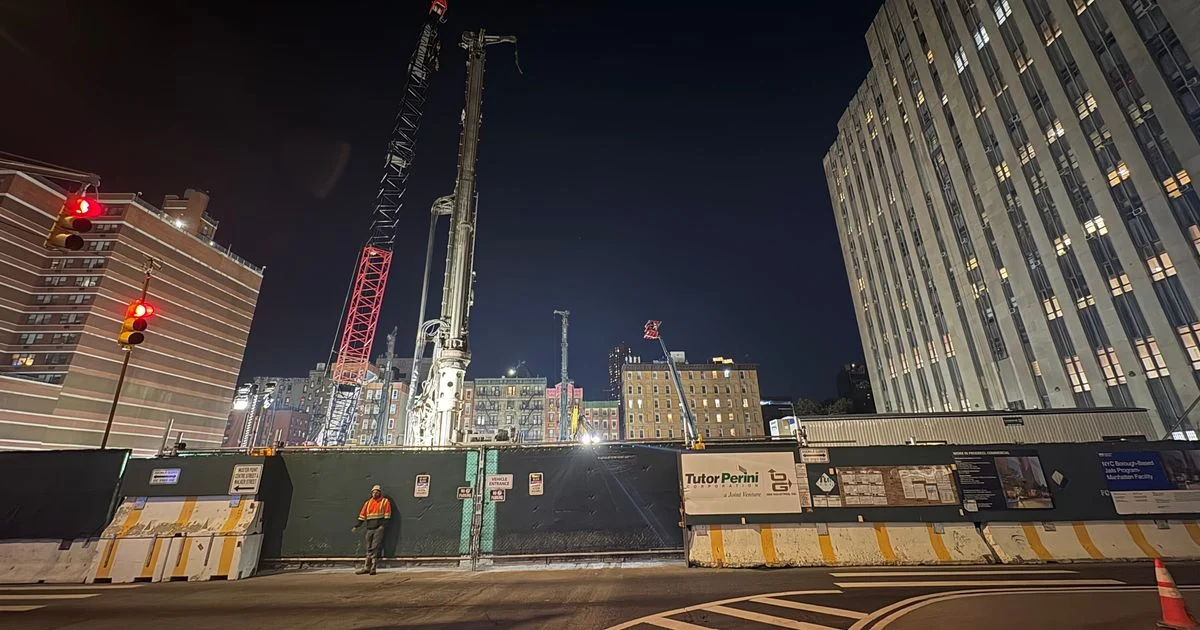
The Manhattan facility, slated for the former site of the Manhattan Detention Complex—historically known as "The Tombs"—at White and Centre Streets, has encountered intense community pushback. Previous legal challenges, ranging from Article 78 proceedings to artist-led injunctions, have ultimately failed to stop the project. Consequently, the city’s design-build team, Tutor Perini and O&G Industries, has implemented a high-intensity construction schedule to claw back lost time. The project is currently projected for completion in 2032—blowing past the original legal mandates by five years and swelling to an estimated price tag of $3.9 billion.
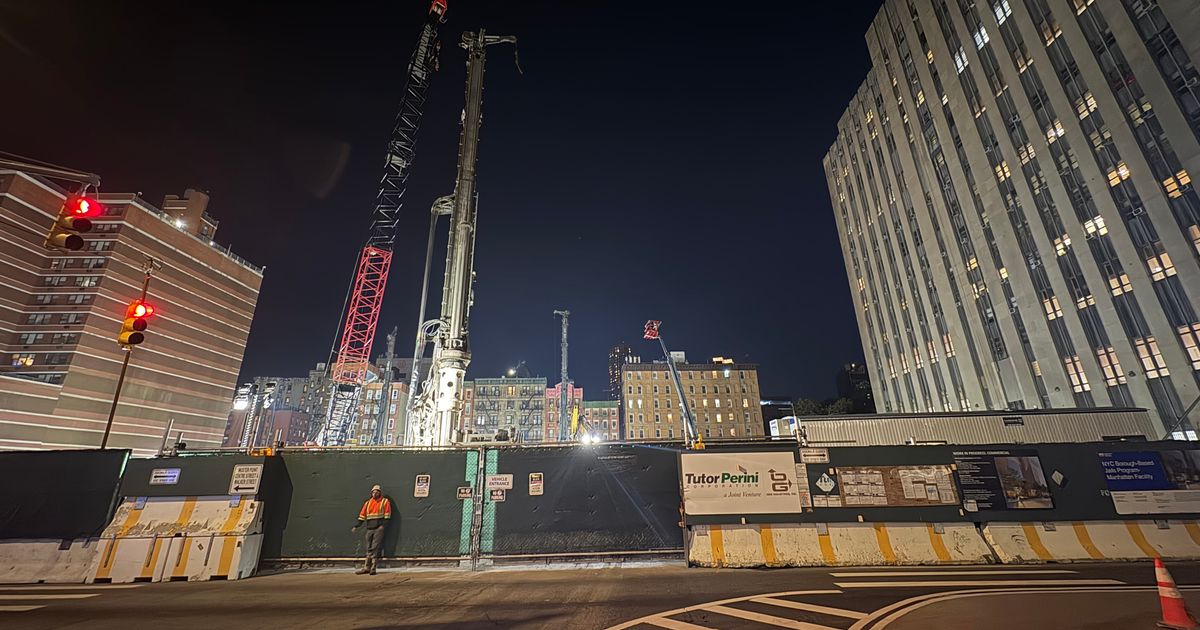
To meet this expedited 2032 target, the city authorized an extended work schedule. According to municipal advisories, construction operations on White Street now run from 6 a.m. through midnight on weekdays, supplemented by early morning deliveries starting at 4 a.m. and mandatory daytime shifts on Saturdays. City officials maintain that restricting the project to standard weekday daytime hours would push completion back to 2034 and add an additional $340 million to taxpayer expenses.
The human cost of this accelerated timeline, however, is heavily concentrated among Chinatown’s most vulnerable residents. In affidavits submitted to the Manhattan Supreme Court, local community members paint a harrowing picture of daily life adjacent to the job site.
Jon Alpert, a 77-year-old documentary filmmaker who resides and operates the media-arts center DCTV on Lafayette Street, described the current conditions as a form of psychological torture. Recovering from treatments for metastatic prostate cancer, Alpert noted that his only window for uninterrupted rest is a brief four-hour span between midnight and 4 a.m. The constant cacophony of heavy drilling, booming jackhammers, and ground-shaking tremors has also disrupted DCTV’s evening classes, screenings, and professional audio-recording services.
Similarly, 77-year-old Betty Lee and her husband, residents of a rent-stabilized apartment on Baxter Street, are forced to keep their windows permanently sealed against the noise. Compounding the auditory assault, powerful floodlights illuminate the construction zone throughout the evening, subjecting nearby apartments to perpetual daylight conditions long after sundown.
Vulnerable populations at the Chung Pak senior housing facility, located immediately adjacent to the jail site, have also reported severe disruptions. Ping Ai Mei, an 88-year-old resident, was forced to relocate to a different unit within the building due to respiratory complications and health issues exacerbated by construction dust and relentless vibrations. Local leaders, including City Councilmember Christopher Marte—a co-founder of the community advocacy group Neighbors United Below Canal—have criticized the city for imposing permanent industrial-scale disruptions on a residential neighborhood under the guise of temporary inconvenience.
At the core of the lawsuit is a direct challenge to the legality of the city’s extended-hours permits. Plaintiffs argue that under municipal regulations, after-hours construction variances are legally restricted to projects undertaken explicitly for immediate public health and safety. They contend that building a new correctional facility fails to meet this narrow legal threshold.
Furthermore, the lawsuit alleges significant violations of the New York State Environmental Quality Review Act (SEQRA). The legal complaint asserts that the current around-the-clock construction schedule more than doubles the intensity and duration of the impacts originally evaluated in the project’s environmental impact statement. Despite this dramatic intensification of noise, dust, glare, and heavy vehicular traffic, plaintiffs charge that the city has failed to conduct supplemental environmental reviews to assess the cumulative toll on the surrounding community.
While local residents demand relief, city officials and criminal justice reform advocates emphasize the urgent humanitarian crisis driving the project forward. The push to shutter Rikers Island remains a moral and legal imperative for municipal leadership, framed by the catastrophic conditions that have plagued the island for decades.

In 2025 alone, 15 individuals died while in custody at Rikers Island, with additional fatalities recorded in subsequent months. Proponents of the borough-based jail system argue that the sprawling, antiquated island facility is fundamentally unfixable and that perpetuating its use inflicts enduring trauma on both detainees and staff.
Dana Kaplan, the administration’s "Close Rikers" czar, has repeatedly emphasized that the city has a moral obligation to expedite the construction of modern facilities. According to city officials, the new borough-based jails will offer significantly improved conditions, better access to legal representation, closer proximity to families, and safer environments for correctional officers.
A mayoral spokesperson, Sam Raskin, reiterated that the administration is actively reviewing the lawsuit’s specific claims while remaining steadfast in its commitment to meeting legal obligations and transitioning New York City to a safer, more humane correctional system.
The lawsuit filed by Chinatown residents highlights a profound urban planning dilemma: the collision between a citywide mandate for systemic criminal justice reform and the localized, localized burden borne by specific neighborhoods. As the legal battle plays out in the Manhattan Supreme Court, the immediate future for the residents of White and Baxter Streets remains defined by the blinding glare of floodlights and the unyielding rhythm of heavy machinery. For a community that has historically fought for its preservation and economic viability, the pursuit of a progressive penal system is exacting a heavy, exhausting daily toll.