As NASA accelerates its preparations for long-duration crewed missions to the Moon and eventually Mars, the agency is addressing a challenge that extends far beyond rocket propulsion and life-support systems: the psychological and physiological necessity of fresh food. While the nation reflects on the importance of shared meals during the Thanksgiving holiday, scientists are working to ensure that future astronauts, millions of miles from Earth, can experience the comfort and nutrition of a diverse diet. This agricultural endeavor is not merely for culinary satisfaction; it is a critical component of sustaining human health, supporting mental well-being, and establishing the biological systems required for long-term habitation in extraterrestrial environments.
The Intersection of Botany and Aerospace Engineering
The challenge of growing crops in space is immense, requiring the integration of advanced horticulture with rigorous aerospace engineering. Unlike terrestrial farming, space-based agriculture must operate within closed-loop life support systems. Plants serve a dual purpose: providing sustenance and acting as vital biological components of a spacecraft’s ecosystem. Through photosynthesis, these crops absorb carbon dioxide and release oxygen, while simultaneously assisting in water reclamation and recycling processes.
As missions extend from low-Earth orbit to the lunar surface—and eventually to the Martian frontier—the reliance on pre-packaged, shelf-stable rations becomes a significant logistical hurdle. Research conducted by NASA’s Biological and Physical Sciences Division is currently pivoting toward the development of sophisticated growth chambers designed to function under microgravity or partial-gravity conditions. A forthcoming investigation, scheduled for launch to the International Space Station (ISS), will deploy a next-generation prototype growth chamber. This hardware is intended to provide the empirical data necessary to refine crop production systems for upcoming Moon Base habitats.
Strawberries: The Challenge of Compact Cultivation
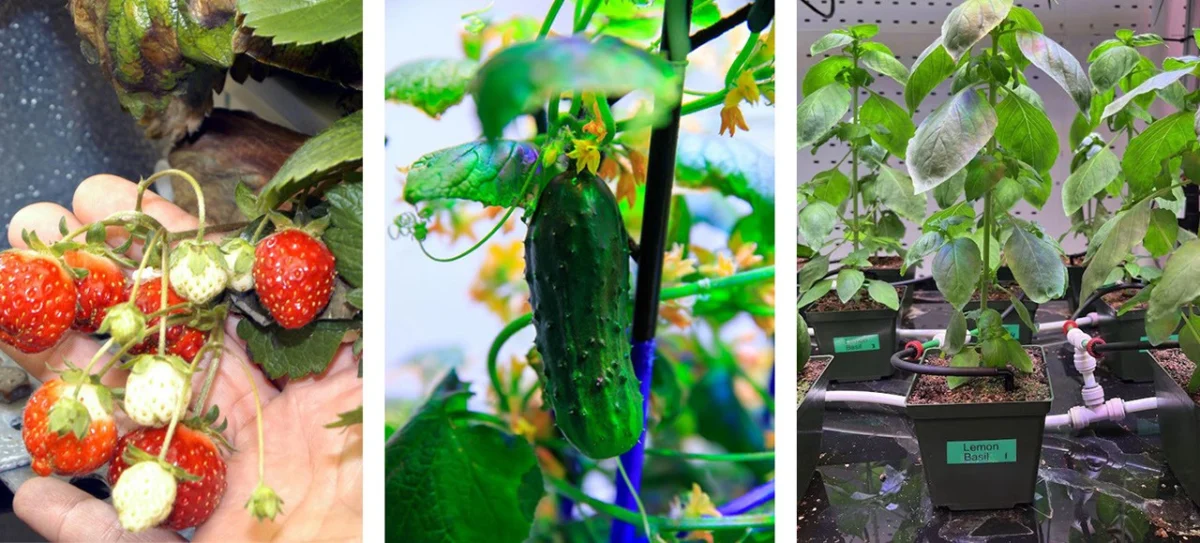
Strawberries have emerged as a primary candidate for spaceflight due to their high nutritional density, aromatic properties, and self-pollinating nature. However, selecting the right variety is a complex process of optimization. Researchers at NASA’s Kennedy Space Center (KSC) in Florida, in collaboration with the Australian Research Council Centre for Excellence in Plants for Space, have been rigorously testing various cultivars to determine which can thrive in the constrained, artificial environments of a spacecraft.
A notable study published in September in the journal Life Sciences in Space Research highlighted the trade-offs involved in this selection. Researchers compared the "Delizz" strawberry—a variety currently favored by NASA—with a wild strawberry cultivar. The results were telling: while the wild strawberry produced twice as many flowers and fruits, its growth habit was poorly suited for spaceflight. It produced an abundance of "runners"—stems that spread across the ground—which would consume excessive space and complicate maintenance in a confined growth chamber. In contrast, the Delizz variety produced larger, consistent fruit while maintaining a compact, manageable architecture, reinforcing its status as the superior candidate for orbital missions.
Diversifying the Cosmic Menu: The Gourd Frontier
For decades, space-grown crops have been limited to a narrow range of leafy greens and small vegetables. To combat "menu fatigue"—a phenomenon where astronauts become increasingly averse to the limited textures and flavors of standard space rations—NASA is expanding its experimental repertoire. Cucumbers represent a significant advancement in this area as the first member of the gourd family to undergo formal evaluation for spaceflight.
According to a study published in August in HortScience, researchers conducted comprehensive assessments of cucumber plants under simulated spaceflight conditions. The findings were largely positive. Although the plants exhibited some physiological adaptations, such as enlarged leaves, they maintained a consistent yield of edible fruit. The implications of this success are twofold: first, it introduces a new nutritional profile to the astronaut diet; second, it promotes plant biodiversity. Increased biodiversity within a growth chamber enhances the resilience of the entire system, providing a safety net against the potential failure of a single crop variety.
Aromatics and the Psychology of Sustenance
The integration of herbs, such as lemon basil, represents a strategic move toward improving the human experience in space. Beyond their nutritional contributions, herbs provide essential sensory variety. A bland, repetitive diet is more than a trivial inconvenience; it can lead to a decrease in caloric intake and a decline in morale, both of which are detrimental to crew performance during high-stakes missions.
Lemon basil has successfully passed initial testing at Kennedy Space Center, including the critical stage of seed sanitization. This process is mandatory for any biological matter destined for the ISS, as it eliminates microorganisms that could compromise the space station’s delicate environment. The next phase of testing involves deploying the herbs into "plant pillows," the specialized growth modules used by ISS crews to cultivate vegetation. By allowing astronauts to harvest fresh, aromatic ingredients, NASA aims to bridge the gap between sterile laboratory environments and the psychological need for familiar, sensory-rich experiences.
Chronology of Space-Based Agriculture
The trajectory of space farming has evolved from rudimentary experiments to complex botanical investigations:
- 1982: The Soviet Salyut 7 mission achieves the first plant to complete a full life cycle in space (Arabidopsis).
- 2014: NASA’s "Veggie" facility is installed on the ISS, enabling the first harvest of red romaine lettuce for human consumption in space.
- 2019: The Advanced Plant Habitat (APH) begins operations, providing a more controlled environment for complex research.
- 2024: Testing of diverse crops including strawberries and cucumbers marks a transition toward nutritional self-sufficiency.
- 2025 and beyond: Deployment of next-generation, automated growth chambers to support lunar surface operations.
Implications for Long-Duration Missions
The broader impact of these agricultural developments is foundational to the success of the Artemis program and future Mars expeditions. As mission durations increase from months to years, the ability to supplement the crew’s diet with fresh, nutrient-dense foods will become mandatory. Furthermore, the data gathered from these experiments provide critical insights into how plants respond to radiation, varying gravity levels, and restricted resource management.
From an engineering perspective, the transition from Earth-supplied food to in-situ production reduces the "mass budget" of a mission. Every kilogram of food not launched from Earth represents a kilogram of equipment, fuel, or scientific instruments that can be carried instead. As research continues to refine the variables of light, water, and nutrient delivery, the goal of a sustainable, productive "space garden" moves closer to reality.
Conclusion
The pursuit of agriculture in space is a testament to the complexity of human exploration. By tackling the challenge of crop cultivation, NASA is not only preparing for the nutritional requirements of future explorers but is also addressing the essential human need for variety and comfort in extreme environments. As researchers continue to refine the selection of strawberries, cucumbers, and herbs, they are building the agricultural scaffolding necessary for humanity to become a multi-planetary species. The garden of the future may be contained within metallic, light-bathed chambers, but its roots are firmly planted in the objective of sustaining life across the vast, silent reaches of space.