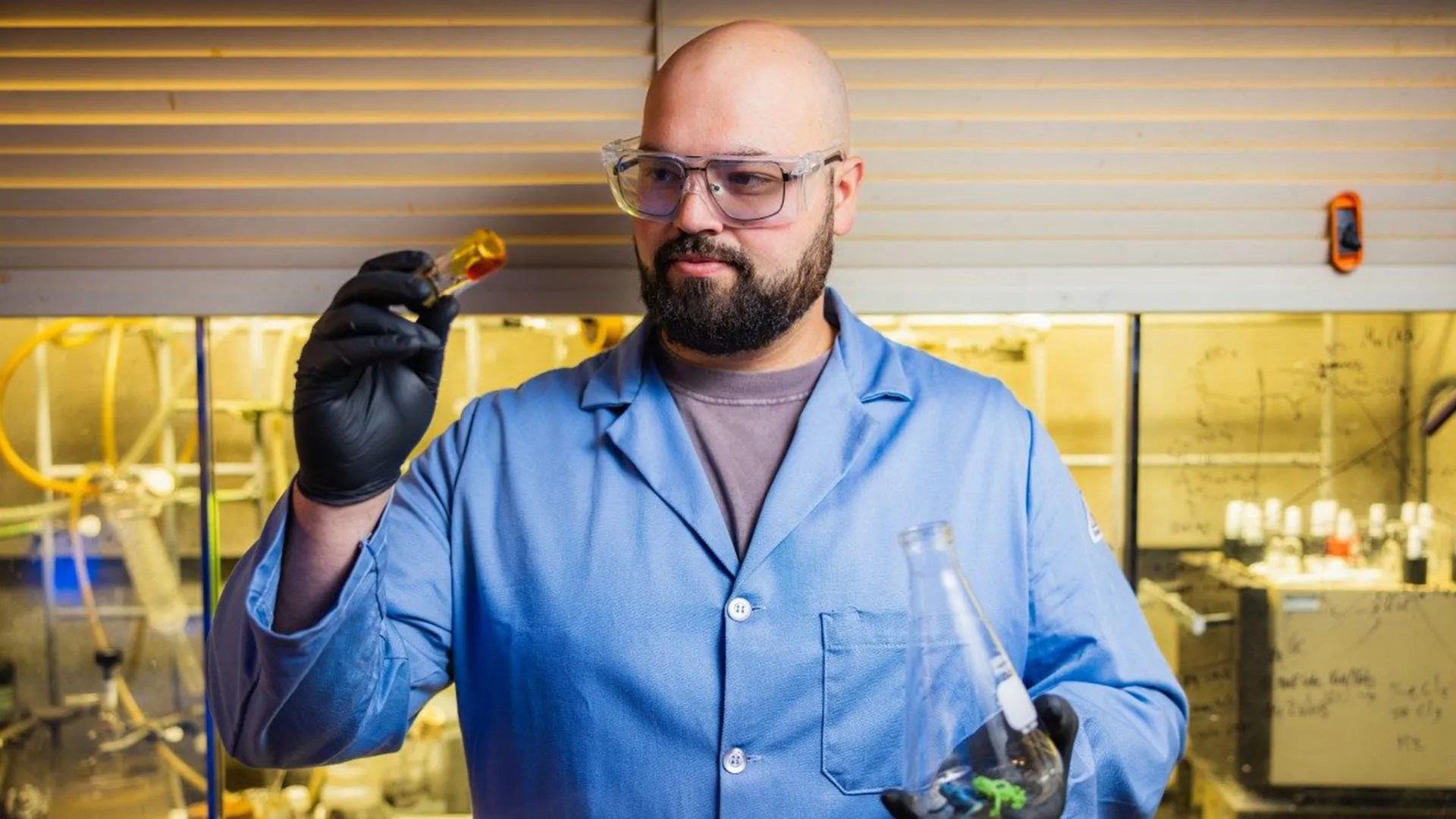
Old plumbing pipes, discarded window frames, and expired credit cards could one day become valuable ingredients in engine oil. Researchers at Virginia Tech have developed a new chemical process that transforms one of the world’s most difficult plastics to recycle into a high-performance lubricant material. Led by chemist and chemical engineer Guoliang "Greg" Liu, the research team has successfully pioneered a methodology to convert polyvinyl chloride (PVC) into polyalphaolefin (PAO), a critical base stock used in the synthesis of high-performance lubricants. This development, recently published in the journal Nature, marks a significant milestone in polymer science, offering a dual-pronged solution to the global crises of plastic accumulation and the resource-intensive production of industrial fluids.
The ubiquity of PVC in modern infrastructure presents a paradoxical challenge. While its durability and versatility make it ideal for construction—spanning everything from residential piping to window frames—these same characteristics render it a scourge in waste management systems. PVC is notoriously difficult to recycle through mechanical means because of its high chlorine content and the dense cocktail of chemical additives, such as plasticizers and stabilizers, used to modulate its physical properties. When these additives are present, they frequently compromise the integrity of recycled plastic, leading to materials that are too brittle or contaminated for further use. As a result, the vast majority of post-consumer PVC is diverted to landfills or incinerators, where it poses long-term environmental hazards.
A Chronology of Discovery
The trajectory of this discovery began not with a focus on lubricants, but with a broader inquiry into polymer upcycling. Liu’s laboratory has spent years investigating the potential to turn plastic waste into functional, high-value chemical products. Their earlier work, which garnered attention in Science and Nature Sustainability, focused on converting various plastic waste streams into surfactants—the foundational molecules used in soaps, detergents, and industrial cleaning agents.
Emboldened by their success in the surfactant space, the team shifted their focus to the more recalcitrant challenge of PVC. The research group, which Liu affectionately dubbed "the three musketeers"—comprised of doctoral student Eric Munyaneza Nuwayo, graduate student Connor S. Thompson, and first-year researcher Abby Civiello—began by attempting to modify the PVC molecular chain. The initial hypothesis was that by replacing chlorine atoms with other chemical groups, they could derive a useful, high-value material.
However, the early months of the project were characterized by experimental frustration. The team consistently produced soft, sticky, and essentially useless materials. It was this failure that led to the breakthrough moment. Liu posited that if the material could not be modified in its long-chain state, perhaps it could be disassembled. By breaking the polymers down into smaller, segmented chains, the researchers found they could reconstruct the molecules into a more valuable form. This pivot from modification to degradation—and subsequent re-polymerization—revealed a path to creating synthetic base oils.
The Chemical Process: From Waste to Lubricant
The laboratory process involves a precise, multi-step reaction. PVC waste is first placed into a specialized solvent. Researchers then introduce aluminum trichloride—a catalyst that facilitates the necessary chemical rearrangement—and alpha-olefins, a class of hydrocarbons. The reaction mixture is heated to 158 degrees Fahrenheit (approximately 70 degrees Celsius) for three hours. During this period, the PVC undergoes a structural transformation, emerging as a thick, viscous lubricating oil.
The product of this synthesis is polyalphaolefin, a synthetic base oil prized for its thermal stability, low volatility, and excellent viscosity index. Because PAOs perform exceptionally well under extreme temperature fluctuations, they are the preferred base for high-performance synthetic engine oils used in automotive, aviation, and heavy machinery applications. By synthesizing these molecules from discarded plastic, the Virginia Tech team has effectively demonstrated a "closed-loop" potential for one of the most stubborn polymers in the waste stream.
Data and Industrial Context
To understand the scope of the potential impact, one must consider the sheer volume of lubricant consumption. The global lubricant market is projected to reach approximately $180 billion by 2030, driven by the continuous expansion of the global vehicle fleet and industrial automation. Traditionally, these lubricants are derived from petroleum-based feedstocks, which carry a significant carbon footprint from extraction through refining.
By providing an alternative source for PAOs, the Virginia Tech technology could potentially decouple lubricant production from virgin crude oil reliance. Furthermore, the environmental benefits are compounded. By sequestering carbon within a long-lasting industrial product—rather than allowing PVC to sit in a landfill for centuries or releasing toxic gases through incineration—the upcycling process creates a double-positive environmental impact.
Official Responses and Collaborative Validation
The transition from a laboratory bench to industrial scalability is a daunting task, and Liu has sought external validation to ensure the commercial viability of the process. The team collaborated with Ali Erdemir at Texas A&M University to perform rigorous performance testing on the resulting lubricant samples. Simultaneously, William Goddard of the California Institute of Technology (Caltech) utilized advanced computational modeling to map the underlying chemical pathways, providing a theoretical framework for why the process is so efficient.
At Virginia Tech, Xi Chen has been instrumental in the economic analysis of the project. Her work focuses on the techno-economic modeling of the process, exploring how it could be integrated into existing manufacturing infrastructures. While the team remains cautious about immediate commercial rollout, the consensus among these collaborators is that the technology is robust and holds significant potential for the chemical manufacturing sector.
Implications for a Circular Economy
The broader implications of this research are twofold. First, it challenges the current recycling paradigm. Standard mechanical recycling is often described as "downcycling," where the material loses quality with each iteration until it is eventually discarded. The process pioneered by Liu and his team represents true "upcycling," where a waste product with a negative value (the cost of disposal) is converted into a commodity with a high market value.
Second, the success of this research highlights the growing importance of "chemical recycling" in the global sustainability agenda. As governments and international bodies increase pressure on corporations to reduce plastic waste, technologies that can digest complex, contaminated polymers will become increasingly attractive. The ability to treat PVC—which has long been considered the "black sheep" of the plastic family—could change the economic calculus for waste management facilities globally.
As the team looks toward the future, the primary goal is scaling the operation. Making the process more energy-efficient and ensuring the supply chain for PVC waste is stable are the next logical hurdles. If the transition from laboratory to pilot plant proves successful, this technology could provide a blueprint for handling other types of difficult-to-recycle polymers.
"Lubricants are the silent hero out there," Liu remarked. "We often don’t recognize they exist, but they are out there working quietly. We want to be able to produce the oil on a larger scale to reach more people in the world."
The research represents a critical bridge between environmental science and industrial engineering. By re-imagining the molecular architecture of plastic waste, the Virginia Tech team has not only solved a nagging problem in polymer chemistry but has also opened a door to a more sustainable future for the machinery that keeps the modern world moving. As the industry grapples with the transition to greener materials, the transformation of old plumbing and credit cards into high-performance lubricants serves as a compelling example of how scientific innovation can turn a liability into a vital resource.