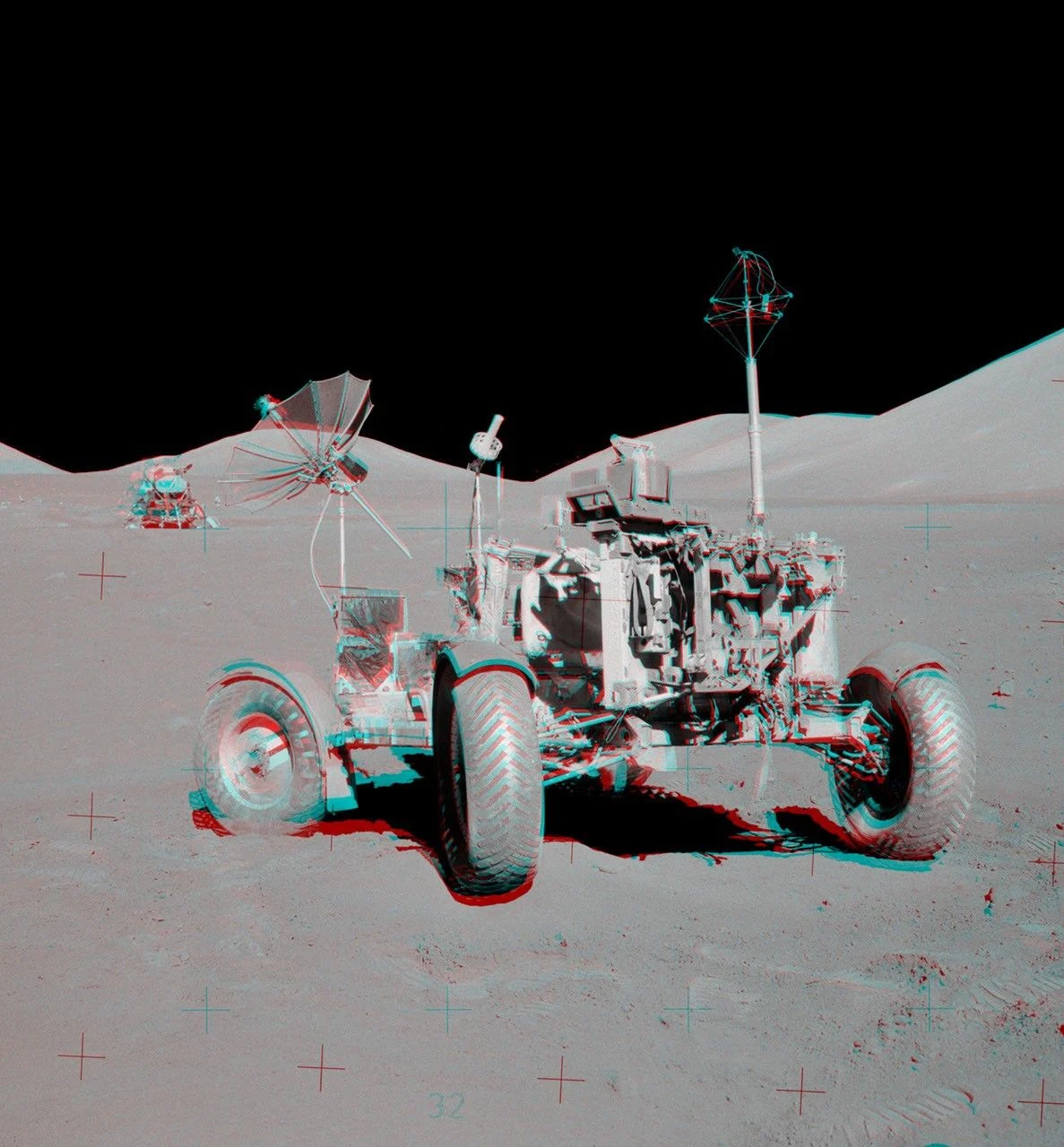
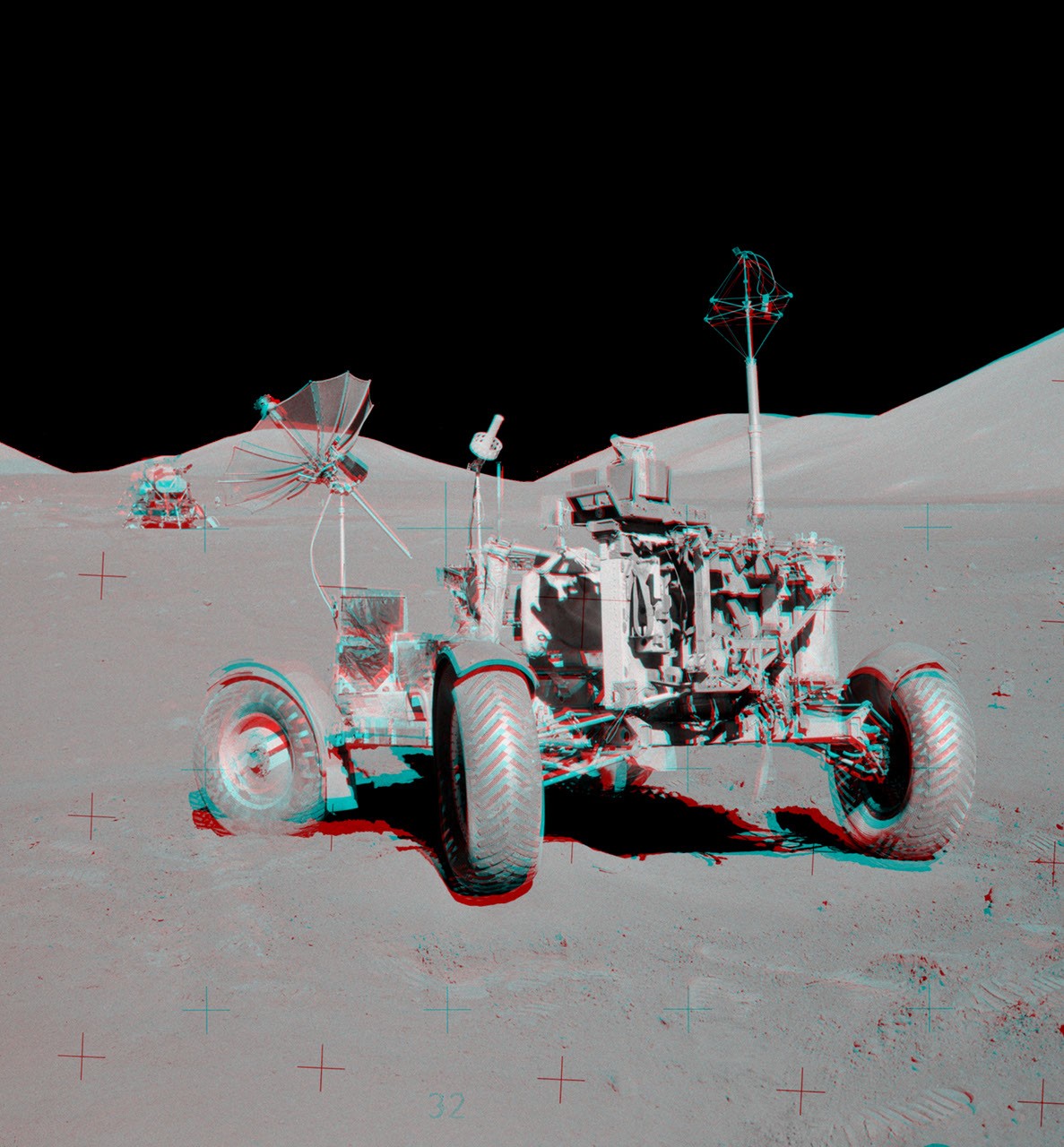
The Apollo 17 mission, which concluded in December 1972, remains a watershed moment in the history of human space exploration. As the final crewed mission of NASA’s Apollo program, it represented the pinnacle of lunar surface operations, scientific return, and engineering capability. Recent archival efforts, including the release of high-resolution 3D anaglyphs, have provided a renewed look at the mission’s hardware, specifically the Lunar Roving Vehicle (LRV) parked at the so-called "VIP Site" in the Taurus-Littrow valley. This site served as the strategic vantage point from which the world witnessed the historic liftoff of the Lunar Module ascent stage via a remotely operated television camera mounted on the rover.
A Chronology of the Final Lunar Landing
The mission launched on December 7, 1972, from Kennedy Space Center, carrying astronauts Eugene Cernan, Harrison Schmitt, and Ronald Evans. While Evans remained in lunar orbit aboard the Command and Service Module America, Cernan and Schmitt descended to the lunar surface in the Lunar Module Challenger.
The descent to the Taurus-Littrow valley—a geologically diverse region chosen for its potential to yield insights into both young volcanic activity and ancient lunar crustal material—commenced on December 11, 1972. Over the course of the next 75 hours, the two astronauts conducted three distinct Extravehicular Activities (EVAs). These excursions pushed the boundaries of lunar exploration, utilizing the Lunar Roving Vehicle to traverse more than 30 kilometers across the rugged landscape.
The chronology of their time on the surface was marked by intense scientific labor. During their stay, they deployed the Apollo Lunar Surface Experiments Package (ALSEP), collected samples from various craters, and performed deep-core drilling. The mission concluded on December 14, 1972, when the ascent stage of the Challenger lifted off, marking the final time human beings have departed the lunar surface.
Technical Precision at the VIP Site
The specific location highlighted in recent imagery—the "VIP Site"—was chosen with meticulous intent. NASA mission planners positioned the Lunar Roving Vehicle approximately 150 meters from the Lunar Module. This distance was calculated to be optimal: far enough to ensure the rover would not be damaged by the ascent stage’s engine exhaust, yet close enough for the rover’s steerable high-gain antenna to capture the historic moment of departure.
The imagery produced by this setup was a technological marvel for its time. By utilizing a television camera mounted on the LRV, engineers at Mission Control in Houston were able to control the camera’s pan and tilt remotely. This allowed for the first and only live television broadcast of a lunar ascent from the surface of the Moon. The success of this operation provided not only a powerful symbolic image of human achievement but also vital engineering data regarding the interaction between the lunar surface and rocket plumes during takeoff.
Scientific Contributions and Sample Collection
The scientific yield of Apollo 17 stands as the most significant of any single mission in the Apollo series. The crew returned to Earth with 110 kilograms (approximately 243 pounds) of lunar rock and soil samples. This collection included a diverse array of samples that allowed geologists to reconstruct the history of the Taurus-Littrow valley with unprecedented detail.
Among the most notable findings were the orange soil discovered by Harrison Schmitt at Shorty Crater. Analysis revealed that these beads were volcanic glass, originating from a "fire fountain" eruption that occurred approximately 3.6 billion years ago. The return of these samples allowed scientists to refine the chronology of the Moon’s volcanic history and provided evidence that the Moon’s interior remained geologically active much later than previously assumed.
Furthermore, the deployment of the ALSEP station included experiments that monitored lunar seismic activity, atmospheric composition, and heat flow. Data from these sensors continued to transmit information back to Earth until the station was decommissioned in 1977, contributing to our fundamental understanding of lunar geophysics.
Institutional Perspective and Historical Standing
From the vantage point of NASA and the global scientific community, the legacy of Apollo 17 is defined by its transition from exploratory "flag-planting" to systematic geological investigation. As the only mission to include a professional scientist—geologist Harrison Schmitt—in the crew, Apollo 17 set a precedent for the integration of specialized research capabilities into human spaceflight.
"The Apollo 17 mission was not just the end of an era, but the blueprint for how we conduct planetary exploration today," notes a spokesperson from NASA’s Lunar Exploration Program. "The integration of mobility via the rover, coupled with the presence of a geologist on the ground, allowed us to maximize the scientific return in a way that previous missions could only approximate."
The fact that Cernan and Schmitt remain the last humans to have walked on the Moon is a point of significant discussion in modern aerospace circles. For over five decades, the Moon has been visited exclusively by robotic landers and orbiters. This hiatus has framed Apollo 17 not merely as a historical event, but as the benchmark against which all future lunar return missions—including those under the Artemis program—are measured.
Broader Implications for Future Lunar Exploration
The significance of the Taurus-Littrow site extends into the current era of lunar exploration. As international space agencies and commercial entities look toward establishing a permanent human presence on the Moon, the data gathered by Apollo 17 remains essential. Engineers currently designing pressurized lunar rovers and habitat sites are utilizing the performance data of the original Apollo LRV to understand the long-term effects of lunar dust (regolith) on mechanical systems.
The regolith, which proved to be a persistent nuisance to the Apollo astronauts, remains a primary technical challenge for modern exploration. The abrasive nature of the dust, combined with its electrostatic properties, caused significant wear on seals and joints during the Apollo 17 mission. Lessons learned from the maintenance required by Cernan and Schmitt are directly informing the development of current dust-mitigation technologies.
Conclusion
The enduring imagery of the Lunar Rover resting in the Taurus-Littrow valley serves as a tangible link between the pioneering efforts of the 1970s and the prospective lunar economy of the 21st century. By analyzing these stereo anaglyphs and historical logs, researchers are reminded that the Apollo program was a triumph of interdisciplinary cooperation.
As we look toward the future of space travel, the mission of Apollo 17 stands as a testament to the capabilities of human endurance and technical ingenuity. The 110 kilograms of lunar material brought back to Earth continue to reveal new secrets, and the site where the astronauts parked their rover remains a silent monument to a half-century of exploration. The mission did not merely conclude an era; it provided the foundation upon which the next generation of lunar explorers will build as they prepare to return to the Moon, ensuring that the legacy of Taurus-Littrow continues to influence the trajectory of human progress in space.