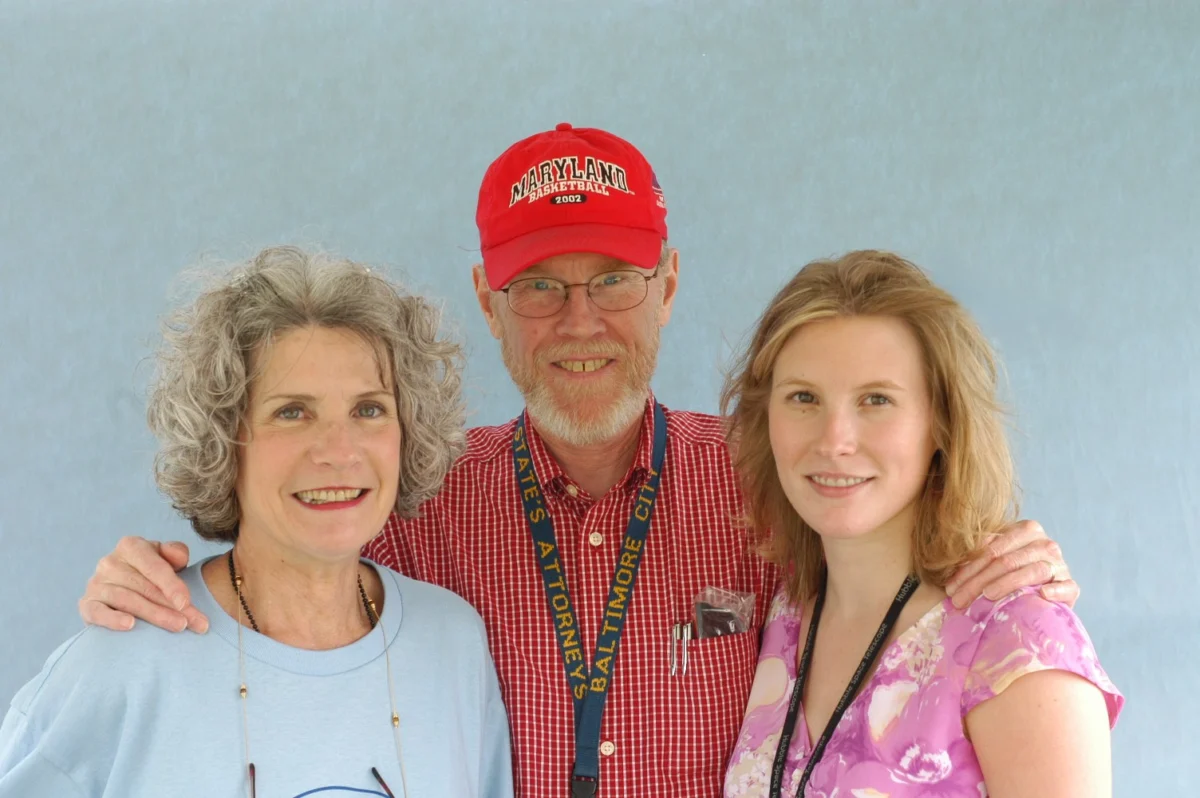
For Ashley Knight, the inner workings of NASA were never a distant abstraction; they were the familiar backdrop of a Maryland childhood. Conversations at the family dinner table in Greenbelt often centered on the latest technical hurdles or triumphs emerging from NASA’s Goddard Space Flight Center, where her father, Lyle Knight, served as a mechanical engineer, and her mother, Julia Knight, navigated the complexities of human resources. These early exposures were not merely anecdotal; they were formative, rooting a deep-seated appreciation for the agency’s collaborative culture and its role in human space exploration.
The trajectory of Knight’s professional life recently reached a significant milestone in late August, when she and several colleagues within the Goddard Office of the Chief Financial Officer were officially sworn in as federal employees. This transition, part of a strategic workforce initiative titled "Restoring NASA’s Core Competencies," represents more than a change in status; it is a structural realignment designed to solidify the agency’s institutional knowledge and ensure that critical financial oversight remains firmly embedded within the civil service framework.
A Legacy of Service and the Path to Goddard
Knight’s journey into the federal workforce was not immediate, though it was consistent in its trajectory. After graduating from the University of Maryland, College Park, she entered a job market defined by the rapid evolution of space technology. Her search for a career path inevitably returned to the gates of Goddard, where she had once toured testing chambers and assembly facilities as a child.
Her initial entry into the aerospace sector came via a contractor role supporting the Hubble Space Telescope team. At the time, the Hubble program was a global symbol of technical resilience. Knight recalls the inspiration drawn from the 1993 servicing mission, which corrected the observatory’s infamous spherical aberration. Joining the team as a project support analyst, she played a vital role in the preparation for Hubble’s fifth and final shuttle servicing mission, managing data gathering, hardware procurement, and complex test plans.
Following the conclusion of the shuttle servicing era in 2009, Knight transitioned to the Robotic Refueling Mission within the Satellite Servicing Capabilities Office—now recognized as the In-Space Servicing, Assembly, and Manufacturing (ISAM) Capabilities Office. This period of her career underscored the evolving nature of NASA’s mission, moving from legacy telescope maintenance to the future of in-orbit infrastructure and refueling technologies.
Workforce Directive: Restoring NASA’s Core Competencies
The August swearing-in ceremony was the culmination of a broader agency-wide directive announced by NASA Administrator Jared Isaacman in February. The policy, titled "Restoring NASA’s Core Competencies," seeks to address a systemic reliance on contract support in areas deemed essential to the agency’s mission success.
For decades, NASA, like many federal agencies, utilized a mixed workforce model. While this provided flexibility, leadership identified that the pendulum had swung too far in some departments, leading to a dilution of institutional knowledge and a reliance on external entities for mission-critical financial and technical management. By insourcing roles such as budget analysis and project management, NASA aims to reclaim direct control over the programs that govern the multi-billion-dollar investments in lunar and deep-space exploration.
Lisa Kelleher, Goddard’s Chief Financial Officer, emphasized that the directive is not merely a staffing adjustment but a rebalancing of organizational power. "The directive has given our office an opportunity to rebalance positions across the organization and remove limitations that were applied to those who were previously not government employees," Kelleher noted. "We are now better able to insource many of our experienced contractor staff, allowing us to build up our in-house core competencies in areas such as budget analysis and accounting."
The Financial Engine Behind Space Exploration
As a newly minted budget analyst in the Program Analysis Office, Knight’s responsibilities remain centered on the intricate dance of fiscal management. Her role serves as a vital bridge between NASA Headquarters and the specific program offices at Goddard. In the federal environment, managing labor budgets, preventing funding lapses, and ensuring the timely disbursement of resources are not just administrative tasks—they are the enabling functions that keep engineering schedules on track.
The implications of this transition are twofold. First, it provides the agency with greater autonomy. Civil servants are empowered to handle specific government-only functions that contractors are legally or procedurally barred from performing. Second, it facilitates long-term career growth. By integrating staff into the civil service, NASA can offer a structured path for training, development, and advancement, which in turn fosters higher retention rates among specialized personnel.
Linnette Morales, Knight’s supervisor in the Program Analysis Office, highlights the strategic value of this conversion. "Ashley is a great team player. This conversion is a fantastic milestone because it unlocks new avenues for her learning and development, and allows us to integrate her into new roles," Morales stated. "I am thrilled she can now fully access the opportunities on the civil servant side, immensely benefiting both her continued career growth and our organization."
Chronology of Institutional Shift
- 1990s-Early 2000s: Knight’s early exposure to Goddard via family connections and "Take Your Child to Work" programs.
- Post-Graduation (circa 2000s): Knight joins the Hubble Space Telescope team as a contractor, contributing to the final shuttle servicing mission.
- 2009-2010: Transition to the Robotic Refueling Mission during the reorganization of the Satellite Servicing Capabilities Office.
- Mid-2010s: Brief tenure with the U.S. Naval Research Laboratory before returning to Goddard’s Office of the Chief Financial Officer as a contractor.
- February 2024: NASA Administrator Jared Isaacman announces the "Restoring NASA’s Core Competencies" workforce directive.
- August 2024: Knight and colleagues are sworn in as civil servants, marking the successful implementation of the directive within the CFO’s office.
Implications for Future Missions
The timing of this workforce reorganization coincides with a period of intense activity at NASA. With the agency’s focus firmly set on the Artemis program—which aims to return humans to the lunar surface and establish a sustainable presence there—the importance of robust, in-house budget and program analysis has never been higher.
Large-scale missions like the Moon-to-Mars initiative require seamless coordination across multiple NASA centers. Financial analysts like Knight are the unseen architects of this effort, ensuring that the necessary funding is allocated to engineers and scientists at the exact moment it is required. Without this fiscal agility, even the most innovative technological breakthroughs risk stalling due to procurement delays or budgetary misalignments.
Knight views her role in this context with a sense of duty. "We’re the go-between between NASA Headquarters and Goddard programs, and it’s our job to make it a seamless transition for projects to use money they’ve been given to help get these projects off the ground," she said. "It’s both vital and exciting with the lunar and Mars endeavors, and I’m proud to play whatever role I can."
A Culture of Continuity
Despite the change in her employment status, Knight notes that the underlying ethos at Goddard has remained remarkably stable throughout her two-decade tenure. Whether acting as a contractor or a civil servant, the mission remains the driving force of the daily routine.
"Through the years, I’ve noticed everyone remains driven by teamwork and achieving the mission," she reflected. "Everybody wants to succeed together by working toward the same goal, and I’m grateful I can continue to be part of it all."
The transition of employees like Knight signals a broader trend within the federal government to prioritize institutional stability in an era of rapid technological change. By bridging the gap between historical expertise and modern workforce management, NASA is positioning itself to handle the complex, multi-decadal requirements of space exploration. For those who grew up in the shadow of the agency, like Knight, this shift represents a full-circle moment—not just for her career, but for the agency’s commitment to its own future.