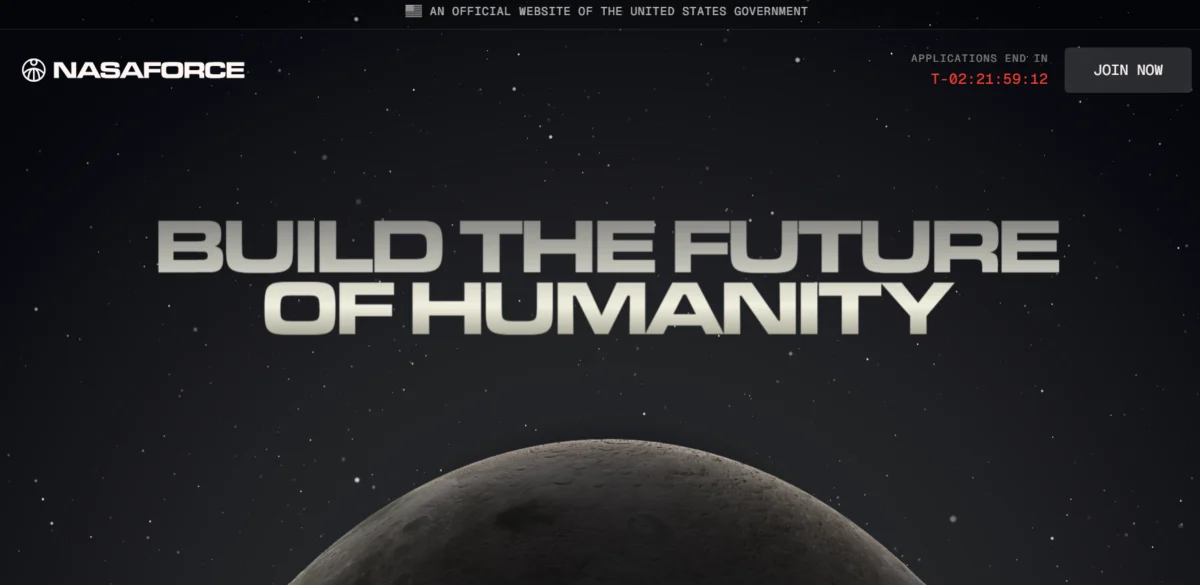
Washington D.C. – In a strategic move to bolster its future endeavors and maintain unparalleled leadership in air and space exploration, NASA, in collaboration with the U.S. Office of Personnel Management (OPM), officially launched the NASA Force website on Friday. This groundbreaking initiative is designed to attract and onboard the nation’s most exceptional engineers and technologists, filling critical roles that will drive America’s ambitious air and space agenda. The NASA Force program aims to bring highly skilled early- to mid-career professionals into mission-critical positions, ensuring NASA possesses the cutting-edge expertise necessary for its ongoing and future exploration, research, and advanced technology priorities.
The launch of NASA Force signifies a deliberate and proactive approach by the space agency to cultivate its internal talent pipeline. This initiative is a cornerstone of NASA’s broader workforce strategy, which seeks to strengthen technical core competencies, enhance in-house capabilities, and foster an enduring culture of technical resilience. These efforts are directly aligned with the President’s national space policy, which emphasizes maintaining U.S. leadership in the dynamic fields of air and space.
Strategic Partnership for Elite Talent Acquisition
The NASA Force initiative is a direct result of a strategic partnership between NASA and OPM, underscoring a coordinated federal effort to address the growing demand for specialized technical talent. OPM, through its broader "US Tech Force" initiative, is working across multiple federal agencies to recruit elite technical professionals. This broader initiative aims to modernize federal systems, accelerate innovation, and enhance mission delivery across the government. NASA Force represents a specialized application of this strategy, tailored to the unique and demanding requirements of the space agency.
"NASA Force is bringing highly skilled early- to mid-career engineers, technologists and innovators to help us achieve our world-changing missions," stated NASA Administrator Jared Isaacman. His remarks highlight the critical role of these professionals in realizing NASA’s ambitious goals. Isaacman further emphasized the inspiration generated by recent successes, such as the Artemis II mission, which has reportedly fueled significant public interest in joining the NASA workforce. He described the current era as a "Golden Age of innovation and exploration," suggesting a fertile ground for attracting motivated individuals.
OPM Director Scott Kupor echoed this sentiment, underscoring the historical achievements of American talent when directed towards significant missions. "NASA has always shown the world what American talent can achieve when it’s pointed at a bold mission," Kupor remarked. He articulated the core objective of NASA Force: "NASA Force is about making sure the agency has access to the next generation of innovation and strong partnerships with private sector talent to drive its very ambitious agenda." This statement suggests a forward-looking approach, recognizing the need for continuous influx of new ideas and expertise to sustain NASA’s pioneering work.
The Artemis Program and the Demand for Expertise
The timing of the NASA Force launch is particularly significant, coinciding with a period of intense activity and renewed public enthusiasm for space exploration, largely driven by the Artemis program. The Artemis program, NASA’s flagship endeavor to return humans to the Moon and establish a sustainable lunar presence, requires a vast array of specialized engineering and technological skills. From designing and building advanced spacecraft and habitats to developing innovative life support systems and conducting complex scientific research, the program demands a workforce at the forefront of innovation.
Artemis II, the uncrewed test flight that orbited the Moon, served as a critical milestone, demonstrating the capabilities of the Orion spacecraft and the Space Launch System (SLS) rocket. This mission, completed in December 2023, not only validated key hardware but also captured the imagination of the public, reigniting interest in human spaceflight. The success of Artemis II has undoubtedly amplified the perceived need for a robust and skilled workforce capable of supporting the subsequent crewed missions, including Artemis III, which aims to land astronauts on the lunar south pole.
The demand for aerospace engineers, in particular, is expected to surge as NASA progresses through the Artemis missions and plans for future lunar and Martian exploration. The initial job openings advertised through NASA Force are for aerospace engineer positions, offered as two-year term appointments with the possibility of extensions. This term-based hiring structure allows NASA to bring in specialized expertise for specific project phases while also offering individuals the opportunity to contribute to impactful missions for a defined period. The agency has indicated that additional openings across various technical disciplines will be announced in the coming weeks and months, signaling a sustained recruitment effort.
Broader Context: US Tech Force and Federal Workforce Modernization
The NASA Force initiative is not an isolated effort but rather an integral component of the larger "US Tech Force" initiative spearheaded by OPM. Established to address a nationwide need for highly skilled technical professionals within the federal government, US Tech Force aims to streamline and modernize the federal hiring process for critical technology roles. This overarching program recognizes that many federal agencies face challenges in attracting and retaining top-tier tech talent, often competing with the private sector for skilled individuals.
The US Tech Force initiative seeks to:
- Modernize Federal Systems: By bringing in experts in areas like cybersecurity, data science, and software engineering, federal agencies can upgrade their aging IT infrastructure and develop more robust, secure, and efficient digital services.
- Accelerate Innovation: Attracting innovative thinkers and problem-solvers is crucial for driving technological advancement within government, enabling agencies to develop and implement cutting-edge solutions to complex challenges.
- Strengthen Mission Delivery: Ultimately, the goal is to ensure federal agencies have the necessary technical expertise to effectively carry out their missions, whether it involves national security, scientific research, or public service.
The U.S. federal government, as one of the largest employers in the nation, plays a vital role in national defense, scientific discovery, and technological development. However, it has historically faced hurdles in recruiting and retaining individuals with specialized technical skills. Factors contributing to these challenges include lengthy hiring processes, sometimes perceived as less competitive compensation compared to the private sector, and the need for continuous professional development in rapidly evolving fields.
The US Tech Force initiative, and by extension NASA Force, aims to overcome these obstacles by employing more agile and targeted recruitment strategies. This includes leveraging online platforms like USAJOBS.gov more effectively, potentially offering more flexible employment arrangements, and emphasizing the unique opportunities for public service and impactful work that federal careers can provide.
Supporting Data and Analysis of Implications
The launch of NASA Force comes at a time when the demand for skilled engineers and technologists is at an all-time high, both within government and the private sector. According to the Bureau of Labor Statistics, employment for aerospace engineers is projected to grow 5% from 2022 to 2032, about as fast as the average for all occupations. While this projection might seem moderate, it translates to a significant number of new jobs, and the demand for experienced professionals is often greater than the supply.
Furthermore, the increasing complexity of space missions, the rise of commercial space ventures, and the integration of advanced technologies such as artificial intelligence, quantum computing, and advanced materials necessitate a highly specialized workforce. NASA, as a leader in space exploration, must not only keep pace with these technological advancements but also drive them.
The implications of the NASA Force initiative are far-reaching:
- Maintaining U.S. Technological Supremacy: By securing a pipeline of top-tier talent, NASA can ensure that the United States continues to lead in critical areas of aerospace technology, from propulsion systems to deep space communication and life support. This leadership is crucial for national security, economic competitiveness, and scientific advancement.
- Accelerating Scientific Discovery: The influx of new expertise will undoubtedly accelerate NASA’s ability to conduct groundbreaking scientific research, whether it involves studying the origins of the universe, searching for extraterrestrial life, or understanding Earth’s changing climate.
- Inspiring Future Generations: The visible success of NASA’s missions, coupled with opportunities for talented individuals to directly contribute, can serve as a powerful inspiration for future generations of scientists and engineers, encouraging them to pursue STEM education and careers.
- Strengthening In-House Capabilities: A key objective for NASA is to bolster its internal technical capabilities. This reduces reliance on external contractors for certain critical functions, ensuring greater control over intellectual property, mission integrity, and long-term strategic development.
The focus on early- to mid-career professionals suggests a strategy for both immediate impact and long-term workforce development. By attracting individuals who are beginning to establish their careers, NASA can nurture their growth within the agency, fostering loyalty and developing future leaders.
How to Apply and Future Prospects
The dedicated NASA Force website, https://www.nasaforce.gov, serves as the central hub for information and application processes. The initial recruitment effort is focused on aerospace engineers, offering two-year term positions with potential for extension. This approach allows for flexibility in addressing immediate project needs while also providing a pathway for successful candidates to continue their contributions.
Prospective applicants are encouraged to visit the NASA Force website to learn more about the available positions, eligibility requirements, and the application process. For a broader range of federal job opportunities, including those not specifically under the NASA Force initiative, the government’s primary employment portal, USAJOBS.gov, remains the comprehensive resource.
The launch of NASA Force represents a significant step in NASA’s ongoing efforts to build and sustain a world-class workforce. By strategically partnering with OPM and leveraging new recruitment initiatives, the agency is positioning itself to meet the challenges and seize the opportunities of the current era of space exploration, ensuring America’s continued preeminence in the cosmos. The success of this initiative will be a critical factor in achieving NASA’s ambitious goals for the Artemis program and beyond, solidifying its role as a catalyst for innovation and discovery on a global scale.
The agency’s commitment to retaining and bolstering its internal talent pipeline, strengthening technical core competencies, and fostering an enduring culture of technical resilience is evident in this proactive recruitment strategy. NASA Force is more than just a hiring program; it is an investment in the future of American space exploration and technological leadership. The coming months and years will reveal the full impact of this initiative as new talent joins the ranks, contributing to missions that inspire and advance humanity’s understanding of the universe.