
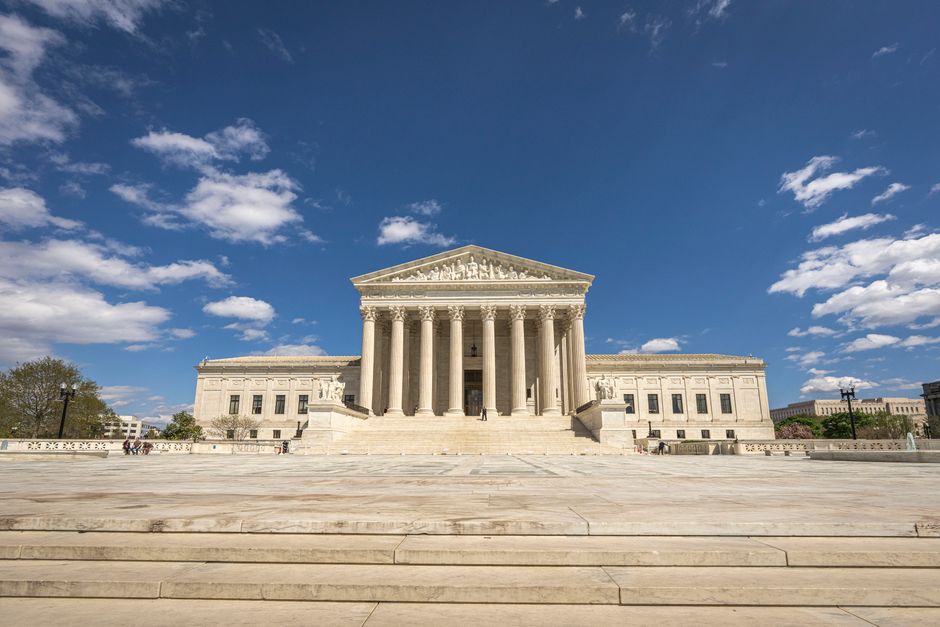
Arizona Supreme Court: Navigating Justice in the Grand Canyon State
The Arizona Supreme Court, often referred to as the state’s highest court, stands as the ultimate arbiter of legal disputes within Arizona. Its pronouncements shape the interpretation and application of state law, impacting individuals, businesses, and governmental entities across the Grand Canyon State. Understanding its structure, jurisdiction, and key functions is crucial for anyone seeking to comprehend Arizona’s legal landscape or engage with its judicial system.
The Arizona Supreme Court is a collegial court, meaning it consists of a body of judges who hear and decide cases together. The Court is composed of a Chief Justice and four Associate Justices, all of whom are appointed by the Governor and confirmed by the Arizona Senate. Justices serve for a term of six years, after which they must stand for retention election by the voters. This retention system, a unique feature of Arizona’s judicial selection process, aims to balance judicial independence with public accountability. The Chief Justice is elected by the Associate Justices for a five-year term. The Court typically sits en banc, meaning all five justices participate in the decision of every case, ensuring a unified and authoritative voice for the state’s highest court.
The jurisdiction of the Arizona Supreme Court is primarily appellate. This means it reviews decisions made by lower courts, specifically the Arizona Court of Appeals and, in certain instances, directly from the Superior Courts. The Court does not retry cases or hear new evidence; instead, it examines the record from the lower court proceedings to determine if errors of law were committed. These errors could involve misinterpretations of statutes, misapplication of legal precedent, or procedural irregularities that prejudiced a party’s right to a fair trial. The Supreme Court’s review is crucial for ensuring consistency and correctness in the application of Arizona law throughout the state.
Beyond its direct appellate role, the Arizona Supreme Court also possesses original jurisdiction in specific, limited circumstances. This original jurisdiction allows the Court to hear certain types of cases for the first time, without them having been considered by a lower court. These instances are typically rare and involve matters of significant statewide importance, such as original proceedings for extraordinary writs like habeas corpus, special action petitions challenging the legality of a detention or official action, and in cases involving the apportionment of legislative districts. The Court may also exercise original jurisdiction in cases involving the election or qualifications of state officers.
The primary function of the Arizona Supreme Court is to interpret and apply Arizona’s constitution and statutes. Its decisions establish legal precedent that binds all lower courts in the state. This doctrine of stare decisis, meaning "to stand by things decided," is fundamental to the common law system and promotes predictability and stability in the law. When the Supreme Court rules on a particular legal issue, that ruling becomes the guiding principle for how similar issues will be handled in all subsequent cases in Arizona’s state courts. This role is essential for maintaining a coherent and consistent legal framework across the state.
The Court also plays a vital role in the administration of justice throughout Arizona. It promulgates rules of civil procedure, criminal procedure, juvenile procedure, and appellate procedure that govern the practice and procedure in all Arizona courts. These rules are designed to ensure fairness, efficiency, and due process in legal proceedings. The Court’s Judicial Council, comprised of judges and other legal professionals, oversees the administration of the Arizona judicial system, including budgeting, personnel, and the development of policies and programs aimed at improving judicial performance and public access to justice. This administrative oversight is critical for the effective functioning of the entire judiciary.
The types of cases that reach the Arizona Supreme Court are diverse, reflecting the broad spectrum of legal issues that can arise in a modern society. Historically, significant cases have touched upon a wide range of topics, including criminal law (sentencing, constitutional rights of defendants), civil rights (discrimination, individual liberties), family law (custody, divorce), business law (contracts, corporate governance), environmental law (land use, resource management), and constitutional law (challenges to state laws, interpretation of the Arizona Constitution). The Court’s decisions in these areas often have profound and lasting effects on the lives of Arizonans.
The process of appealing to the Arizona Supreme Court typically begins with a petition for review filed with the Court. This petition argues why the Court should hear the case, often highlighting significant legal questions or conflicts in lower court decisions. The Court has discretion over which cases it chooses to review, and it does not grant review in every case appealed to it. This discretionary review power allows the Court to focus its resources on cases that present the most important and impactful legal issues for the state. If a petition for review is granted, the parties then submit briefs to the Court, outlining their arguments. Oral arguments are often held, allowing attorneys to present their cases directly to the justices and answer questions from the bench.
The deliberation process within the Arizona Supreme Court is rigorous. After hearing oral arguments and reviewing the briefs, the justices engage in private conferences to discuss the cases. One justice is assigned to write the majority opinion, which explains the Court’s decision and the legal reasoning behind it. Dissenting opinions may be written by justices who disagree with the majority’s conclusion, and concurring opinions may be filed by justices who agree with the outcome but for different reasons. These opinions are publicly filed and become an integral part of Arizona’s legal literature, providing guidance for future legal interpretations.
The impact of the Arizona Supreme Court extends far beyond the courtroom. Its decisions influence public policy, shape economic development, and define the boundaries of individual freedoms and governmental powers within the state. For example, a Supreme Court ruling on a controversial land use issue could significantly impact development in rapidly growing areas, while a decision on criminal procedure could alter how law enforcement operates. The Court’s interpretations of constitutional provisions, such as the right to privacy or freedom of speech, are foundational to the protection of fundamental rights in Arizona.
The Arizona Supreme Court is located in the historic Arizona State Capitol building in Phoenix, serving as a physical anchor for the state’s judicial branch. The Court’s public accessibility is paramount; its proceedings are open to the public, and its opinions are readily available, fostering transparency and public understanding of the judicial process. The Court also engages in various outreach programs to educate the public about the role of the judiciary and the importance of the rule of law.
In summary, the Arizona Supreme Court is a cornerstone of Arizona’s legal system. Its role as the final appellate authority, its power to interpret the state constitution and laws, and its responsibility for the administration of justice are vital to maintaining a fair, just, and orderly society. Understanding its composition, jurisdiction, and the precedential weight of its decisions is fundamental to comprehending the legal and governance framework of Arizona. Its ongoing work ensures that justice is administered consistently and that the fundamental rights and obligations of Arizonans are continuously upheld and defined within the evolving landscape of state law. The Arizona Supreme Court, through its rigorous review and reasoned pronouncements, remains the ultimate guardian of justice and the rule of law in the Grand Canyon State, its influence resonating through every level of its legal infrastructure and impacting the daily lives of its citizens.
