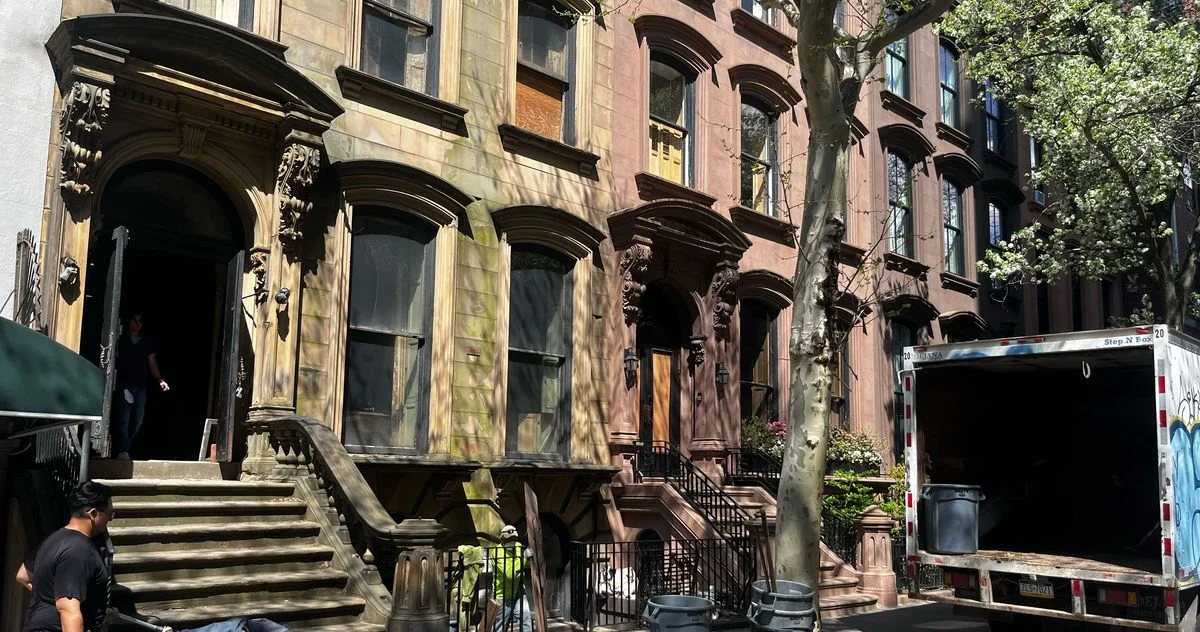
The silence surrounding the property was finally broken this week when a U-Haul truck arrived at the front door, signaling the end of an era of neglect. Vicki Negron, a veteran broker with Corcoran, has announced that the property is officially entering the market with an asking price of $15 million. The listing represents more than just a real estate transaction; it is the conclusion of a decades-long neighborhood saga involving rumors of family feuds, structural decay, and the preservation of a "treasure chest" of Gilded Age architectural history.
The Architecture of a Forgotten Era
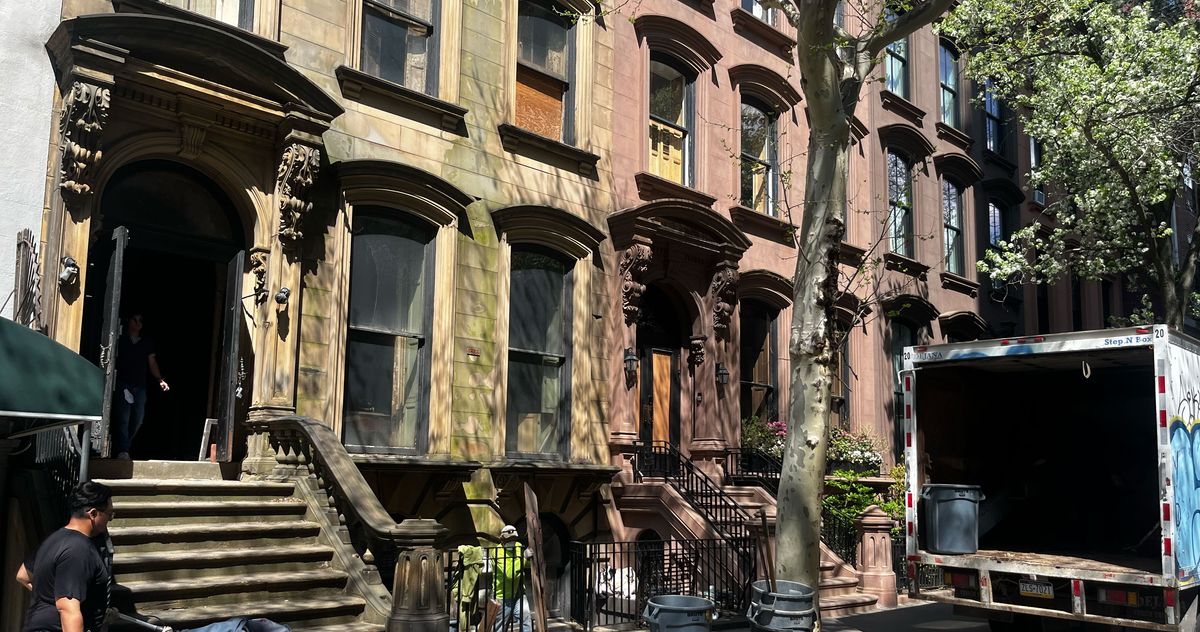
Built approximately in 1860, 194 Columbia Heights is a testament to the era when Brooklyn Heights established itself as America’s first suburb for the Manhattan elite. The property spans roughly 7,500 square feet across six levels. This includes a cellar with uncharacteristically high eight-foot ceilings and a massive attic with 12-foot ceilings that remains invisible from the street level due to the building’s pitched roof and cornice design.
According to architectural historians brought in to evaluate the site, the home was originally constructed for a wealthy family who occupied the space for two generations. It was later sold to a single female owner before being acquired by the current owner, Austin Moore. Despite thirty years of vacancy, the interior remains a remarkably preserved capsule of 19th-century craftsmanship.
The "treasure chest" described by Negron includes:
- Original Marble Fireplaces: Two fireplaces per floor, carved from Italian marble, featuring intricate Victorian motifs.
- Hand-laid Parquet Flooring: Rare wood patterns, including a distinct pinwheel design that remains largely intact beneath decades of dust.
- Artisanal Hardware: Hand-forged doorknobs shaped like volute shells and deep stone cornices that signify the high-status commissions of the 1860s.
- Victorian Wallcoverings: Patterned wallpaper flecked with genuine gold leaf, dating back to the late 19th century.
However, one of the home’s most significant features will not be part of the sale. A stained-glass window in the formal living area—attributed to the Tiffany studios—depicts the Statue of Liberty. In a unique historical quirk, the figure’s hand does not point toward the sky but rather toward her actual geographic location on the waterfront, visible from the home’s rear windows. The Moore family has chosen to retain this piece, which experts suggest may be worth more than a standard residential property on its own.
The Legend of the Spite House
In real estate parlance, a "spite house" typically refers to a building constructed specifically to irritate neighbors or block their views. In the case of 194 Columbia Heights, the term took on a more modern, psychological meaning. For thirty years, the house sat empty while its value skyrocketed. Local folklore suggested that the owner kept the house in a state of intentional disrepair to "spite" an ex-spouse or a family member, ensuring that no one could enjoy the property’s world-class views of the Statue of Liberty and the Lower Manhattan skyline.
The reality, as revealed by Negron, is less cinematic but equally complex. The property is being sold on behalf of a family trust. The owner, Austin Moore, is described as being in good health and possessing "all of his faculties." The decision to sell comes after years of the family realizing they would likely never embark on the massive restoration project required to make the home habitable again.
Over the years, the building became a "problem house" for the city. Neighbors frequently filed complaints with the Department of Buildings (DOB) and the Department of Health, citing concerns over structural integrity, the potential for squatters, and infestations of rats. Despite these complaints, the owners remained current on their property taxes, preventing the city from seizing the building and leaving the community to wonder if the brownstone would simply collapse before it was ever sold.
The Economics of a $15 Million Restoration Project
The $15 million asking price is only the entry point for what will likely be one of the most expensive private renovations in Brooklyn. Because 194 Columbia Heights is located within the Brooklyn Heights Historic District—the first such district designated in New York City in 1965—any exterior work must be approved by the Landmarks Preservation Commission (LPC).
Broker Vicki Negron estimates that a comprehensive restoration to convert the building back into a premier single-family residence will cost between $6 million and $10 million. This brings the total investment for a prospective buyer to approximately $25 million.
While that figure is staggering, it aligns with the upper echelon of the Brooklyn Heights market. In recent years, the neighborhood has seen several record-breaking sales:
- 2020: A penthouse at Quay Tower sold for $20.3 million.
- 2021: A townhouse at 8 Montague Terrace sold for $25.5 million.
- 2015: The "Truman Capote" house at 70 Willow Street sold for $12.5 million (and would likely command double that today after its renovation).
The value of 194 Columbia Heights lies in its "bones" and its location. It sits on the "Promenade side" of the street, meaning its backyard directly abuts the famous walkway, offering unobstructed, protected views of the harbor. In New York City real estate, such views are the ultimate commodity, as they cannot be built out by future developments.
The Clearing of a Life
The arrival of the U-Haul marked the beginning of a massive "clean-out" operation. Workers have been seen removing truckloads of furniture, bric-a-brac, and personal effects that have sat untouched since the mid-1990s. Among the items being hauled away were vintage dresses, antique toys, a wooden sled, and boxes upon boxes of comic books—predominantly Richie Rich issues, a detail that neighbors found ironically fitting given the property’s latent value.
Despite the mold and the decades of neglect, the interior has yielded surprising finds. Workers recently discovered a stamped metal panel, likely a decorative plate for a fireplace, featuring a dove curled inside an oval. Such details are being carefully salvaged to be included in the sale, as they are essential for a restoration that honors the building’s 1860 origins.
Neighborhood Reaction and Broader Implications
The listing of 194 Columbia Heights is being met with a mixture of relief and excitement by the local community. For many, the "Spite House" was a blemish on an otherwise pristine historic block. The prospect of a multi-year renovation means the end of the "zombie" property that has weighed on local property values and aesthetic sensibilities.
"We’ve already had threats of offers," Negron noted, indicating that despite the work required, the appetite for rare, historic Brooklyn real estate remains insatiable.
The sale also highlights a broader trend in the New York City "ultra-prime" market: the emergence of "unpolished gems." As the supply of renovated historic homes dwindles, wealthy buyers are increasingly seeking out "distressed" properties with intact original details, preferring to spend millions on a bespoke restoration rather than buying a developer’s "cookie-cutter" luxury renovation.
Timeline of 194 Columbia Heights
- 1860: Construction completed; the house serves as a single-family residence for a wealthy merchant family.
- 1860–1920s: Occupied by the original family for two generations.
- 1930s–1960s: Transition of ownership; the house remains a centerpiece of the Heights social scene.
- 1965: Brooklyn Heights is designated as NYC’s first historic district, protecting the facade of 194 Columbia Heights from significant alteration.
- 1990s: The house is effectively abandoned as a primary residence; windows are eventually boarded up.
- 2000–2023: The "Spite House" era; the property becomes a subject of neighborhood legend and multiple DOB complaints.
- April 2024: The Moore family trust authorizes the clean-out of the property and its listing for $15 million.
As the U-Haul trucks continue to cycle through Columbia Heights, the neighborhood watches closely. The "Spite House" is finally shedding its reputation, preparing to transition from a symbol of neglect to what will likely become one of the most coveted addresses in the borough. For the future buyer, the reward is a piece of New York history and a view that—despite thirty years of boarded windows—remains one of the finest in the world.