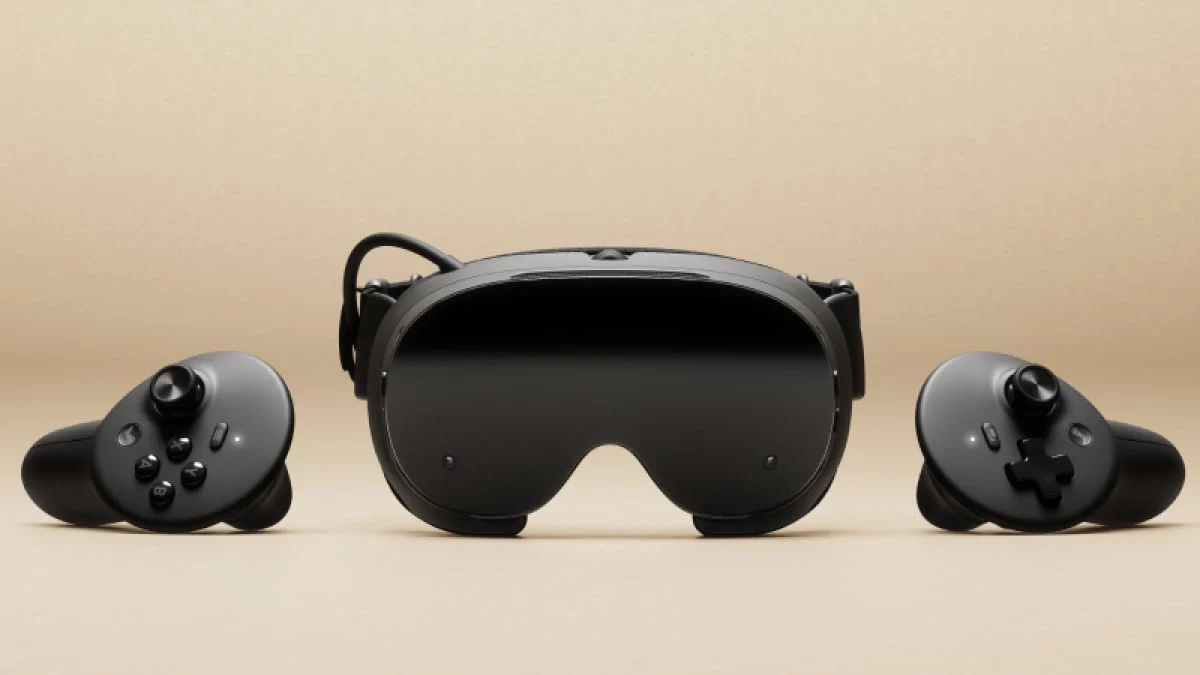
The consumer virtual reality market has experienced a turbulent decade characterized by high expectations, premature market stagnation, and gradual hardware evolution. Following years of persistent industry speculation, Valve Corporation—the parent company of the dominant Steam digital distribution platform—officially launched its long-awaited standalone virtual reality device, the Steam Frame. Released to the public on September 18, following its initial announcement in November 2025, the Steam Frame represents Valve’s most ambitious hardware undertaking since the introduction of the Steam Deck handheld console.
Priced at $1,059 for the base 256GB model and reaching $1,299 for the 1TB iteration, the Steam Frame enters a mature yet skeptical marketplace. Early critical consensus portrays the device as a masterclass in hardware ergonomics and wireless engineering, tempered significantly by prohibitive pricing, lackluster software momentum within the broader virtual reality ecosystem, and persistent early-stage performance hurdles.
Main Facts and Hardware Capabilities
The Steam Frame is designed to bridge the gap between traditional desktop gaming and untethered immersive environments. Unlike Valve’s previous tethered headset, the Valve Index released in 2019, the Steam Frame functions as a standalone unit powered by customized internal architecture while retaining seamless integration with a user’s broader Steam library.
One of the most widely praised features among early reviewers is the device’s physical design and comfort profile. Industry critics have highlighted the unit’s streamlined architecture, which seeks to minimize facial pressure and eliminate the cumbersome setup procedures that historically plagued high-end PC virtual reality systems. Jacob Ridley of PC Gamer commended the device’s straightforward user experience, noting that the Steam Frame successfully removes the friction points that typically discourage routine virtual reality utilization.
Beyond immersive virtual reality applications, the Steam Frame introduces a robust virtual monitor feature. The headset allows users to access and play traditional, non-virtual reality flat-screen games within a scalable virtual display environment. Jacqueline Thomas of IGN reported spending an equivalent amount of time utilizing the device as a portable virtual monitor for standard desktop titles rather than dedicated virtual reality software, suggesting the hardware functions effectively as a mobile extension of a primary gaming rig.
Furthermore, the headset’s wireless PC streaming capabilities have received critical acclaim. Zack Zwiezen of Kotaku noted that the Steam Frame performs wireless local network streaming with remarkable stability, virtually eliminating the latency and compression artifacts common in competing hardware. Zwiezen described the untethered high-end gaming experience as a defining victory for Valve’s engineering team, noting that the performance successfully replicates a wired connection without physical constraints. Chis Person of Aftermath similarly characterized the hardware as an innovative attempt to unify disparate gaming paradigms into a single, cohesive open platform.
Chronology and Development Timeline
The journey toward the Steam Frame spans nearly half a decade of industry rumors, patent filings, and corporate pivots by Valve Corporation.
- 2019: Valve launches the Valve Index, a tethered, premium PC virtual reality headset that establishes high industry standards for tracking and controllers but remains bound by physical cables and a high barrier to entry.
- 2021–2022: The successful commercial launch and cultural saturation of the Steam Deck handheld gaming PC refocuses Valve’s hardware strategy toward standalone computing architecture and mobile gaming ecosystems. Industry leaks begin pointing toward internal research and development on a standalone virtual reality device codenamed internally.
- November 2025: Valve officially pulls back the curtain on the Steam Frame, confirming months of renewed leaks and setting a tentative release timeline. The announcement generates substantial interest across the gaming industry regarding how Valve intends to adapt its SteamOS ecosystem for facial-mounted displays.
- September 18, 2026: The Steam Frame officially hits the market, arriving alongside the publication of reviews from major technology and gaming journalism outlets.
Economic Realities and Critical Industry Reception
Despite widespread praise for its mechanical execution, innovative software integration, and wireless fidelity, the Steam Frame faces formidable headwinds regarding its market viability. Reviewers across the media landscape have raised concerns regarding the device’s cost, battery longevity, and firmware stability during the initial rollout phase.
Scott Stein of CNET outlined several technical caveats in his evaluation, pointing to battery life limitations, occasional software bugs, and a thin catalogue of native software optimized for the platform at launch. Stein advised mainstream consumers to exercise caution before purchasing, categorizing the current iteration as an experimental journey suited primarily for dedicated early adopters.
The pricing structure presents a substantial economic barrier. Starting at $1,059 for the 256GB model and escalating to $1,299 for the 1TB option, the Steam Frame occupies the ultra-premium tier of consumer electronics. James Archer of Rock Paper Shotgun emphasized that these figures create difficult economic calculations for consumers, particularly in an economic climate where discretionary spending on luxury hardware remains tightly constrained.
Compounding the pricing challenge is the current trajectory of the virtual reality software market. Analysts and journalists have noted that consumer enthusiasm for virtual reality hardware has plateaued significantly since the pandemic-era surge. James Archer observed that the supply of original, AAA-tier virtual reality titles has slowed to a minimal output, creating a challenging chicken-and-egg scenario where hardware manufacturers release advanced devices into an ecosystem starved of marquee software releases.
Devindra Hardawar of Engadget contextualized the hardware within the broader historical arc of the medium, arguing that the primary obstacle facing the Steam Frame is its arrival timeline. While acknowledging the headset as a competent standalone platform, Hardawar suggested that the device may have entered the market too late to revitalize a cooling virtual reality sector or reverse developer flight toward other platforms.
Broader Impact and Market Implications
The release of the Steam Frame carries significant implications for the future of open-platform computing and Valve’s hardware ecosystem. By maintaining an open operating system architecture akin to the Steam Deck, Valve continues to champion user-repairability, third-party software sideloading, and compatibility with non-Steam storefronts—philosophies that sharply contrast with the closed, walled-garden ecosystems maintained by competitors like Meta and Sony.
However, the lukewarm broader industry appetite for virtual reality forces a critical evaluation of whether hardware innovation alone can stimulate software creation. Industry analysts suggest that while the Steam Frame succeeds as a technical showcase for wireless streaming and ergonomic design, its long-term success will depend heavily on Valve’s willingness to subsidize software development or deploy first-party system-seller titles to justify the hardware’s premium cost.
As the Steam Frame transitions from its initial launch window into the hands of global consumers, Valve finds itself navigating a familiar paradox: holding industry-leading hardware engineering capacity while grappling with broader market fatigue toward the medium itself. Whether the Steam Frame becomes a foundational stepping stone for future spatial computing standards or remains a sophisticated niche device for dedicated enthusiasts will depend entirely on software adoption rates and subsequent hardware revisions in the years ahead.