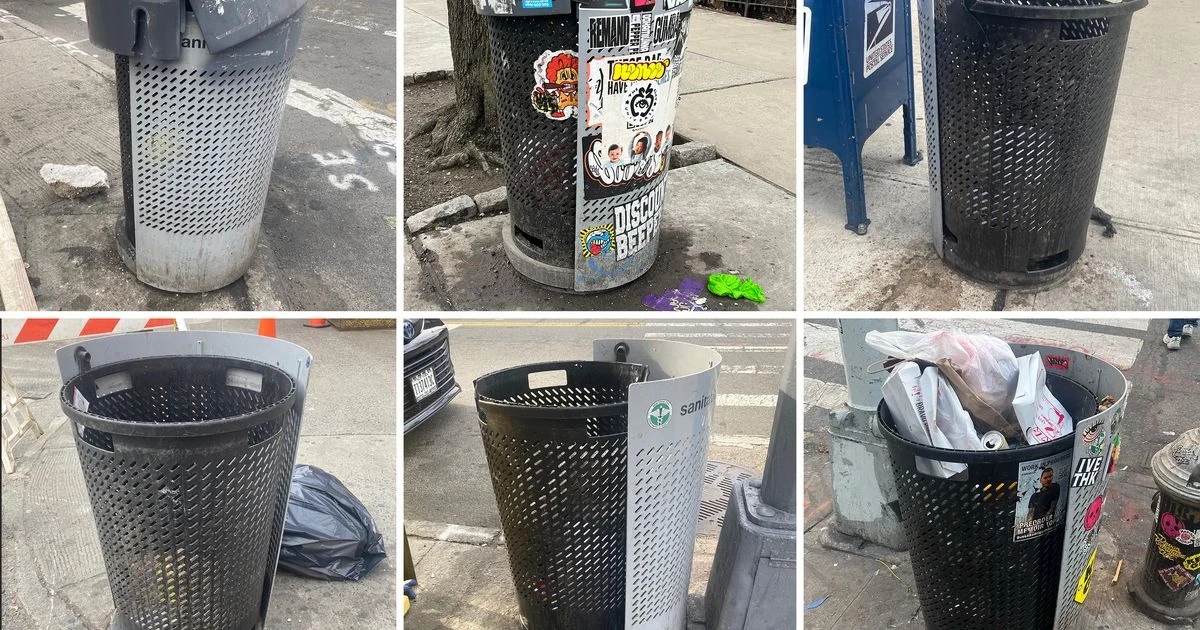
The transition to the Better Bin was motivated by a desire to address the chronic shortcomings of the old wire-mesh models. Those legacy bins, while durable in their simplicity, were frequently criticized for allowing "trash juice" to leak onto sidewalks, providing easy access for the city’s burgeoning rat population, and being light enough to be tossed into the street by vandals or repurposed by residents to reserve parking spaces. The Better Bin was engineered to solve these issues through a sophisticated, modular design featuring a heavy concrete base, a lightweight plastic interior liner, and a two-part steel collar with a hinged "flip-top" lid.
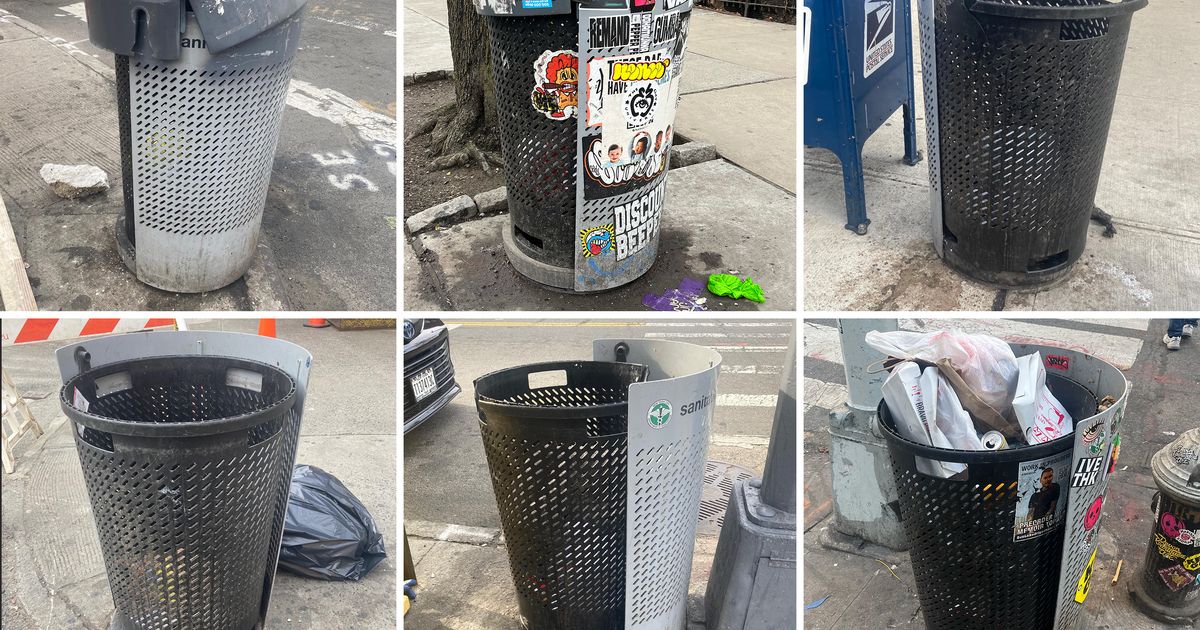
However, the very complexity that makes the Better Bin superior in functionality appears to be its primary weakness. Unlike the old wire bins, which were essentially single-piece welded units, the Better Bin relies on moving parts, hinges, and bolts. An informal survey of several high-traffic neighborhoods reveals a troubling pattern of mechanical failure. On the Bowery at East 3rd Street, units have been spotted with their flip lids entirely missing, leaving the trash exposed to the elements and pests. Similar "beheaded" bins have been documented on Seventh Avenue near 30th Street and along Avenue B. In Jackson Heights, residents have reported seeing as many as four broken bins within a single six-block radius along 37th Avenue.
The Evolution of New York City’s Litter Baskets
The journey toward the Better Bin began in 2018, when the DSNY, in partnership with the Van Alen Institute and the Industrial Designers Society of America, launched a global design competition. The goal was to create a "sustainable, ergonomic, and iconic" litter basket for the 21st century. The winning design, produced by the firm Group Project, was selected for its ergonomic benefits for sanitation workers and its aesthetic appeal.
By 2022, the city began deploying these bins in earnest, starting with high-visibility corridors in Manhattan and Queens. The design was praised for its modularity; if one part broke, it could theoretically be replaced without discarding the entire unit. This was a departure from the "throwaway" culture of the wire bins, which were often scrapped entirely if they became severely dented or rusted.
The Better Bin was also a key component of Mayor Eric Adams’ broader "Trash Revolution," a multi-billion-dollar initiative aimed at moving New York toward a European-style containerization model. By sealing trash inside thick plastic liners and steel collars, the city hoped to deprive rats of easy food sources. While the bins have largely succeeded in containing liquids and deterring household trash dumping—thanks to a narrow aperture—the mechanical integrity of the hinges has become a point of contention for urban observers and local residents alike.
A Financial and Industrial Contrast
The shift from the wire-mesh bin to the Better Bin represents a massive increase in capital expenditure. The legacy wire bins were manufactured by Corcraft, the brand name for the New York State Department of Corrections and Community Supervision’s Division of Industries. Produced using incarcerated labor at facilities upstate, these bins cost the city approximately $175 each. They were rudimentary but nearly indestructible, lasting for years until the metal eventually succumbed to rust or extreme physical trauma.
In contrast, the Better Bin is a premium product manufactured by Roy Metal Products, based in Ontario, Canada. As of late 2023, the price per unit for the Better Bin was approximately $1,000. This price tag covers the sophisticated engineering required for the three-part system: the 150-pound concrete base designed to prevent the bin from being moved, the custom-molded plastic liner, and the powder-coated steel frame.
Critics of the program argue that the $1,000 price point is difficult to justify if the bins require frequent repairs within their first three years of service. Proponents, however, point to the long-term ergonomic savings. The old wire bins weighed 30 pounds empty and significantly more when full, requiring sanitation workers to lift the entire heavy metal frame to empty it. The Better Bin allows workers to simply flip the lid and pull out a lightweight plastic liner, a change that DSNY officials say will significantly reduce back injuries and workers’ compensation claims over time.
Official Response and Technical Upgrades
The Department of Sanitation has defended the performance of the Better Bin, characterizing the current failures as part of a natural iterative process. Joshua Goodman, a representative for the DSNY, emphasized that the modular nature of the bins is actually an advantage when things go wrong. "Parts can be replaced instead of the whole thing," Goodman noted, arguing that a missing lid does not mean the entire $1,000 investment is lost.
According to the DSNY, many of the broken units currently visible on city streets are "first-generation" prototypes or early production models. The department acknowledges that these early versions had weaknesses in the plastic brackets and rubber bumpers that support the hinged collar. In response to field data, the DSNY has already implemented several design upgrades for "Gen-2" and "Gen-3" models, which include reinforced hinges, more robust bolting systems, and improved weather-resistant coatings.
"We have seen great success with the baskets that have all the modifications," Goodman stated. The department plans to phase out the older models as they break, replacing them with the sturdier versions. However, the repair timeline has been hampered by external economic factors. Because the bins and their components are manufactured in Canada, the DSNY has encountered supply chain delays linked to trade policies and tariffs. Officials have indicated that the "tariff issue" has made it more difficult and expensive to source replacement parts quickly, leading to the "headless" bins currently seen on corners like Avenue C and the Bowery.
Broader Implications for the "Trash Revolution"
The struggle with the Better Bin reflects the larger challenges facing New York City as it attempts to overhaul its waste management infrastructure. Under the leadership of Commissioner Jessica Tisch and the city’s first-ever "Rat Czar," Kathleen Corradi, the DSNY has moved at an unprecedented pace to containerize waste. This includes not just the street-corner litter baskets, but also new side-loading bins for residential and commercial buildings.
The reliability of these containers is crucial for public buy-in. If the high-tech, expensive bins are seen as fragile or poorly maintained, it could undermine confidence in the city’s ability to manage more complex containerization projects. Furthermore, the aesthetic impact cannot be ignored; a broken $1,000 bin arguably looks worse than a dented $175 wire basket, projecting a sense of urban decay despite the high investment.
From an environmental standpoint, the Better Bin remains a significant upgrade. By preventing "trash juice" from leaching into the pavement, the bins help reduce the persistent odors that plague New York summers. The containment of loose litter also prevents debris from entering the catch basins and polluting the city’s waterways. These "hidden" benefits are part of what the DSNY refers to as the "Porsche vs. Go-kart" trade-off: a more sophisticated machine requires more maintenance but delivers a vastly superior performance.
Timeline of New York City Litter Management
To understand the current situation, it is helpful to look at the chronology of the city’s waste receptacles:
- 1930s–1970s: The city relies on heavy cast-iron or simple sheet-metal cans, which were durable but extremely heavy and difficult for workers to empty.
- 1980s: The wire-mesh "Corcraft" bin becomes the standard. Its open design was a response to the need for lightweight, ventilated bins that wouldn’t trap odors, though it inadvertently invited rats and leakage.
- 2018: DSNY launches the "Better Bin" competition to find a modern replacement.
- 2019: The winning design by Group Project is announced and undergoes a pilot program in select neighborhoods.
- 2022: Full-scale rollout begins, with the city ordering thousands of units to replace aging wire bins.
- 2024–2025: Reports of hinge failures and missing lids increase as early-generation bins reach their two-year service mark.
- 2026: DSNY confirms design upgrades and acknowledges supply chain delays due to international trade factors.
As the city continues to monitor the performance of the Better Bin, the focus remains on whether the "Gen-2" reinforcements will be enough to withstand the rigors of New York City’s streets. With thousands more bins slated for installation, the DSNY is betting that the modular design’s long-term benefits—cleaner streets, fewer rats, and healthier workers—will eventually outweigh the growing pains of its mechanical components. For now, New Yorkers will have to wait for the next shipment from Canada to see their "headless" bins made whole again.