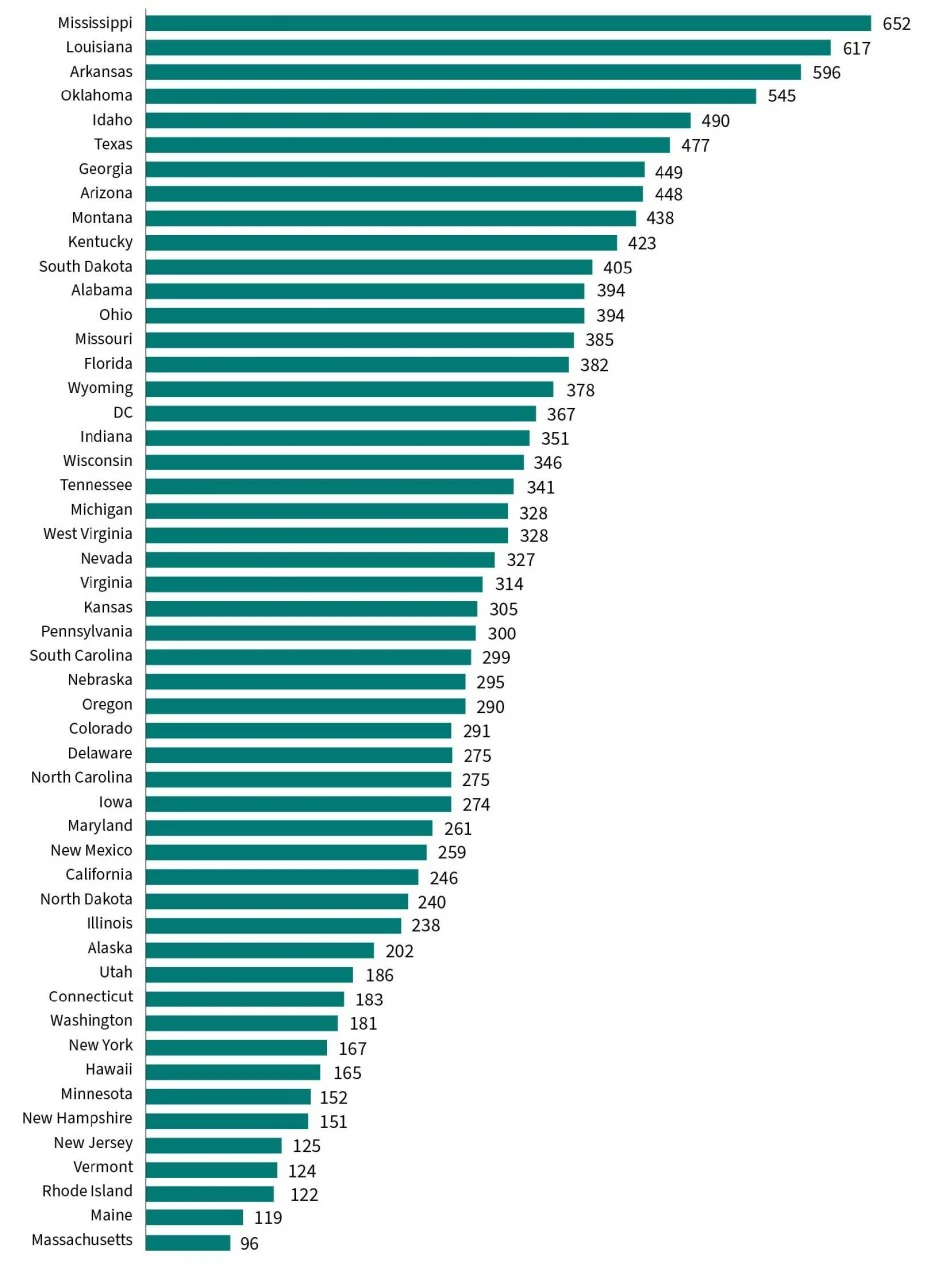
The United States criminal legal system is currently defined by a scale of imprisonment that distinguishes it from almost every other nation on Earth. With nearly two million people currently held in prisons and jails and an additional four million under community supervision, the U.S. remains a global leader in its reliance on incarceration. This expansive network of control, which supervises nearly six million individuals in total, did not emerge overnight. Instead, it is the result of decades of policy decisions, shifts in sentencing law, and the aggressive expansion of punitive measures that began in the early 1970s. While recent years have seen a slight movement toward reform, the system remains vast, racially disproportionate, and deeply consequential for the nation’s social and economic fabric.
The Historical Trajectory of Prison Growth
The era of mass incarceration is often traced back to 1973, marking the beginning of a nearly forty-year surge in the prison population. In 1972, the U.S. imprisonment rate stood at a relatively modest 93 per 100,000 people, with a total incarcerated population of approximately 360,000. However, a shift toward "tough on crime" rhetoric and the initiation of the "War on Drugs" catalyzed a period of unprecedented growth.
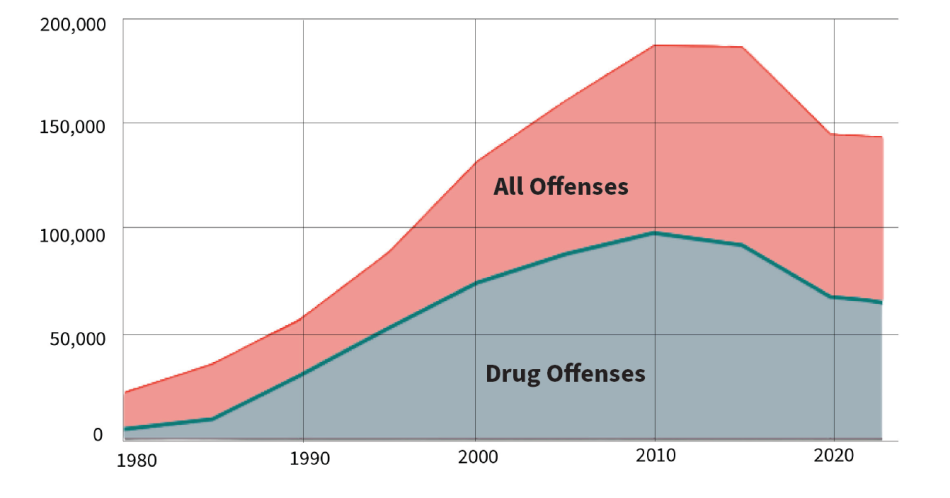
Between 1985 and 1995, the prison population grew by an average of 8% annually. This expansion was nationwide; during the first half of the 1990s, every state except Maine saw substantial increases. Texas, for instance, saw its prison population explode by 130% in just five years, while the federal system grew by 53% in the same window. By the time the expansion peaked in 2009, the incarcerated population had increased seven-fold since the early 1970s.
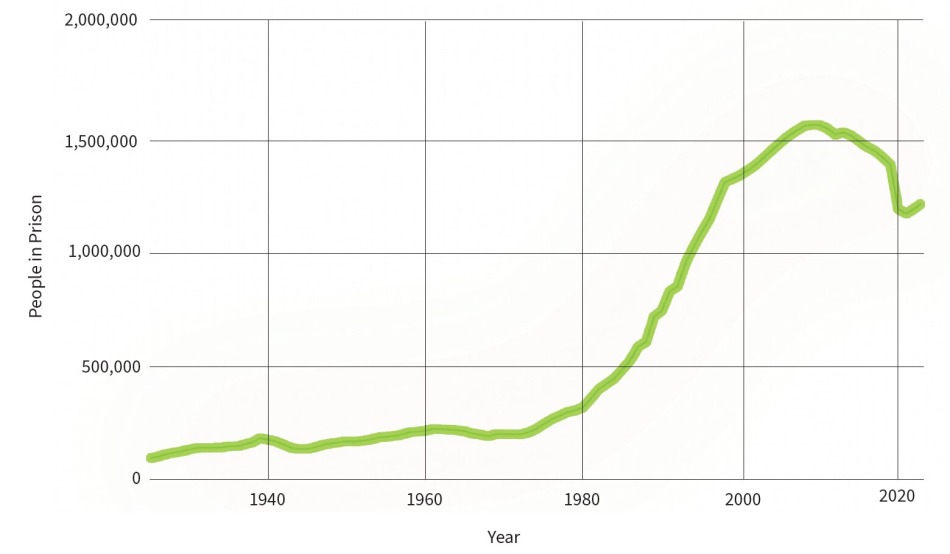
While the population began a marginal decline in 2010, much of that progress was tied to the unique circumstances of the COVID-19 pandemic, which saw a 14% drop in 2020 due to reduced court operations and admissions. However, this trend has recently reversed. In 2022, the prison population rose for the first time in a decade, followed by another 2% increase in 2023, driven by rising populations in 39 states. This suggests that the downward trend of the 2010s may be stalling as policymakers in various jurisdictions seek to roll back earlier reforms.
International Context and Comparative Rates
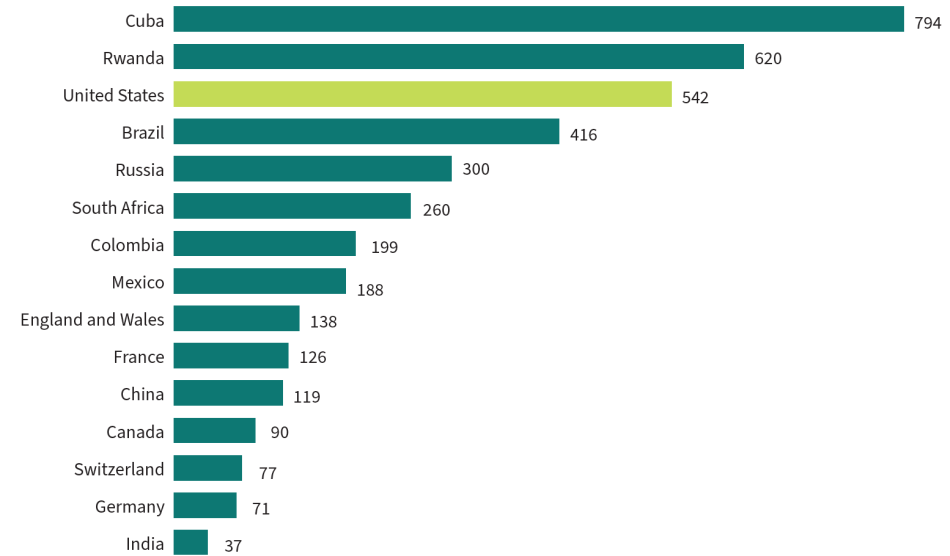
When viewed on a global stage, the United States’ incarceration practices are an anomaly. While a few countries may have higher proportions of their population behind bars in specific years, the U.S. rate is significantly higher than that of other industrialized democracies. For context, the U.S. incarcerates its citizens at a rate far exceeding its immediate neighbors, Canada and Mexico, and many times higher than nations in Western Europe or Scandinavia. This reliance on imprisonment as a primary tool of social control has persisted despite a lack of empirical evidence suggesting that large-scale incarceration is the most effective way to ensure public safety.
The Policy Drivers: Sentencing and the War on Drugs
The primary driver of the U.S. prison boom was not a corresponding spike in crime, but rather fundamental changes in sentencing law and policy. The Sentencing Reform Act of 1984 was a watershed moment, establishing the United States Sentencing Commission and creating rigid guidelines that limited judicial discretion. This was followed by the Anti-Drug Abuse Act of 1986, which introduced harsh mandatory minimum sentences.
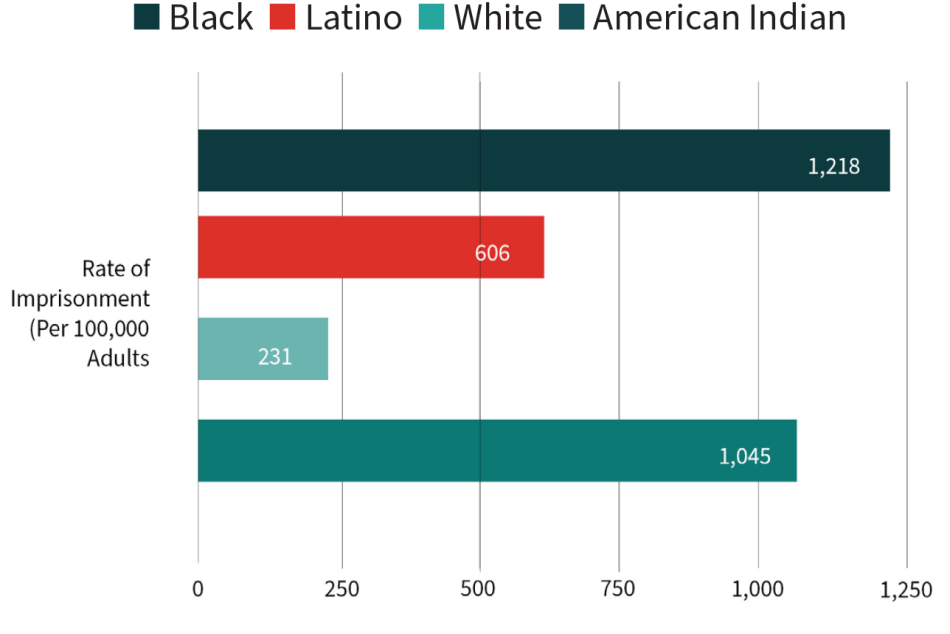
One of the most controversial aspects of this era was the sentencing disparity between crack and powder cocaine. The 1986 law established a "100-to-1" ratio, where the sale of five grams of crack cocaine triggered the same five-year mandatory minimum as 500 grams of powder cocaine. Because crack cocaine was more prevalent in urban, lower-income Black communities, while powder cocaine was more common in wealthier white communities, this policy directly contributed to massive racial disparities in federal prisons. By 2005, the average federal drug sentence for Black defendants was nearly 50% higher than for white defendants.
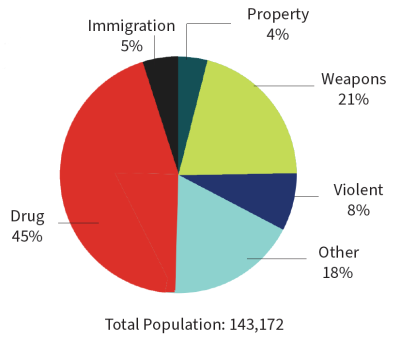
While the Fair Sentencing Act of 2010 and the First Step Act of 2019 have worked to reduce these disparities and apply changes retroactively, the federal system remains heavily focused on drug offenses. Nearly 45% of the federal prison population is currently incarcerated for drug-related crimes, challenging the common misconception that federal prisons are reserved primarily for the most violent offenders.
Racial and Ethnic Disparities
Mass incarceration has been applied with a profound lack of uniformity, falling most heavily on communities of color. Black Americans are overrepresented at every stage of the criminal legal system, from initial police contact to the imposition of life sentences. Current estimates indicate that one in 81 Black adults in the U.S. is serving time in a state prison. For Black men born in 2001, the statistical likelihood of being imprisoned at some point in their lifetime is a staggering one in five.
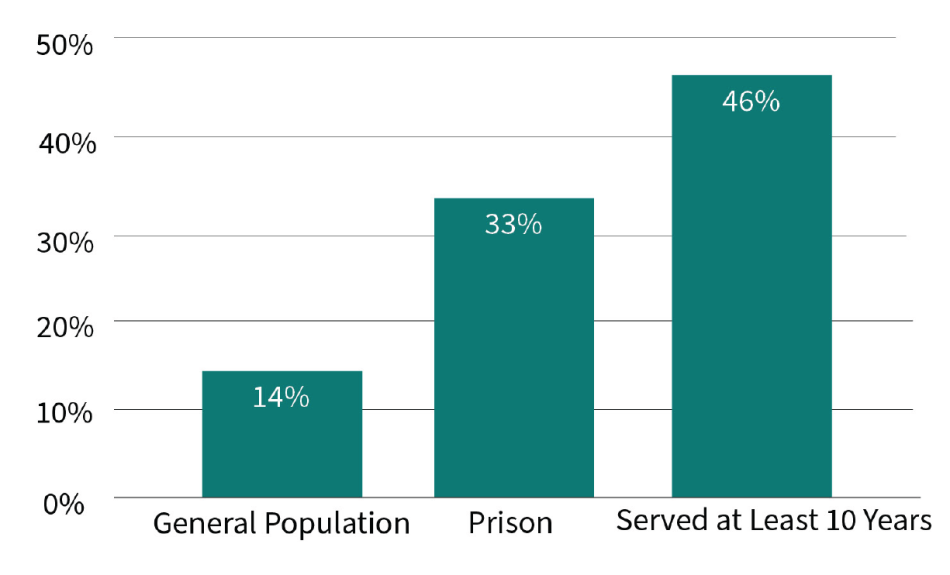
These disparities are even more pronounced among those serving the longest terms. In 2019, while Black Americans made up 14% of the total U.S. population, they accounted for 33% of the total prison population and 46% of those who had already served at least a decade behind bars. Experts point to a range of systemic causes, including historical racial subordination, biased policing tactics in urban neighborhoods, and charging practices that often result in stiffer punishments for defendants of color.
The Proliferation of Life and Long-Term Sentences
Perhaps the most visible sign of the system’s punitive turn is the dramatic increase in life sentences. Today, one in six people in U.S. prisons is serving a life sentence. Historically, a "life" sentence often included the possibility of parole after 10 to 15 years, serving as an incentive for rehabilitation. However, during the mass incarceration era, "Life Without Parole" (LWOP) became a standard sentencing option.
By 2024, the number of people serving LWOP reached an all-time high of over 56,000—nearly six times the number in 1992. Research into "criminal careers" suggests that most individuals "age out" of crime within a decade, meaning that keeping individuals incarcerated for 30, 40, or 50 years provides diminishing returns for public safety while consuming vast amounts of taxpayer resources. Furthermore, Black Americans comprise 55% of those serving LWOP, the most extreme sentence short of the death penalty.
Impact on Women and Youth
The demographics of incarceration have also shifted in ways that receive less public attention. At the start of the 1970s, fewer than 6,000 women were in state or federal prisons. By 2015, that number had surged to 105,000—a 17-fold increase. While there have been marginal declines since, the rate of growth for women’s imprisonment in 2023 was more than double that of men.
The impact on youth has been equally transformative. In the 1990s, the "superpredator" theory—a now-debunked sociological claim that a new generation of "radically impulsive" Black youth would cause a crime wave—led to policies that allowed children as young as 10 to be tried as adults. Although youth incarceration saw a significant 84% drop between 1997 and 2021, recent data shows a troubling reversal. In 2022, the number of youth held in adult prisons jumped by 50%, a trend that continued into 2023.
Collateral Consequences and the "Shadow" System
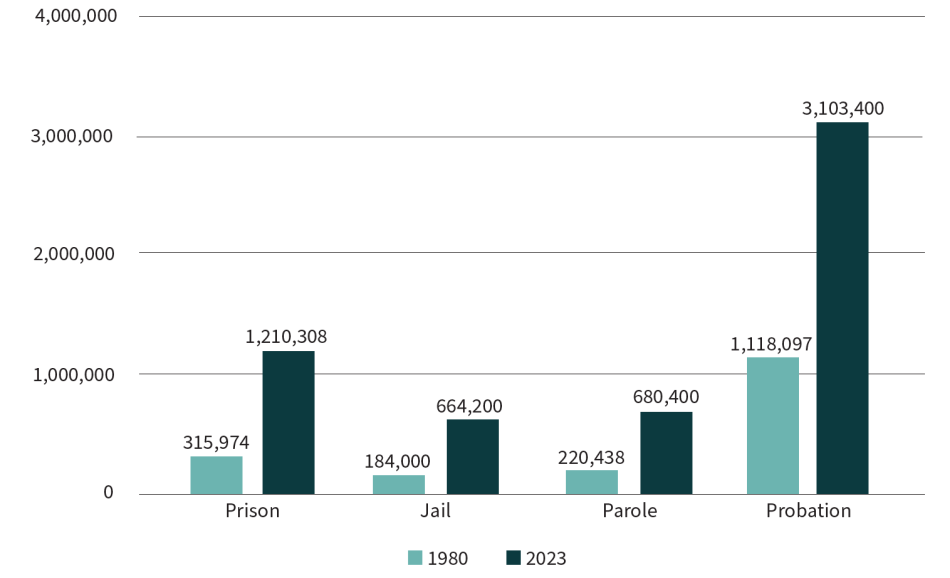
The reach of the criminal legal system extends far beyond prison walls. The number of people on probation and parole has more than tripled since 1980, creating a "shadow" system of supervision that can often lead back to prison for minor technical violations.
One of the most significant political consequences of mass incarceration is felony disenfranchisement. As of 2024, an estimated 4 million Americans are barred from voting due to a felony conviction. This policy disproportionately mutes the political voice of Black communities, where 4.5% of the adult population is disenfranchised, compared to 1.7% of the general population. Notably, 70% of those who cannot vote are not currently behind bars; they are living in their communities, working, and paying taxes, yet remain excluded from the democratic process.
Societal and Economic Implications
The costs of mass incarceration are not merely fiscal, though the U.S. spends over $80 billion annually on corrections. The social costs include the destabilization of families and the long-term economic marginalization of formerly incarcerated individuals. Imprisonment is linked to lower lifetime earnings, housing instability, and food insecurity. Children of incarcerated parents often face declines in academic performance and physical health, creating a cycle of disadvantage that can span generations.
Furthermore, high levels of incarceration can actually undermine public safety by eroding trust in law enforcement and dissolving the informal social networks that help prevent neighborhood crime. When a community loses a significant portion of its young men to the carceral system, the resulting social vacuum can lead to increased instability rather than safety.
Recent Responses and the Path Forward
In recent years, there have been significant attempts to address these issues. In 2025, former President Joe Biden initiated one of the largest mass clemency actions in history, commuting the sentences of nearly 2,500 individuals convicted of non-violent drug offenses. This move was intended to address the "discredited" distinctions between crack and powder cocaine that fueled decades of racial injustice.
However, the future of criminal justice reform remains contested. While many states continue to experiment with alternatives to incarceration and drug policy shifts, other policymakers are calling for a return to more punitive measures in response to public concerns about crime. The tension between these two approaches will likely dictate whether the United States continues to lead the world in incarceration or begins a meaningful transition toward a more rehabilitative and equitable legal system.