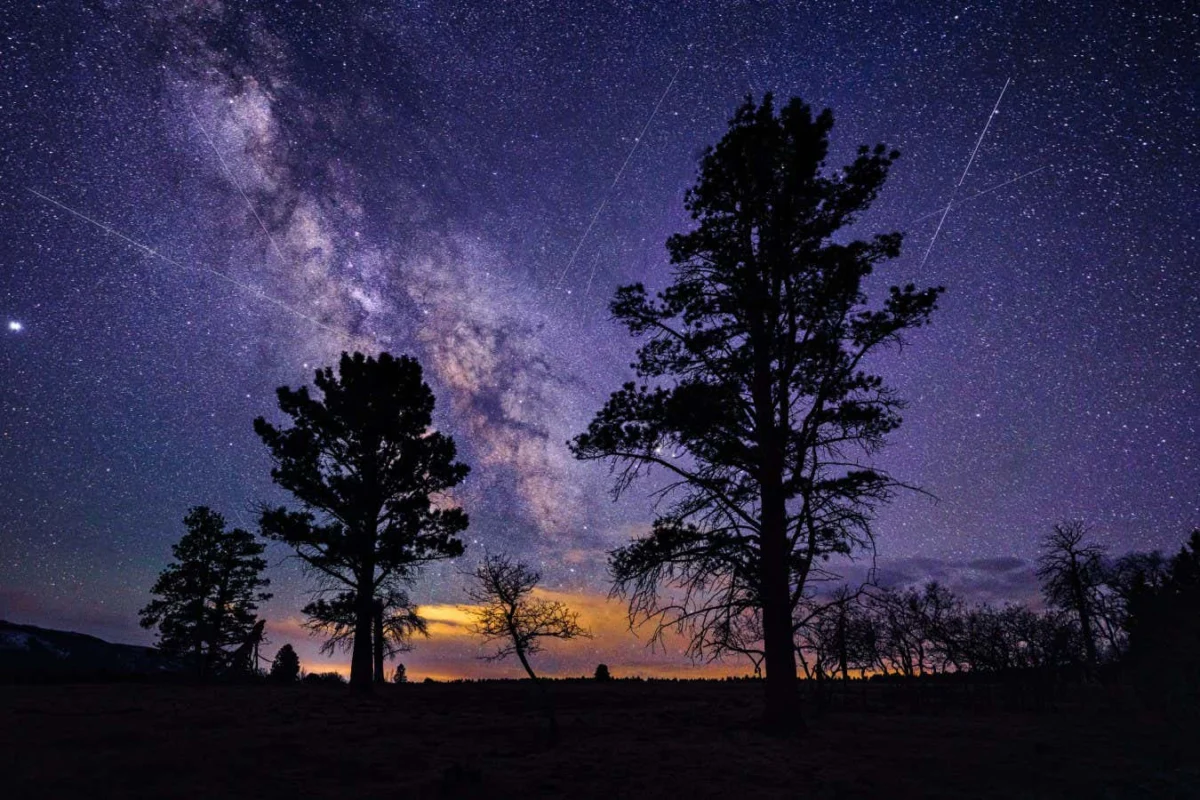
The annual Lyrid meteor shower is set to grace the night sky, with its peak activity anticipated on the evening of April 22nd and into the early morning hours of April 23rd. While this celestial spectacle reaches its zenith during this brief window, stargazers have a broader opportunity to witness these shooting stars between April 16th and April 25th. For those eager to enhance their viewing experience, New Scientist’s dedicated stargazing companion offers guidance, accessible through its podcast feed, "The world, the universe and us."
Understanding the Phenomenon: What are Meteors?
Meteors, commonly known as shooting stars, are the visible streaks of light we observe as small particles of cosmic debris enter Earth’s atmosphere at incredibly high velocities. The intense friction generated between these particles and the atmospheric gases causes them to heat up and vaporize, creating the ephemeral flash that captivates observers. These celestial visitors are not inherently bright; their visibility is a consequence of their rapid disintegration.
The Cosmic Origins of the Lyrids
The recurring nature of meteor showers is directly linked to Earth’s orbital path around the Sun. As our planet traverses its annual journey, it inevitably passes through vast, diffuse clouds of dust and rocky fragments. These debris trails are typically remnants left behind by comets or asteroids that have previously journeyed through the solar system. The Lyrids are no exception, originating from the long-period comet C/1861 G1, famously known as Comet Thatcher.
Comet Thatcher, first discovered in 1861, possesses an exceptionally long orbital period, taking approximately 415 years to complete a single circuit around the Sun. Its most recent passage through the inner solar system occurred in the mid-19th century, and it is not expected to return to our vicinity until around the year 2278. Each year, as Earth intersects with the dusty trail left by Comet Thatcher, the Lyrids meteor shower becomes visible.
Locating the Radiance: The Constellation Lyra
Meteor showers are named after the constellation from which their radiant point appears to originate. For the Lyrids, this celestial namesake is the constellation Lyra, situated in the northern celestial hemisphere. Lyra is distinguished by its prominent star, Vega, one of the brightest stars in the night sky.
For observers in the northern hemisphere, Lyra will ascend in the eastern sky shortly after sunset. As the night progresses and the constellation climbs higher, the viewing conditions for meteors become more favorable. However, it’s important to note that the closer one gets to dawn, the brighter the ambient sky will become due to the approaching sunrise, potentially diminishing the visibility of fainter meteors.
Navigating the Night Sky: The Summer Triangle as a Guide
A helpful celestial landmark for locating Lyra, especially for those less familiar with constellations, is the asterism known as the Summer Triangle. This prominent pattern is formed by three exceptionally bright stars: Vega in Lyra, Deneb in Cygnus, and Altair in Aquila. While named the Summer Triangle for its visibility during warmer months in the northern hemisphere, its position in the sky shifts throughout the year.
In late April, around midnight, the Summer Triangle will be visible low on the eastern horizon. The highest of these three stars, Vega, serves as a direct pointer to the constellation Lyra. By identifying Vega, stargazers can then orient themselves to find Lyra and, by extension, the apparent radiant point of the Lyrid meteor shower.
While the radiant point is in the northern hemisphere, meteors themselves can appear anywhere in the sky, streaking in all directions. Therefore, even observers in the southern hemisphere might catch a glimpse of the Lyrids, particularly if they look towards the eastern horizon.
Optimal Viewing Conditions and Expected Activity
The optimal time to witness the Lyrids is during the peak activity, typically on the night of April 22nd into the early morning of April 23rd. Under ideal conditions—characterized by clear, dark skies free from light pollution—observers can anticipate seeing between 10 and 18 meteors per hour. This rate, while modest compared to some more prolific meteor showers, still offers a captivating celestial display.
Factors influencing visibility include:
- Moonlight: A bright moon can significantly wash out fainter meteors. Checking the moon phase for the nights of the peak is advisable.
- Light Pollution: Urban areas with high levels of artificial light are less conducive to meteor shower viewing. Venturing to darker, rural locations is highly recommended.
- Weather: Cloud cover is the most significant impediment to observing any celestial event. Monitoring weather forecasts is crucial for a successful viewing experience.
The New Scientist Stargazing Companion: An Enhanced Experience
To further assist the public in appreciating the Lyrids, New Scientist has developed a stargazing companion. This resource is designed to guide viewers through the specifics of the meteor shower, including identifying key celestial markers and understanding the optimal viewing strategies. The companion is available in audio format, integrated into the podcast feed for "The world, the universe and us," allowing for an immersive and educational experience. This initiative underscores the publication’s commitment to making astronomical events accessible and engaging for a broad audience.
Broader Implications and Astronomical Significance
The Lyrid meteor shower, while not the most intense of the year, holds significant value in the astronomical calendar. It serves as a consistent annual reminder of the dynamic nature of our solar system and the ongoing interactions between Earth and the cosmic debris that surrounds us. Studying meteor showers provides scientists with valuable insights into the composition and distribution of cometary and asteroidal material. Furthermore, the Lyrids offer a readily accessible gateway for amateur astronomers and the general public to engage with space science, fostering curiosity and appreciation for the cosmos.
The predictable timing of meteor showers like the Lyrids allows for long-term observation and data collection. Scientists can analyze the flux of meteors, their radiant points, and their speed to infer details about the parent comet and the structure of the debris trail. While Comet Thatcher is not due to return for over two centuries, the annual passage of Earth through its remnants provides an ongoing opportunity for scientific inquiry.
Looking Ahead: Future Meteor Showers
Following the Lyrids, the astronomical calendar features several other notable meteor showers. The Eta Aquariids, peaking in early May, are also associated with Halley’s Comet. Later in the year, the Perseids in August are known for their high rate of activity and are often a highlight of the summer celestial calendar for those in the northern hemisphere. Understanding and anticipating these events allows for planned observation and a deeper connection with the natural rhythms of the solar system.
In conclusion, the Lyrid meteor shower presents a wonderful opportunity for skywatchers to connect with the wonders of the universe. With a bit of preparation—finding a dark location, checking the weather, and utilizing resources like the New Scientist stargazing companion—anyone can enjoy the spectacle of shooting stars painting across the night sky. The enduring presence of Comet Thatcher’s trail serves as a cosmic time capsule, reminding us of the vast and ever-changing nature of our solar system.