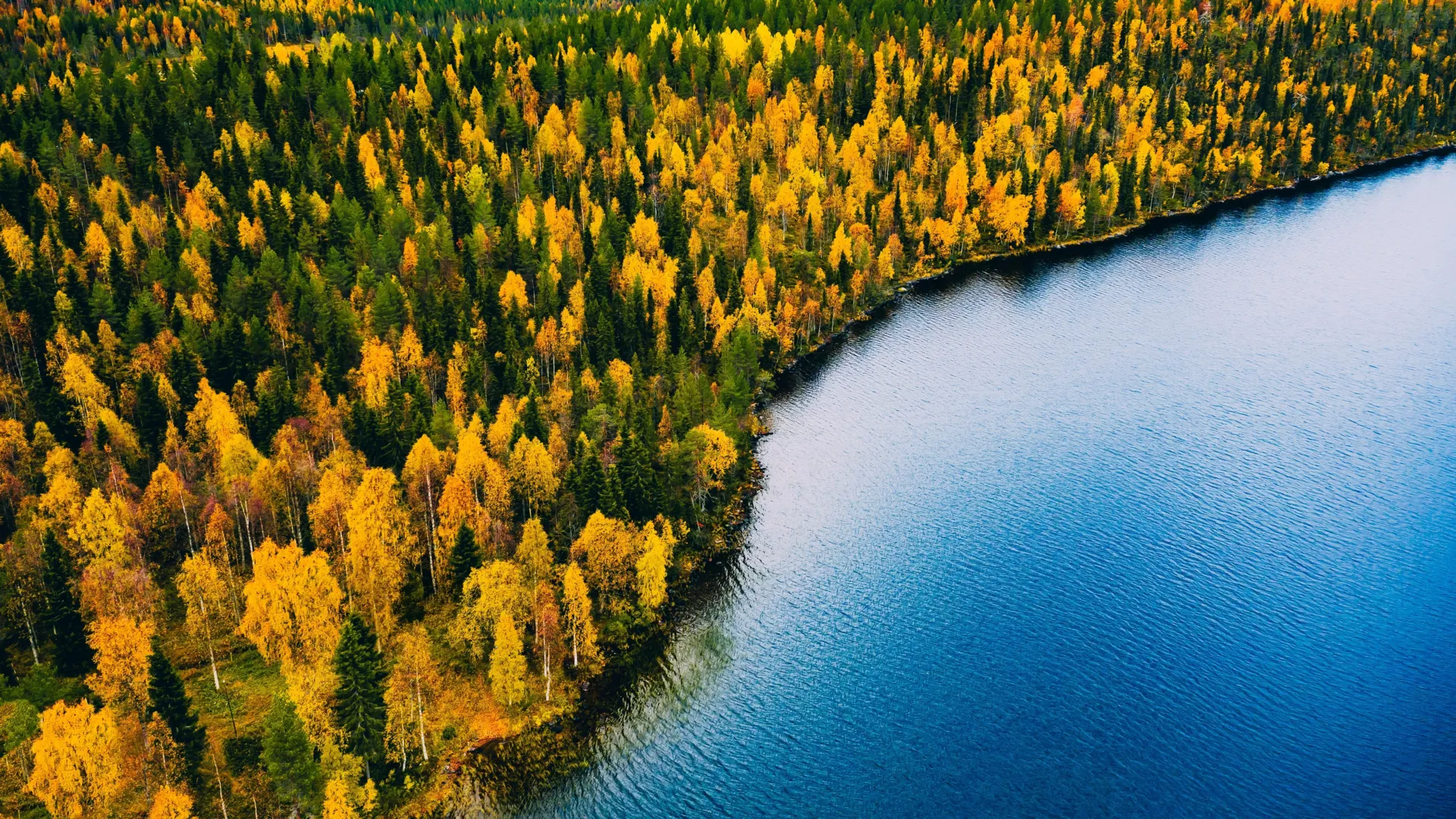
New research, spearheaded by the University of Warwick, has dramatically reshaped our understanding of prehistoric Europe, revealing that Doggerland, the now-submerged landmass beneath the North Sea, was home to flourishing forests far earlier than scientists had previously theorized. This groundbreaking discovery suggests that this lost landscape may have served as a vital sanctuary for a diverse array of plant and animal life, and potentially for early human communities, long before widespread arboreal environments became commonplace across Britain and northern Europe. The findings, published in the esteemed journal Proceedings of the National Academy of Sciences (PNAS), offer a compelling new narrative for the ecological and human history of this enigmatic region.
Unearthing Ancient DNA: A Window into a Lost World
The study’s innovative approach involved the meticulous analysis of sedimentary ancient DNA (sedaDNA) extracted from marine cores. This cutting-edge technique allowed researchers to reconstruct the environmental conditions of Southern Doggerland from the twilight of the last Ice Age, approximately 16,000 years ago, right up until its eventual submersion beneath the rising waters of the North Sea. Professor Robin Allaby of the University of Warwick, the lead author of the study, expressed his astonishment at the findings. "By analyzing sedaDNA from Southern Doggerland at a scale not seen before, we have reconstructed the environment of this lost land from the end of the last Ice Age until the North Sea arrived," he stated. "We unexpectedly found trees thousands of years earlier than anyone expected — and evidence that the North Sea fully formed later than previously thought."
The presence of temperate tree species such as oak, elm, and hazel was detected in DNA samples dating back over 16,000 years. This is significantly earlier than evidence previously gleaned from pollen records in mainland Britain, which had suggested a much later arrival for these tree types. Furthermore, the research unearthed DNA from a tree genus, Pterocarya (a relative of walnut), that was thought to have disappeared from northwestern Europe approximately 400,000 years ago. Its reappearance in the ancient DNA of Doggerland suggests a remarkable survival in the region for a far longer period than previously understood.
Doggerland: More Than Just a Land Bridge
For decades, Doggerland has been primarily conceptualized as a land bridge, a crucial geographical feature that once connected Britain to mainland Europe before the relentless rise of sea levels transformed it into the modern North Sea. While the eventual forested nature of this region was acknowledged, the precise timing of forest establishment and its suitability as a habitat for early human populations remained largely speculative. This new research firmly places Doggerland at the forefront of early European ecological and human history.
The research team analyzed 252 sedaDNA samples from 41 marine cores strategically collected along the prehistoric Southern River. This particular location was chosen for its well-preserved sediments, offering a rich potential to reveal past habitats. This extensive sampling allowed for an unprecedentedly detailed ecological history of Doggerland, spanning from roughly 16,000 years ago to its disappearance beneath the waves.
A Northern Refuge: Evidence of Resilience
The discovery of temperate woodland species, including oak, elm, and hazel, appearing over 16,000 years ago in Doggerland provides compelling evidence that this landmass offered a more stable and hospitable environment than previously assumed. The presence of lime (Tilia), a tree species that thrives in warmer climes, appearing around 2,000 years earlier in Doggerland than in mainland Britain, further supports the notion that parts of this lost landscape acted as a crucial northern refuge during the last Ice Age. This concept of "microrefugia" – small, protected areas where temperate plant species could survive harsh glacial conditions – is gaining increasing traction in paleoecological research and offers a potential explanation for the rapid spread of forests across northern Europe after the Ice Age concluded, a phenomenon that has long been referred to as Reid’s Paradox.
Implications for Early Human Migration and Survival
The implications of a forested Doggerland, thriving with abundant wildlife from as early as 16,000 years ago, are profound for understanding early human presence in Europe. The presence of such a rich environment suggests that Doggerland could have supported significant populations of animals, including game such as wild boar, thus providing valuable resources for early Mesolithic communities. This rich environment would have existed thousands of years before the emergence of known early human groups like the Maglemosian culture, which appeared around 10,300 years ago.
Professor Vincent Gaffney, a co-author of the study from the University of Bradford, highlighted the transformative nature of these findings. "For many years, Doggerland was often described as a land bridge – only significant as a route for prehistoric settlement of the British Isles," he commented. "Today, we understand that Doggerland was not only a heartland of early human settlement, but also that the presence of the land mass may have provided a refuge for plants and animals and acted as a fulcrum for how prehistoric communities settled and resettled northern Europe over millennia."
The researchers’ findings suggest that the forested environment of Doggerland could have provided a crucial haven for early Mesolithic communities prior to the inundation of the landmass. This might also help explain the relative scarcity of early Mesolithic archaeological evidence found on mainland Britain today. If Doggerland was a thriving hub, then the subsequent flooding would have dispersed or submerged much of the evidence of human activity that might otherwise have been preserved on higher ground.
A New Timeline for the North Sea’s Formation
Beyond the ecological and human history revelations, the study also offers new insights into the geological timeline of the North Sea’s formation. The persistence of parts of Doggerland through major flooding events, including the catastrophic Storegga tsunami approximately 8,150 years ago, suggests that some areas remained above water until around 7,000 years ago. This contradicts previous estimates that placed the full formation of the North Sea at an earlier date. This extended period of landmass existence implies a more gradual inundation process than often depicted, with potential implications for understanding coastal erosion and sea-level rise dynamics in the region.
Methodological Advancements and Future Research
The success of this study hinges on the advanced capabilities of sedaDNA analysis. Unlike traditional methods that rely on fragmented fossil remains or limited pollen records, sedaDNA can provide a more comprehensive and continuous record of past life. By extracting genetic material directly from sediments, researchers can identify a wider range of species, including those that leave less robust fossil evidence. This methodological leap has opened up new avenues for reconstructing ancient ecosystems and has proven invaluable in re-evaluating long-held scientific assumptions.
The University of Warwick and its collaborators are planning further research to explore other regions of Doggerland and to integrate sedaDNA data with other paleoenvironmental proxies, such as sediment cores and archaeological findings. The aim is to build an even more detailed and nuanced picture of this lost world, uncovering further evidence of its biodiversity, its role as a refuge, and the extent of its influence on the settlement patterns of early humans across northern Europe. The ongoing investigation into Doggerland promises to continue yielding remarkable discoveries, fundamentally altering our perception of prehistoric landscapes and the resilience of life in the face of dramatic environmental change.
The study’s implications extend beyond academic curiosity, offering valuable lessons for understanding contemporary environmental challenges. The story of Doggerland serves as a stark reminder of the dynamic nature of our planet and the profound impact of climate change on landscapes and the life they support. As sea levels continue to rise in the present day, the resilience and adaptability demonstrated by Doggerland’s ecosystems and its early human inhabitants offer a compelling, albeit ancient, case study in the ongoing interplay between environmental forces and biological survival.